Healthy habits may curb heart risk linked to blood mutations
Blood cell mutations were linked to 41% higher heart disease risk, but an elevated risk was not found in those with a favorable lifestyle.
Fundamental Research
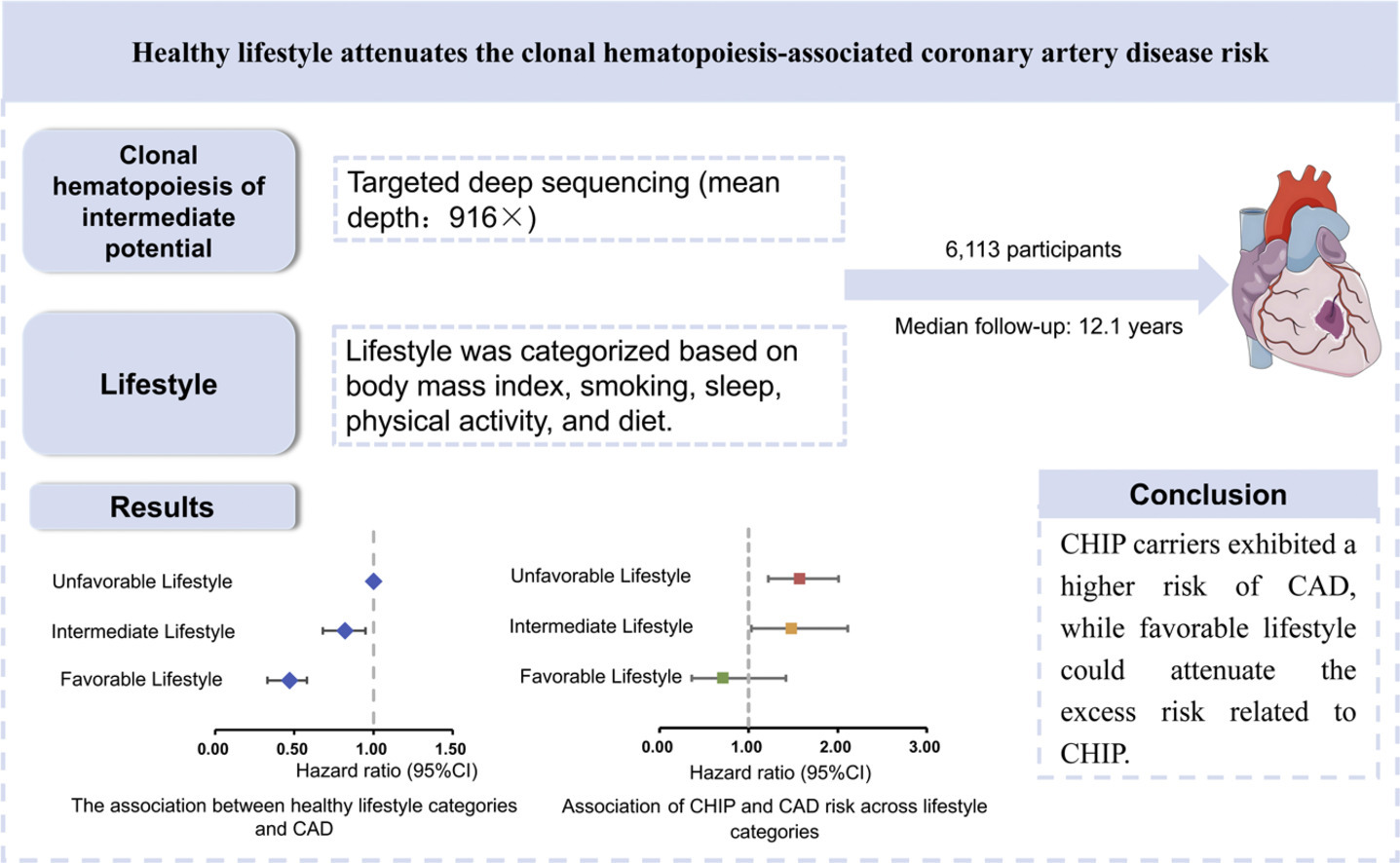
Researchers tracked 6,113 participants in China over a median follow-up of 12.1 years in an observational cohort study. They tested participants for clonal hematopoiesis of indeterminate potential, a state where blood cells acquire mutations and expand. Lifestyle was categorised as unfavorable, intermediate, or favorable based on five factors: body mass index, smoking, sleep, physical activity, and diet.
Over the study period, 760 cases of coronary artery disease occurred. A favorable lifestyle was associated with 53% lower disease risk, whereas the mutations were linked to 41% higher risk. However, the elevated risk linked to mutations was found only in people with intermediate or unfavorable lifestyles. In the favorable lifestyle group, the range of likely values included no increased risk. Together, an unfavorable lifestyle and mutations were linked to a 2.78-fold higher risk compared with non-carriers with a favorable lifestyle.
Why it matters
Coronary artery disease is a major cardiovascular condition that becomes more common with age. These findings suggest that promoting healthy behavioural habits could help attenuate the excess heart disease risk associated with clonal blood mutations.
Caveats
Because this was an observational study, it cannot show that lifestyle habits directly altered coronary artery disease risk. The findings are also derived from a single cohort of participants in China.
The paper
Healthy lifestyle attenuates the clonal hematopoiesis-associated coronary artery disease risk
Show 14 more authors
Hongwei Liu, Jianxin Li, Fangchao Liu, Shufeng Chen, Jie Cao, Hongfan Li, Xiaoqing Liu, Chong Shen, Ling Yu, Dongsheng Hu, Jianfeng Huang, Tong Wang, Wenjing Tian, Dongfeng Gu,Fuwai Hospital
Fundamental Research · 20 Sep 2025