Measures of mortality among people living with fibrodysplasia ossificans progressiva in the United States, 2017-2023
Declared ties to: Regeneron and Rare Bone Disease Alliance Steering Committee
Abstract
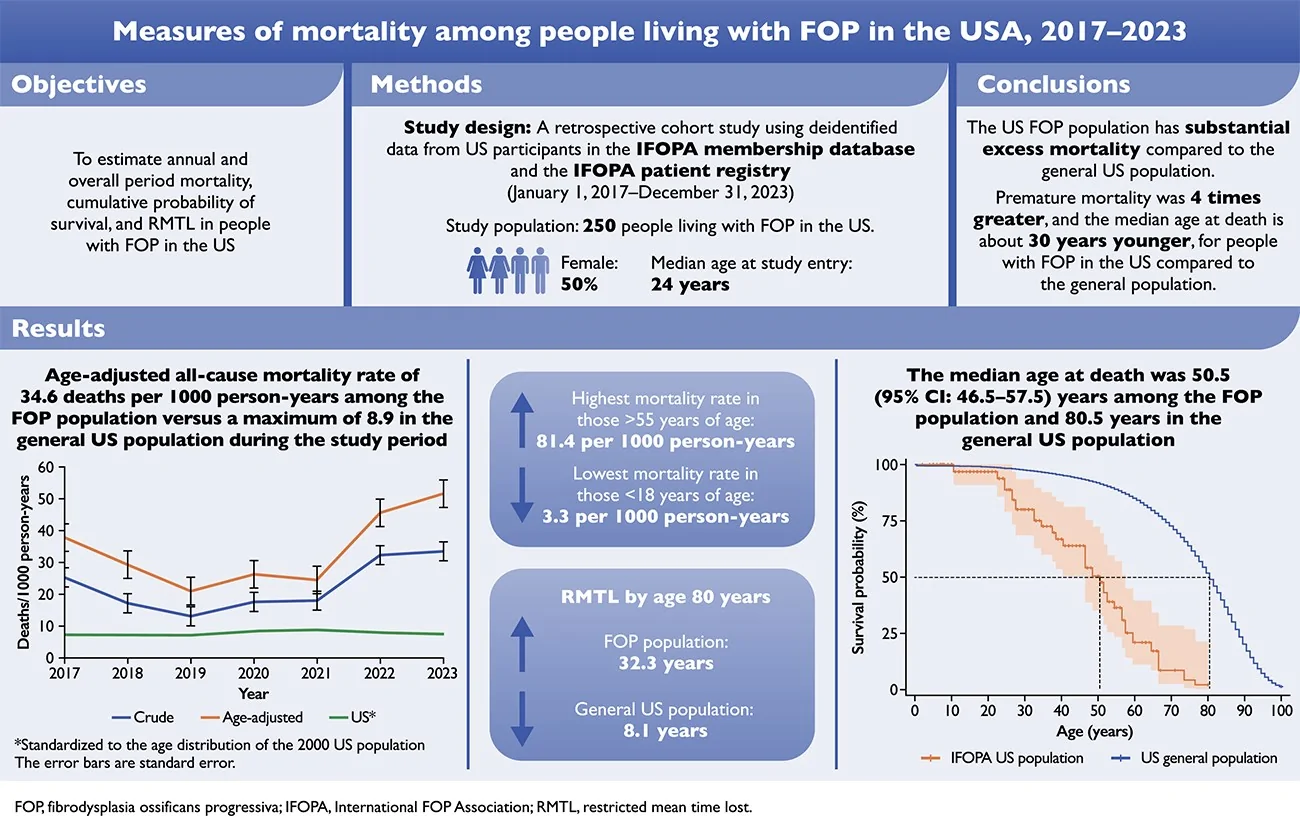
Fibrodysplasia ossificans progressiva (FOP) is an ultra-rare genetic disease characterized by heterotopic ossification in connective tissues. Few epidemiologic studies have investigated mortality rates among people with FOP. We conducted a retrospective cohort study to understand mortality in people with FOP. Data were obtained from people with FOP in the United States (US) who participated in either the International FOP Association (IFOPA) membership database or the IFOPA patient registry between January 1, 2017, and December 31, 2023. From 2017 to 2023, 250 people with FOP were identified. The age-adjusted mortality rate was 34.6 (95% CI: 22.5-51.7) deaths per 1000 person-years. The annual age-adjusted mortality rate ranged from 21.0 (95% CI: 3.2-77.8) to 51.6 (95% CI: 19.1-114.7) deaths per 1000 person-years; the annual age-adjusted mortality rate ranged from 7.2 to 8.9 per 1000 person-years in the general US population. The median age at death for people with FOP was 50.5 (95% CI: 46.5-57.5) yr vs 80.5 yr in the general US population. The restricted mean time lost for people with FOP was 32.3 (95% CI: 26.8-37.8) yr vs 8.1 yr in the general US population. The US FOP population has substantial excess mortality vs the general US population.

