Death risk rose with age in asexual Hydra oligactis
The maximum observed lifespan was approximately two years in a laboratory experiment comparing animals fed five times per week with those fed three times.
Journal of Evolutionary Biology
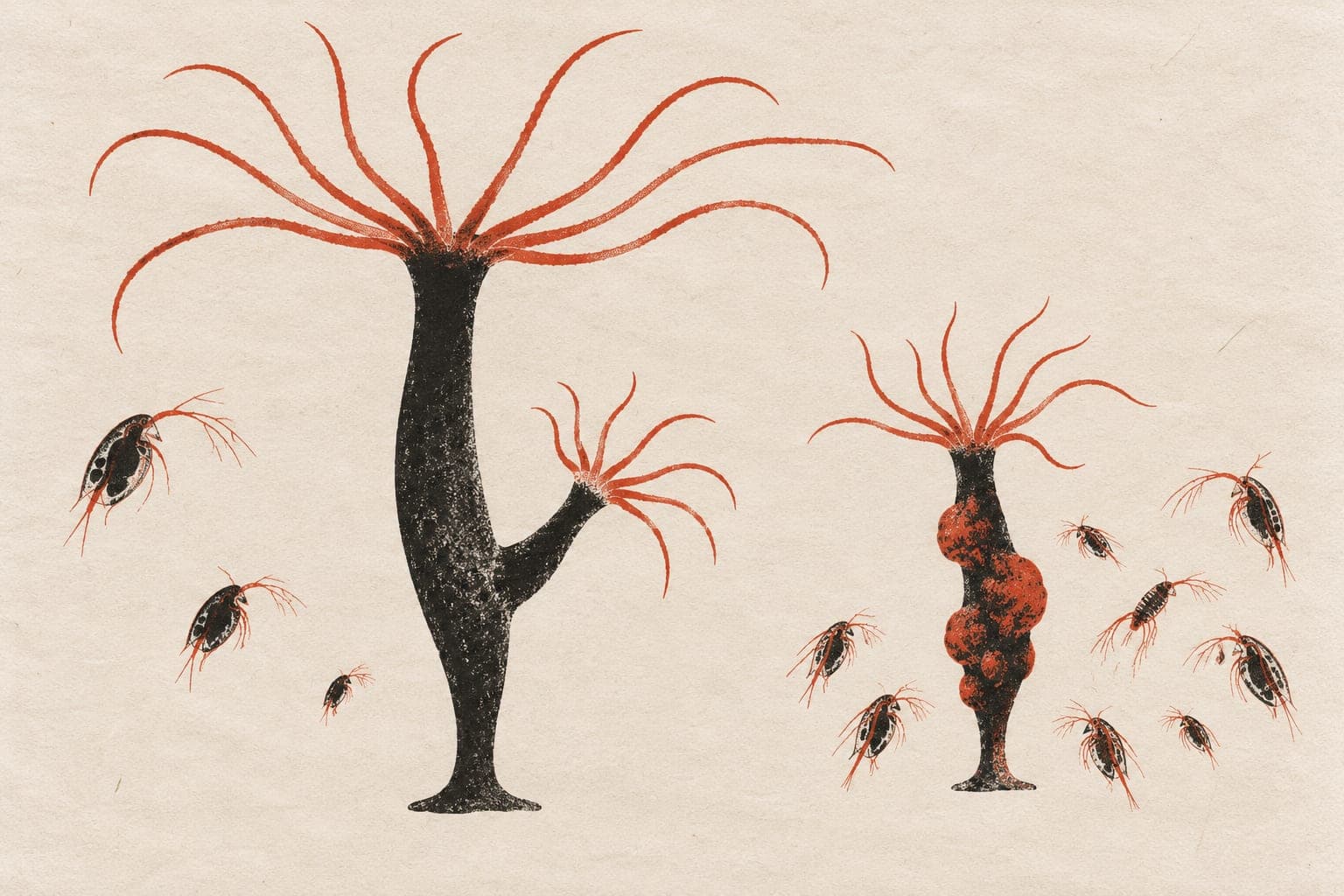
In an experiment with Hydra oligactis, a freshwater animal, researchers tracked death rates and asexual reproduction across the animals’ lives. The animals descended from parent hydras collected in a pond in southern France. Researchers fed one group five times per week and another three times per week throughout their lives. They also recorded spontaneous tumours.
Death rates increased substantially with age, and the maximum observed lifespan was approximately two years. Animals fed three times per week had higher survival, indicating a dietary restriction effect. Higher rates of asexual reproduction were associated with a greater probability of survival. Tumour development was linked to lower survival. The findings showed that this species aged during its asexual stage.
Why it matters
The contrast with the extremely low aging rates reported in laboratory Hydra vulgaris raises the question of why closely related species age differently.
Caveats
This was a laboratory experiment, not a study of survival in the wild. The animals descended from hydras collected in one pond.
The paper
Not all hydras are immortal: asexual Hydra oligactis undergoes senescence
Deakin University · MTA-DE "Momentum" Ecology
Journal of Evolutionary Biology · 5 Oct 2026