30-second chair stand test is linked to peak oxygen uptake
In an external validation cohort, predicted peak VO₂ correlated with observed values at r = 0.654, with a root mean square error of 4.73 mL/kg/min.
International Journal of Cardiology Heart & Vasculature
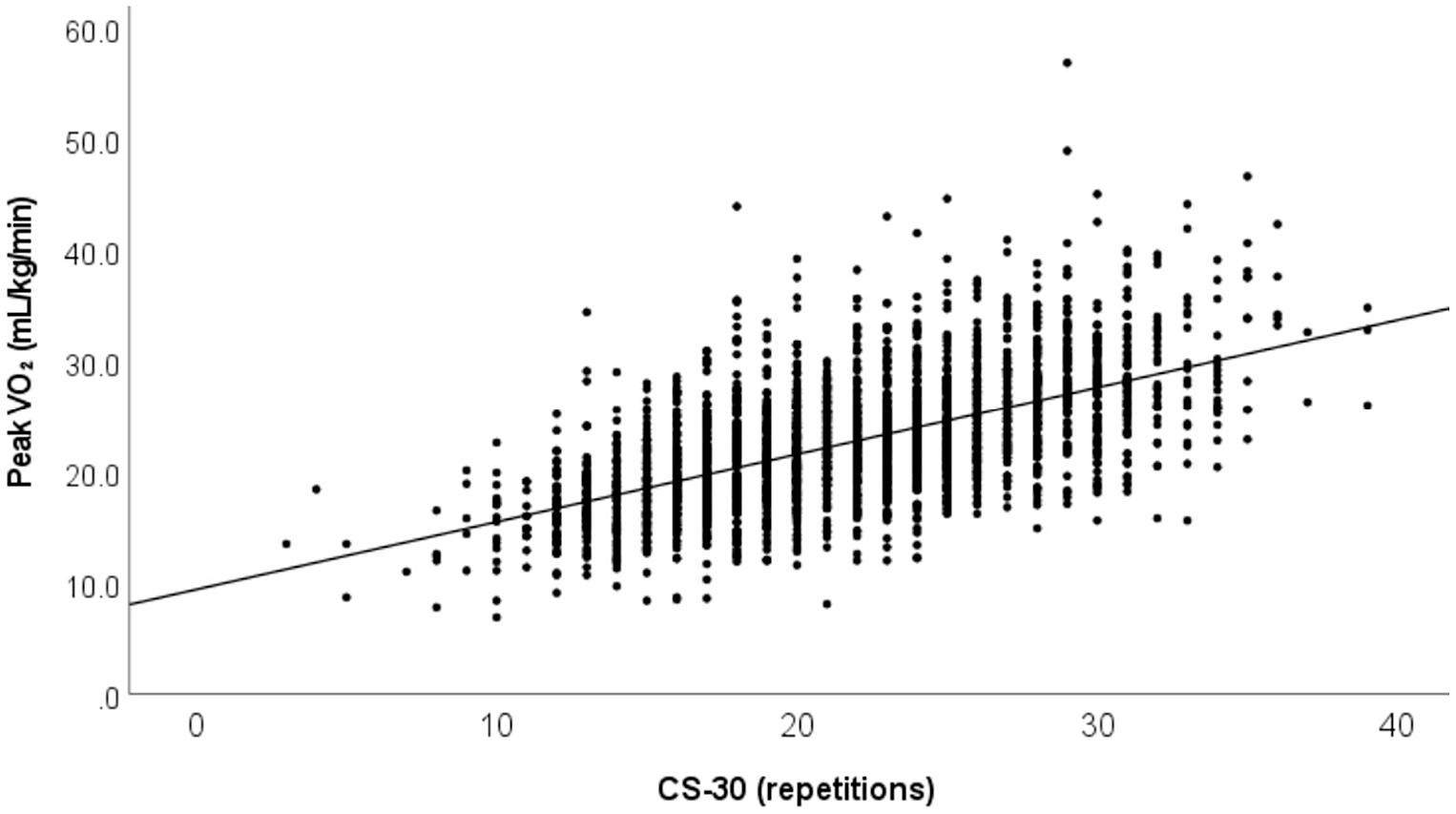
In a retrospective study of 3,577 clinical patients who underwent cardiopulmonary exercise testing, researchers evaluated how performance on the 30-second chair stand test relates to peak oxygen uptake. The team developed a multivariable linear regression model incorporating chair stand performance, age, sex, and body mass index using data from one facility, then validated the model using data from a second facility.
Chair stand performance was independently associated with peak oxygen uptake after multivariable adjustment. In the external validation cohort, predicted peak oxygen uptake showed a moderate correlation with observed peak oxygen uptake (r = 0.654, p < 0.001). The prediction model yielded a root mean square error of 4.73 mL/kg/min and a mean bias of -2.23 mL/kg/min.
Why it matters
Peak oxygen uptake is a standard marker of cardiorespiratory fitness and physical function, but cardiopulmonary exercise testing is often unavailable for routine clinical evaluations. A brief chair stand test may provide a simple complementary assessment linked to exercise capacity.
Caveats
The findings rely on retrospective data from patients referred for exercise testing. In addition, the prediction model achieved only moderate accuracy in external validation and displayed an average underestimation of 2.23 mL/kg/min.
The paper
Minamino Cardiovascular Hospital
International Journal of Cardiology Heart & Vasculature · 22 Sep 2026