Electrocardiogram heart age reflects past electrical burden but not future aging pace
Researchers analyzed serial electrocardiograms from over 128,000 patients to distinguish cumulative cardiac aging damage from the rate of future electrical changes.
Journal of Electrocardiology
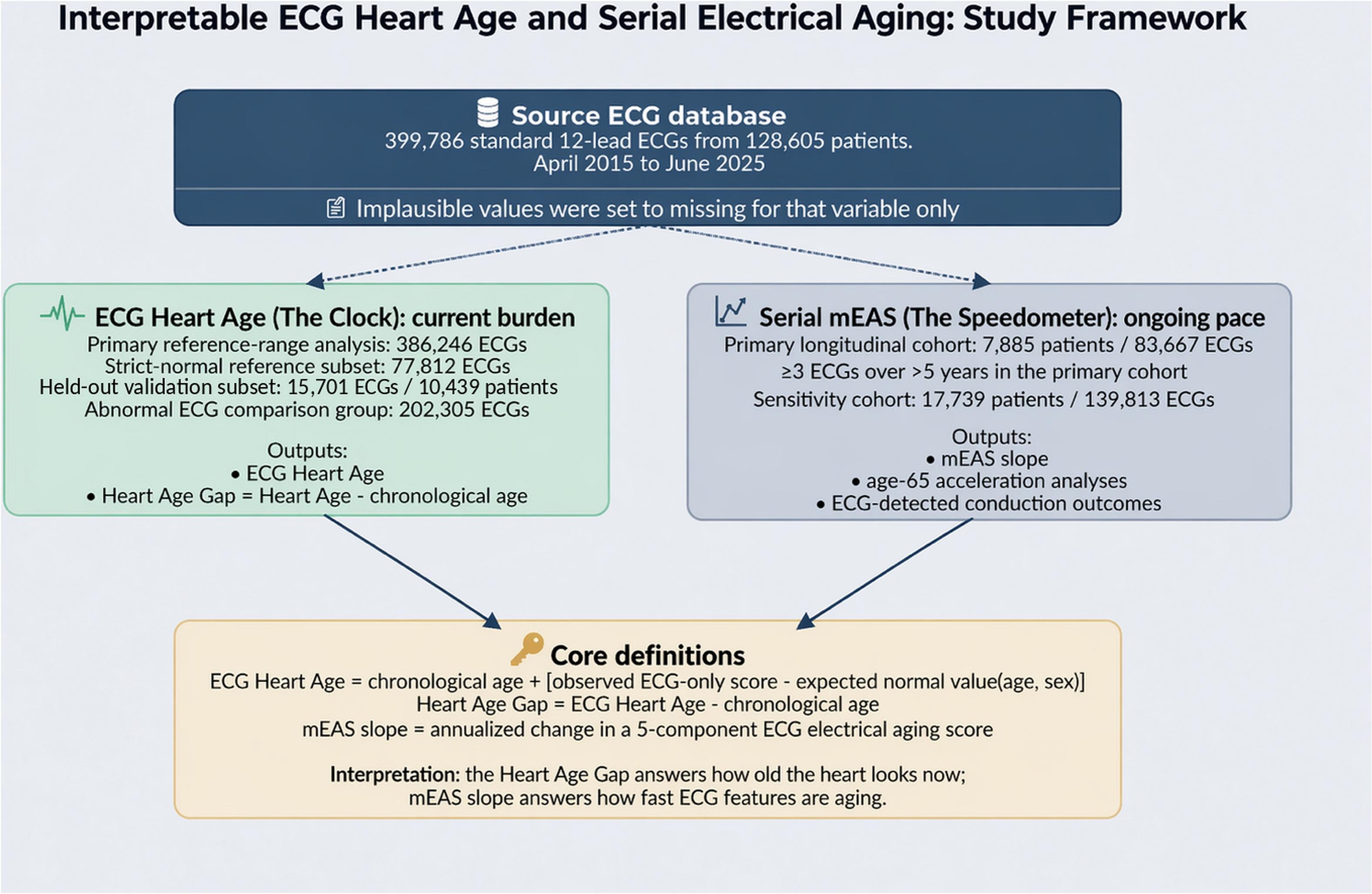
In an observational study of 128,605 human patients, researchers analyzed 399,786 standard 12-lead electrocardiograms to evaluate cardiac electrical aging. The team derived an interpretable ECG Heart Age using sex and six routine measurements. In held-out normal tests, predicted heart age closely matched chronological age, with a median gap of -0.19 years. In contrast, abnormal tracings appeared older, displaying a median gap of +6.58 years. To evaluate ongoing change, the authors tracked a measurement-based Electrical Aging Score in 7,885 patients monitored for more than five years. Although electrical aging markers increased over time, baseline heart age gap did not predict the subsequent rate of electrical aging.
Why it matters
The findings show that baseline accumulated heart burden does not dictate the future rate of electrical senescence. This indicates that a single snapshot of cardiac age may capture different biology than serial measures tracking the pace of aging.
Caveats
The authors caution that whether baseline burden and aging pace represent distinct biological mechanisms remains untested. Additionally, the model requires external validation against clinical outcomes before it can be used in medical practice.
The paper
Interpretable ECG heart age and serial electrical aging in 399,786 electrocardiograms
Heart and Vascular Institute · Cleveland Clinic Abu Dhabi
Journal of Electrocardiology · 28 Sep 2026