Physical and mental capacity scores fell from age 31 to 46
Average physical and mental capacity scores fell from 67 at age 31 to 61 at 46 on a 0–100 scale.
Our read
Biomarkers- Studied:
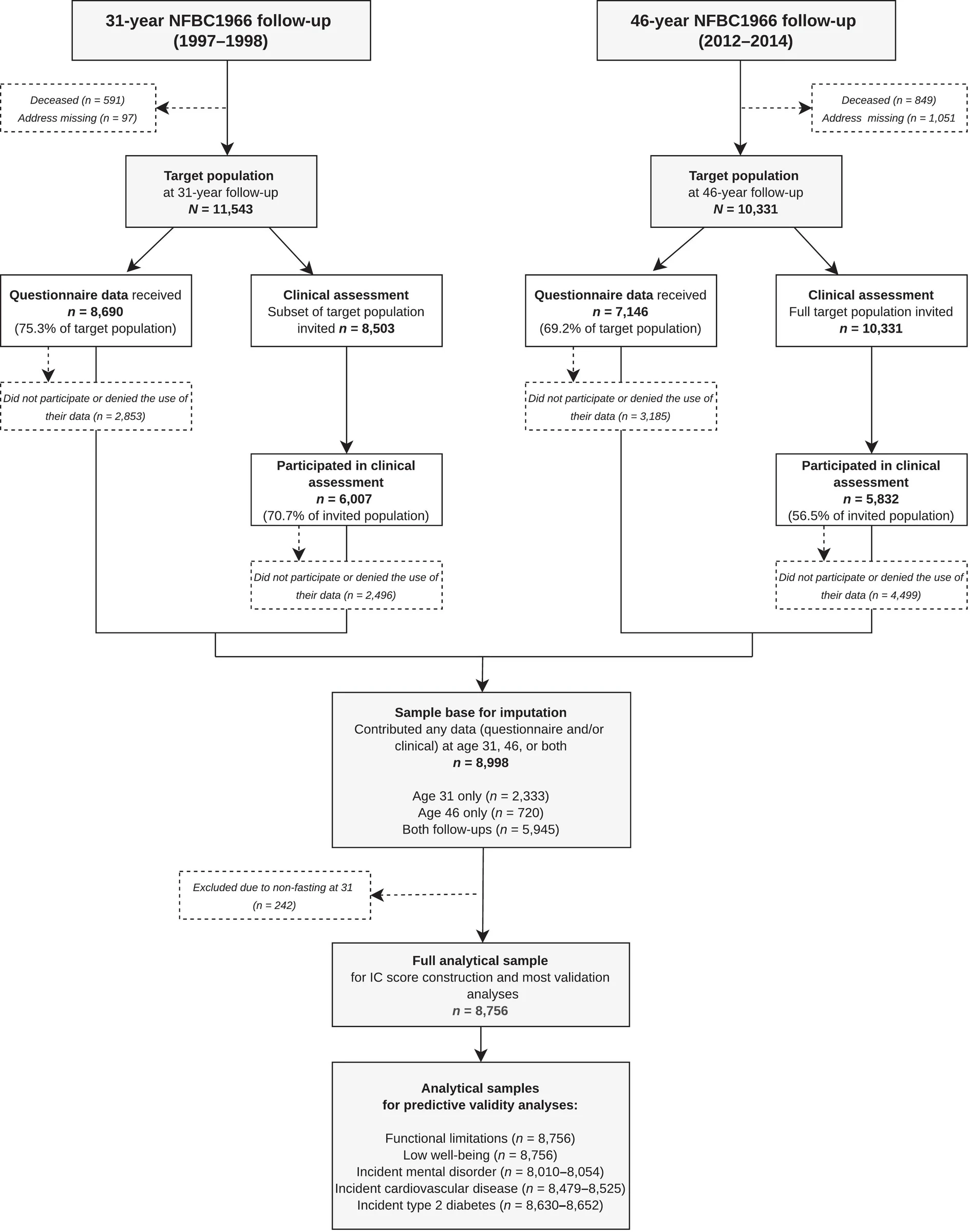
- Cohort study of 8,756 adults from the Northern Finland Birth Cohort, 15-year follow-up
- What changed:
- Average physical and mental capacity scores fell from 67 to 61 on a 0-100 scale between ages 31 and 46
- The catch:
- Assessments at ages 31 and 46 miss when capacity declined between visits
- In the record:
- The 98th paper on intrinsic capacity with results in people; 325 on record in all. Its result on cardiovascular disease agrees with 2 of 3 other findings on record; 1 points the other way.
Editor of record: Boris Djordjevic · AgingResearch.News
An observational cohort study assessed 8,756 participants from the Northern Finland Birth Cohort 1966 at ages 31 and 46. Researchers combined 33 measures covering psychological capacity, thinking and senses, movement, and vitality into scores for intrinsic capacity—the combined physical and mental capacities.
Average scores declined between the assessments, with the steepest reductions in movement capacity. Participants with socioeconomic disadvantage, unhealthy behaviors or health conditions had lower combined scores. Higher scores at 31 were associated with lower odds of developing mental disorders, cardiovascular disease, type 2 diabetes, functional limitations and low well-being by age 46. These associations held after the researchers accounted for other factors.
Why it matters
The authors suggest that assessing physical and mental capacity earlier in adulthood may strengthen prevention-oriented healthy aging strategies.
Caveats
This observational study cannot show that raising capacity scores would prevent later health problems. The findings came from one Finnish birth cohort assessed at ages 31 and 46, rather than older adults.
The paper
Imperial College London; Oulu University Hospital
Experimental Gerontology, Sep 25, 2026, Open access


Comments
Be the first to comment.