The Statin Paradox: Drivers and Consequences of Therapy Discontinuation
Preregistered CRD420261295172, declared ties to: Institute of Psychoeducation, Day Psychiatric Rehabilitation Unit for Children, Adolescents and 4 more
Abstract
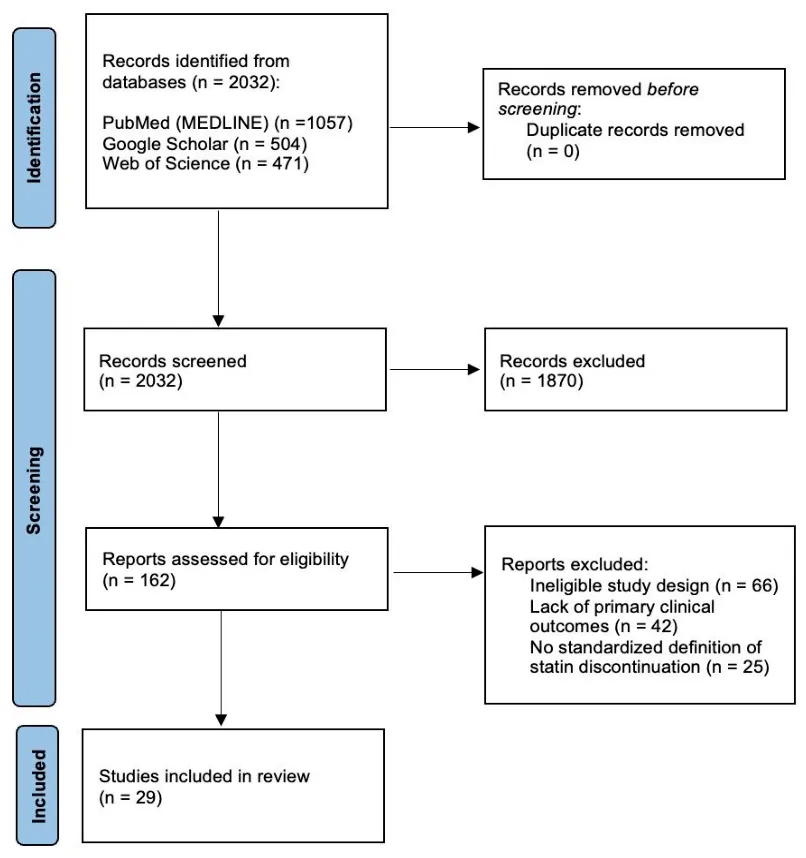
BACKGROUND: Statins are among the most frequently prescribed medications worldwide, with proven benefits in reducing all-cause and cardiovascular mortality, preventing major adverse cardiovascular events (MACEs), and lowering healthcare costs. Despite their well-established safety and effectiveness, discontinuation of statin therapy remains a common problem in both primary and secondary prevention. METHODS: A systematic literature review was conducted in accordance with PRISMA guidelines and registered in the PROSPERO database (CRD420261295172). Original studies published since 1 January 2014 were identified through searches of PubMed (MEDLINE) and Google Scholar using predefined keywords. Methodological quality and risk of bias of the included observational studies were evaluated using the Newcastle--Ottawa Scale (NOS) and Joanna Briggs Institute (JBI) Critical Appraisal Tools. RESULTS: Synthesized data from 29 included studies indicate that up to half of patients discontinue statin therapy within the first year (discontinuation rates ranging from 27.1% to 47.0% in primary prevention and 18.5% to 32.4% in secondary prevention), with rates increasing over time. Major factors contributing to non-adherence include fear of side effects, particularly statin-associated muscle symptoms (SAMSs), misinformation, limited patient-physician communication, socioeconomic barriers, and polypharmacy. Discontinuation is associated with significantly higher all-cause and cardiovascular mortality (Hazard Ratios ranging from 1.30 to 4.65), higher rates of cardiovascular and cerebrovascular events, worsening metabolic outcomes, reduced quality of life, and greater healthcare expenditures. CONCLUSIONS: Improving adherence requires better patient education, addressing misconceptions, strengthening patient-physician relationships, and optimising treatment regimens. A multidisciplinary approach is needed to prevent unjustified discontinuation and improve long-term clinical outcomes.
The paper
Poznan University of Medical Sciences
Metabolites, 24 Aug 2026