Regeneration may buffer genetic defects in zebrafish
A screen of 9,868 zebrafish larvae found regeneration-related gene activity near developmental defects; weakening a cell communication pathway worsened degeneration in mutant larvae.
Our read
Mechanisms- Studied:
- Experiments in fras1 mutant larvae, against control siblings
- What changed:
- Under Fgfr blockade, fin fold areas decreased in fras1 mutants but not in control siblings
- The catch:
- Larval fin folds were examined; internal organs were not measured
Editor of record: Boris Djordjevic · AgingResearch.News
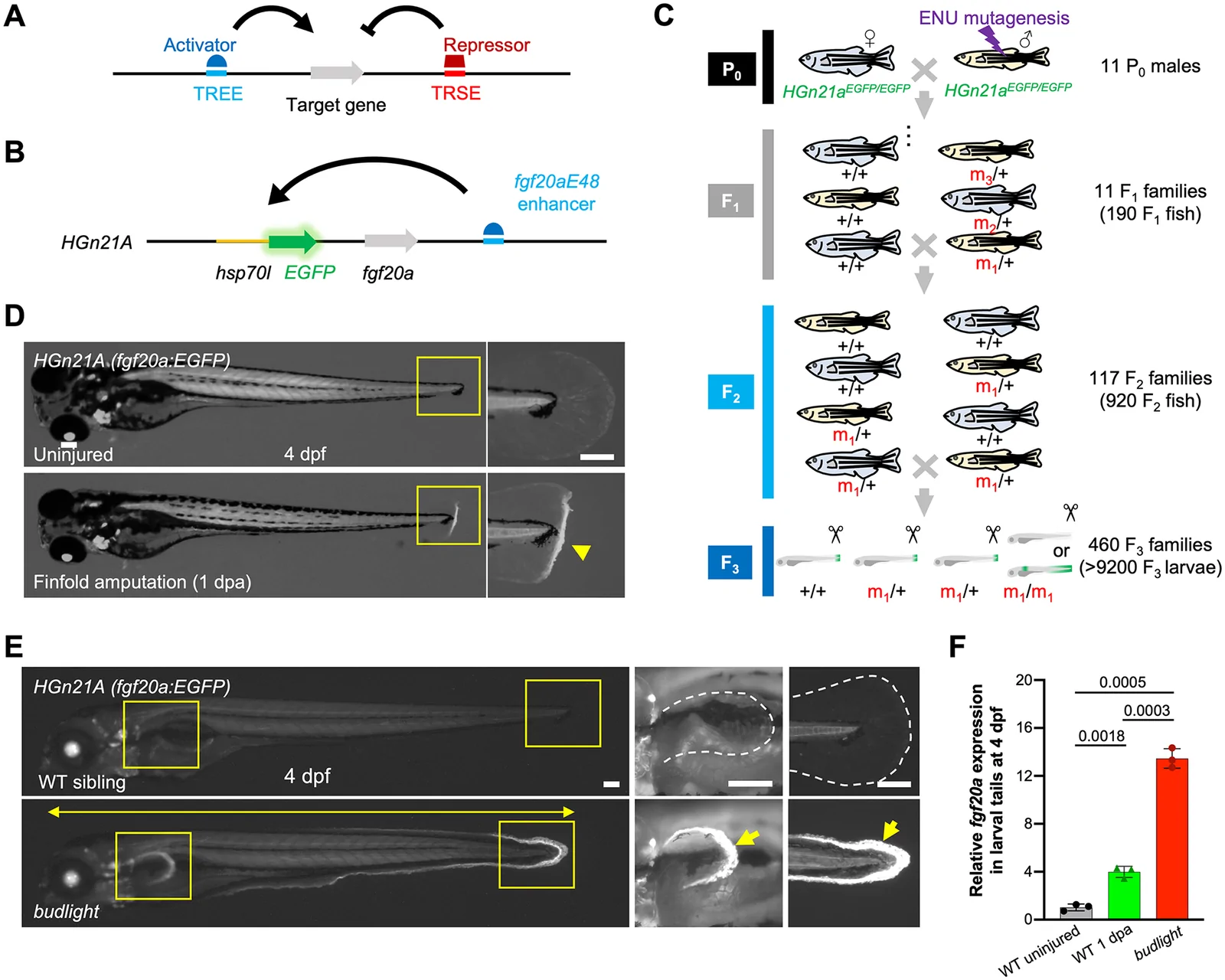
In experiments with zebrafish (Danio rerio) larvae, genetic developmental defects triggered regeneration-related gene activity without experimental injury. Researchers screened 9,868 larvae for changes in a fluorescent marker of regeneration-related gene activity after fin injury. One mutant line carried a defect in fras1, a gene needed for skin integrity. Its degenerating fin folds activated additional regeneration-related genes.
Larvae with disruptions in zebrafish counterparts of other human developmental-disease genes also activated regeneration-related genes near malformed tissue. Reducing fibroblast growth factor signaling, a form of communication between cells, worsened degeneration in fras1 mutants. The authors concluded that regeneration programs may help limit, but not prevent, tissue damage caused by genetic defects.
Why it matters
Regeneration restores damaged or lost tissue, making its triggers relevant to questions about maintaining tissues as animals age.
Caveats
The evidence came from developing zebrafish, not aging animals or people. The researchers could not test whether increasing the growth signal improved defects because their gene-overexpression approach caused embryonic death.
The paper
Regeneration programs buffer genetic defects in animal development
University of Wisconsin–Madison
PLOS Biology, Sep 21, 2026, Open access


Comments
Be the first to comment.