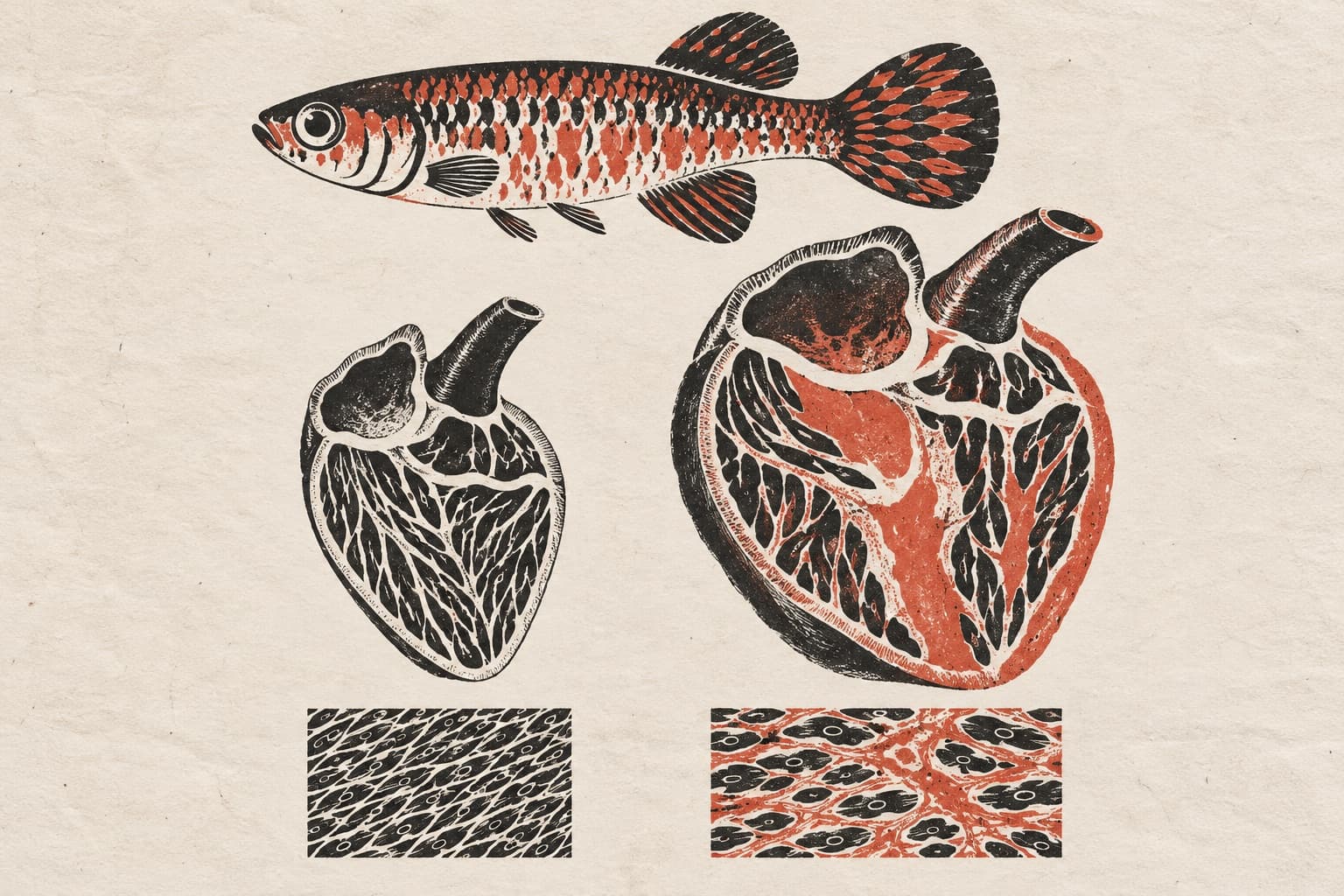
A muscle protein is required for heart regeneration in zebrafish
In zebrafish experiments, losing Mustn1b impaired heart regeneration, while raising its levels enhanced heart muscle cell division and return to a less specialised state.
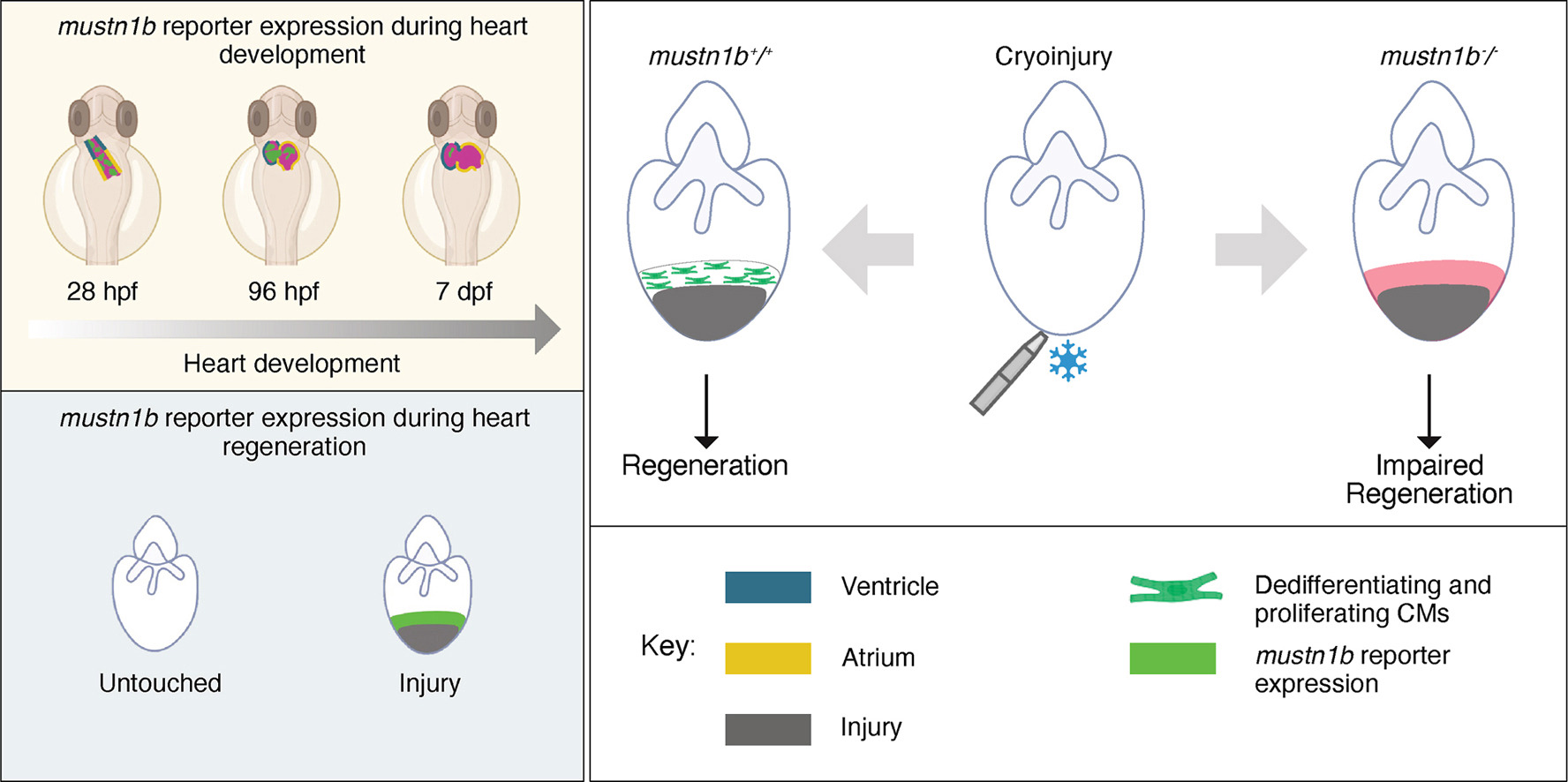
Researchers studied zebrafish in laboratory experiments to examine how their hearts regenerate after injury. They tested Mustn1b, a small protein found in muscle tissues. They used a genetic reporter, a tool for tracking gene activity, to follow the gene that makes it.
The reporter was active specifically in heart muscle cells during development. Its activity returned in adult heart muscle cells undergoing dedifferentiation, a return to a less specialised state, during regeneration. Fish with mutations that disrupted Mustn1b showed less dedifferentiation and cell division, and impaired heart regeneration. Raising Mustn1b levels in heart muscle cells enhanced both cell processes after freeze-induced injury. Protein analysis suggested that Mustn1b interacted with proteins that support cell structure after injury. This pointed towards a possible role in reshaping cells during regeneration.
Why it matters
Adult zebrafish can regenerate heart tissue, unlike adult mammals. Understanding the cell changes involved bears on why adult hearts differ in their capacity to repair damage.
Caveats
The study used zebrafish, whose adult hearts can regenerate unlike adult mammalian hearts. Protein interaction data suggested a role in cell reshaping but did not establish that mechanism.
The paper
Mustn1b is required for cardiomyocyte dedifferentiation and heart regeneration in zebrafish
Max Planck Institute for Heart and Lung Research
Developmental Biology, 9 Oct 2026