Blood pressure drug cuts with delayed increases linked to risk
Under standard care, drug cuts followed by delayed increases were linked to higher cardiovascular event rates versus no cuts (hazard ratio 1.34).
Our read
Interventions- Studied:
- Cohort study of participants in the Systolic Blood Pressure Intervention Trial
- What changed:
- Under standard care, cardiovascular event risk was higher with drug cuts and delayed increases than without cuts (hazard ratio 1.34)
- The catch:
- Participants whose medications were reduced already had higher cardiovascular risk
Editor of record: Boris Djordjevic · AgingResearch.News
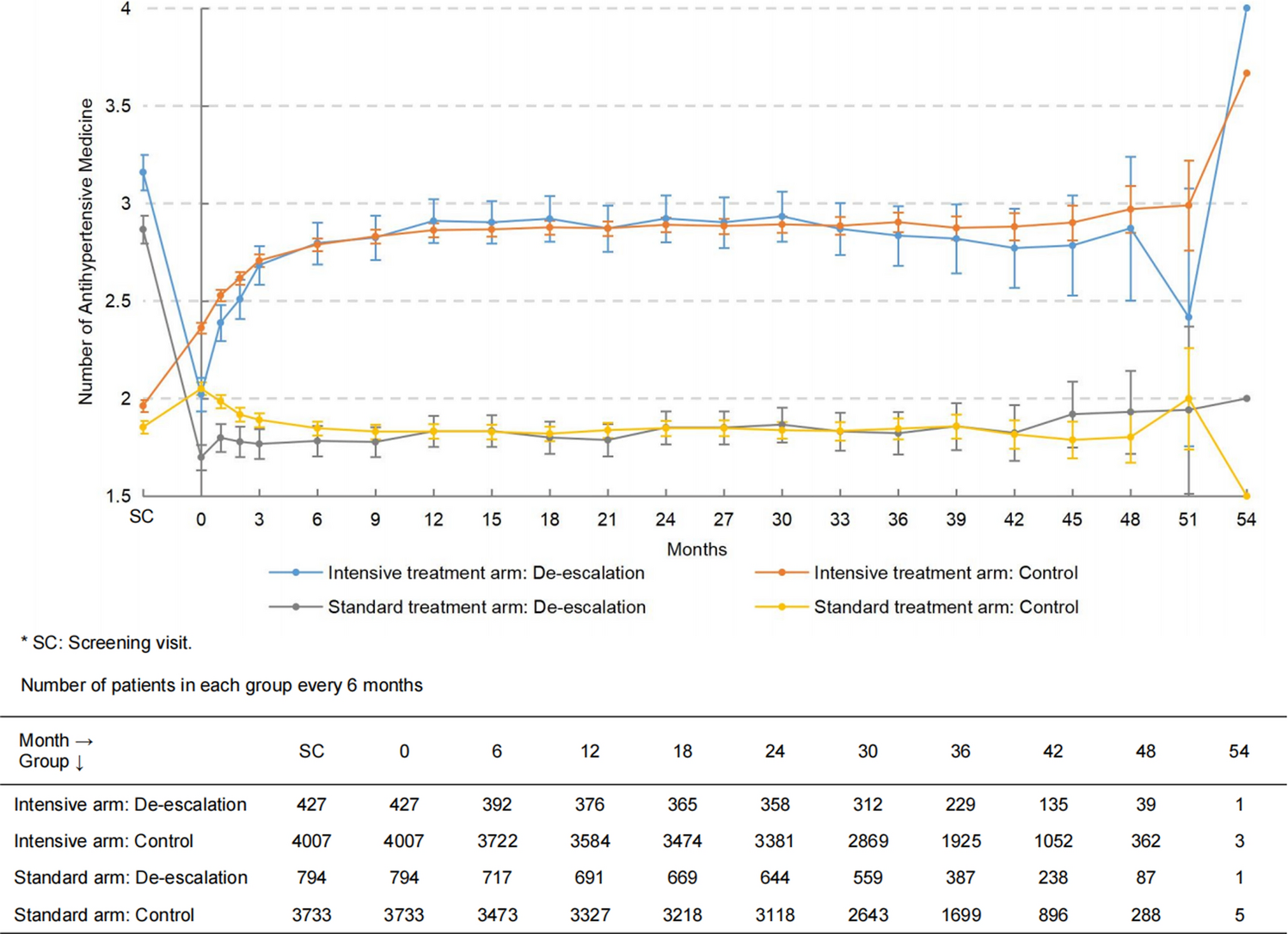
Participants in the Systolic Blood Pressure Intervention Trial were compared in an observational secondary analysis of a randomized trial. Before randomization, some had their medication count reduced to meet blood pressure entry requirements. The standard-target arm included 794 participants with reductions and 3,733 without; the intensive-target arm included 427 and 4,007, respectively.
The targets for systolic blood pressure—the upper reading—were below 140 and 120 mm Hg, respectively. Under the standard target, 52.9% of participants with reductions returned to their screening medication count, after a mean of 358.0 days following randomization. Under the intensive target, 76.6% returned, after a mean of 197.9 days. Reductions followed by delayed increases under the standard target were associated with higher risk of major cardiovascular events, including heart attacks and strokes. No excess risk was observed under the intensive target.
Why it matters
Cardiovascular disease is a concern as people age. The authors emphasized continuous intensive blood pressure control and timely medication increases after reductions, especially for people at high cardiovascular risk.
Caveats
Medication reduction was not randomized, and participants whose drugs were reduced had higher baseline cardiovascular risk. The abstract does not report absolute event rates.
- Antihypertensive de-escalation
- Antihypertensives
- Acute coronary syndrome
- Heart failure
- Myocardial infarction
- Humans
The paper
University of Florida
High Blood Pressure & Cardiovascular Prevention, Sep 19, 2026, Open access, accepted manuscript




Comments
Be the first to comment.