Tighter blood pressure control cut cardiovascular events
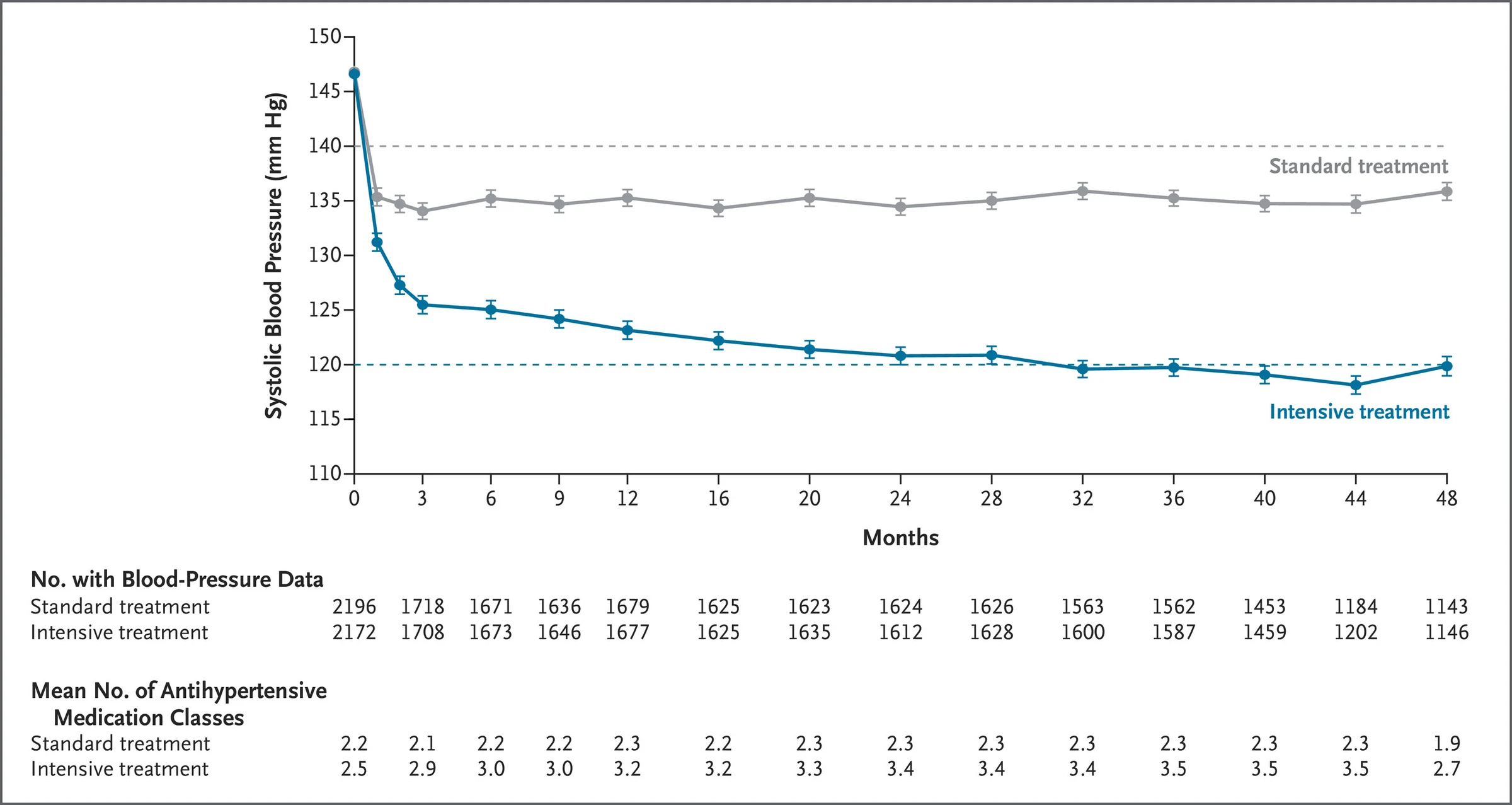
Major cardiovascular events occurred in 10.9% of the intensive-treatment group versus 13.5% with standard treatment over a median 3.9 years.
Our read
Interventions- Studied:
- Randomized trial in 4,368 people with previous ischemic stroke or TIA, median 3.9 years (Multicenter, registered NCT04036409)
- What changed:
- Major cardiovascular events were less common with intensive blood pressure treatment: 10.9% versus 13.5% with standard treatment
- The catch:
- Treatment awareness could influence hospitalization decisions counted as cardiovascular events
- In the record:
- The 57th paper on intensive blood pressure control with results in people; 75 on record in all.
- Why it’s aging research:
- It bears on staying healthy in midlife and later life.
Editor of record: Boris Djordjevic · AgingResearch.News
The 4,368 adults in a randomized trial at 30 Brazilian sites had elevated blood pressure and previous ischemic stroke, caused by blocked blood flow to the brain, or transient ischemic attack, a brief episode of stroke-like symptoms. Their average age was 63.9 years; 2,093 were women. Treatment targeted systolic pressure—the top blood pressure number—below 120 or 140 millimeters of mercury.
Over a median 3.9 years, the combined outcome occurred in 10.9% with intensive treatment and 13.5% with standard treatment. It included death from cardiovascular causes, nonfatal heart attack or stroke, or hospitalization for unstable angina, a type of heart-related chest pain, or heart failure. Intensive treatment more often led to a sustained decline of at least 50% in estimated kidney filtration or progression to kidney failure. Serious adverse events occurred at similar rates.
Why it matters
For people aging with a history of stroke or transient ischemic attack, choosing a blood pressure target involves weighing cardiovascular prevention against kidney health.
Caveats
Participants and clinicians knew the assigned treatment. The trial studied people with elevated blood pressure and a previous ischemic stroke or transient ischemic attack, not people without that history.
- Intensive blood pressure control
- Elevated blood pressure
- Ischemic stroke
- Stroke
- Transient ischemic attack
- Humans
The paper
Intensive Blood-Pressure Control in Patients with Previous Ischemic Stroke
Hospital Israelita Albert Einstein; Imperial College London
The New England Journal of Medicine, Nov 7, 2026


Comments
Be the first to comment.