Newspaper reading may support thinking in older adults
Changes in cognitive screening scores favored newspaper reading over no regular reading by 1.47 points in a 26-week randomized trial.
Limit: Cognitive findings may depend on the assessment instruments' sensitivity to change
Stake: Authors work for Medical Corporation. An author works for Nishinippon Shimbun.
Edited by Boris Djordjevic · AgingResearch.News
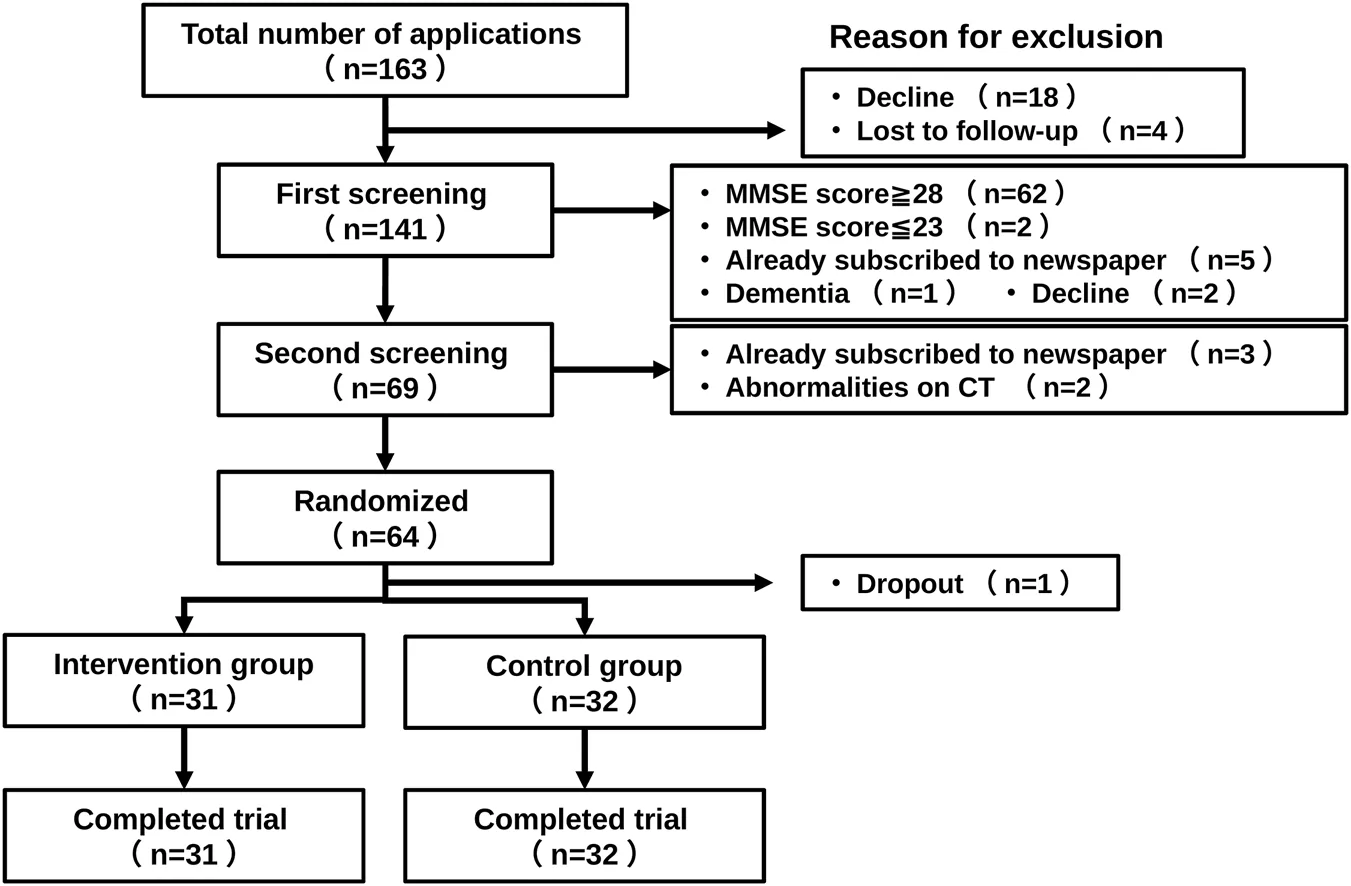
A 26-week randomized controlled trial enrolled 64 independently living adults aged 60 or older with mild cognitive impairment—mild problems with memory or thinking. None had read newspapers in the previous six months. Of the 63 who completed the study, 45 were women; their average age was 73.3.
The reading group received free morning newspapers and instructions to read at least four days weekly, read a column aloud, and complete a quiz. Controls avoided regular newspaper reading. Changes on the main memory-and-thinking screening test favored reading by 1.47 points. Readers also had better changes in depressive symptoms and how widely they moved around in daily life. A second cognitive test and a motivation measure showed no statistically significant differences.
Why it matters
The trial addressed whether an accessible, self-directed intellectual activity might support cognitive function and everyday activity in later life.
Caveats
The trial analyzed only 63 completers and compared the reading-and-quiz routine with usual daily life without regular newspaper reading, rather than another activity program. This small, single-city trial excluded people with diagnosed dementia or depression; the supplied text does not report adverse events.
From the paper
- Participants
Ultimately, 64 participants were deemed eligible and randomly assigned to one of two groups: the newspaper reading group (intervention group) with 31 participants and the non-reading group (control group) with 33 participants.
- Who took part
To examine changes in cognitive function and indicators of motivation and activity resulting from newspaper reading among community-dwelling older adults aged 60 and older, this study enrolled participants with mild cognitive impairment who had not read newspapers in the past 6 months, had no history of conditions such as cerebral infarction or hemorrhage, and had not been diagnosed with dementia or depression …
- Ages
A total of 63 subjects completed this study; by gender, there were 45 women (71.4%), The mean age, MMSE-J, MoCA-J, and GDS-15-J scores were 73.3 ± 7.6 years, 26.8 ± 1.3, 24.8 ± 3.1, and 2.7 ± 2.2, respectively.
- Duration
We conducted a 26-week randomized controlled trial (RCT).
- Result
The mean change in MoCA-J scores was 0.97 (95% CI: 4.21–6.15) in the intervention group, while in the control group it was −0.5 (95% CI: 4.87 – 3.87).
- Cognitive function
The intervention group showed better results than the control group on the MoCA-J (difference: 1.47 [95% CI: 0.31–2.63], p = 0.013). shows the changes in MoCA-J scores from baseline to post-intervention.
- Depressive symptoms
In terms of outcome measures, the intervention group showed significantly better results than the control group (difference in GDS-15-J: 1.85 [95% CI: 3.01 to −0.68], p = 0.003).
- Life-space mobility
For these outcome measures, the intervention group showed significantly better results than the control group (difference in LSA: 14.74 [95% CI: 7.13–22.35], p < 0.001).
- MMSE-J score
Although the intervention group tended to show better results than the control group, no statistically significant difference was observed.
Quoted word for word from the full text on PubMed Central.
The paper
Kurume University
Frontiers in Aging, Sep 4, 2026, Open access
doi.org/10.3389/fragi.2026.1929793PubMed 42761073
Corrected, Sep 21, 2026

