CRISPR-based diagnostics as a specificity layer for the early detection of pancreatic cancer
Abstract
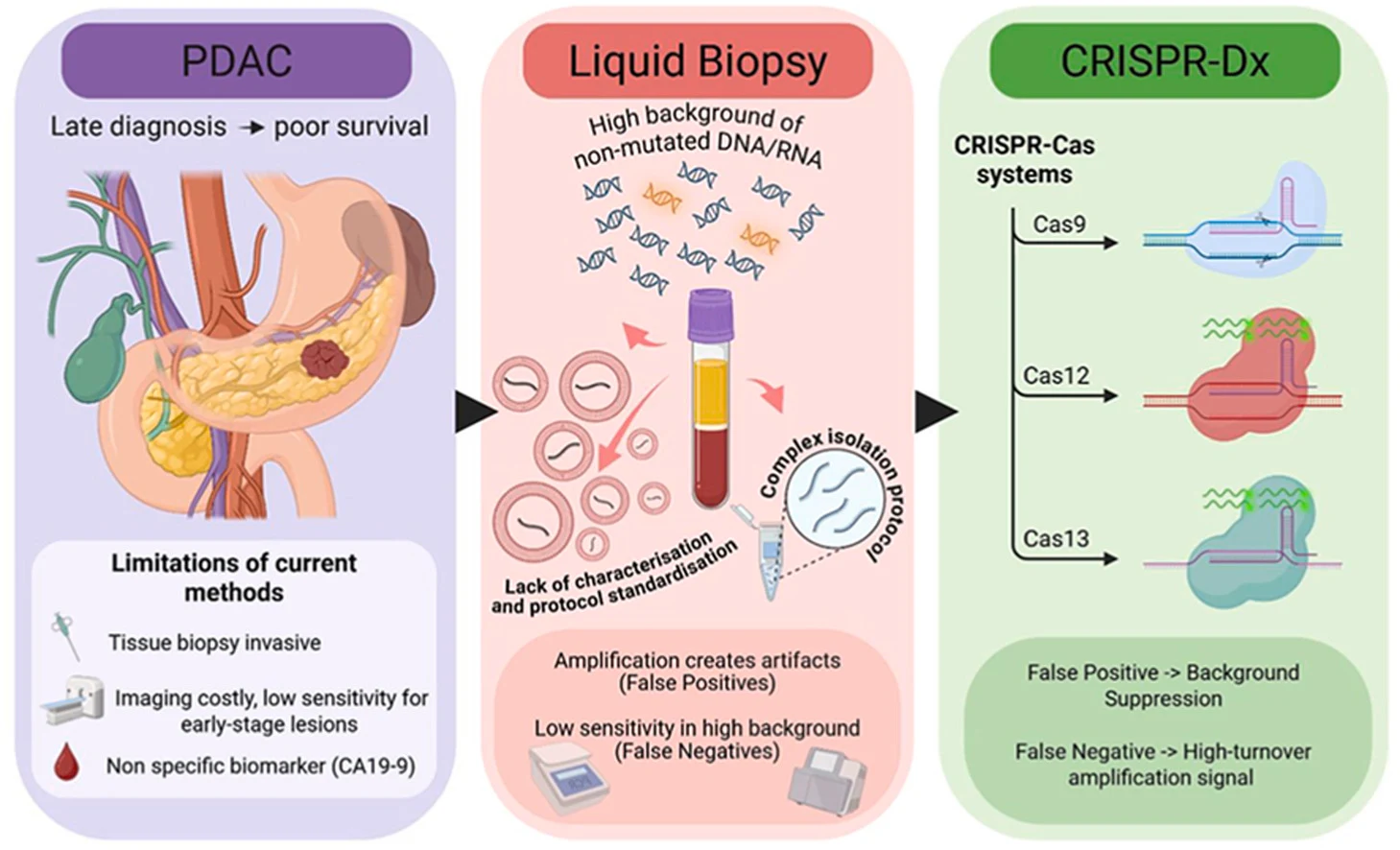
Pancreatic ductal adenocarcinoma (PDAC) remains a highly lethal malignancy, largely because early-stage symptoms are non-specific and diagnosis is often delayed. Although liquid biopsies (LBs) offer a promising non-invasive strategy for early detection, their clinical translation is hindered by substantial analytical limitations. This review examines the current landscape of nucleic acid-based liquid biopsy biomarkers for PDAC detection. We evaluate key limitations of established diagnostic methodologies, including next-generation sequencing (NGS) and droplet digital PCR (ddPCR). In complex biofluids, these approaches may be confounded by background signal and amplification artifacts, particularly when applied for the detection of ultra-rare targets. To address this diagnostic gap, we discuss the role of CRISPR-based biosensing and bioassay not as a replacement but as an additional specificity layer within existing diagnostic workflows. In this framework, CRISPR technologies can act as sequence-specific molecular filters that introduce an active post-amplification validation step. Although pre-analytical limitations remain to be fully characterized, integrating CRISPR into the diagnostic workflow may contribute to a rapid, cost-effective, and highly specific framework for the early detection of PDAC.
The paper
Scuola Superiore Sant'Anna; Amsterdam University Medical Centers
Cancer Letters, 18 Sep 2026