Hormone trials found no clear liver cancer effect in women
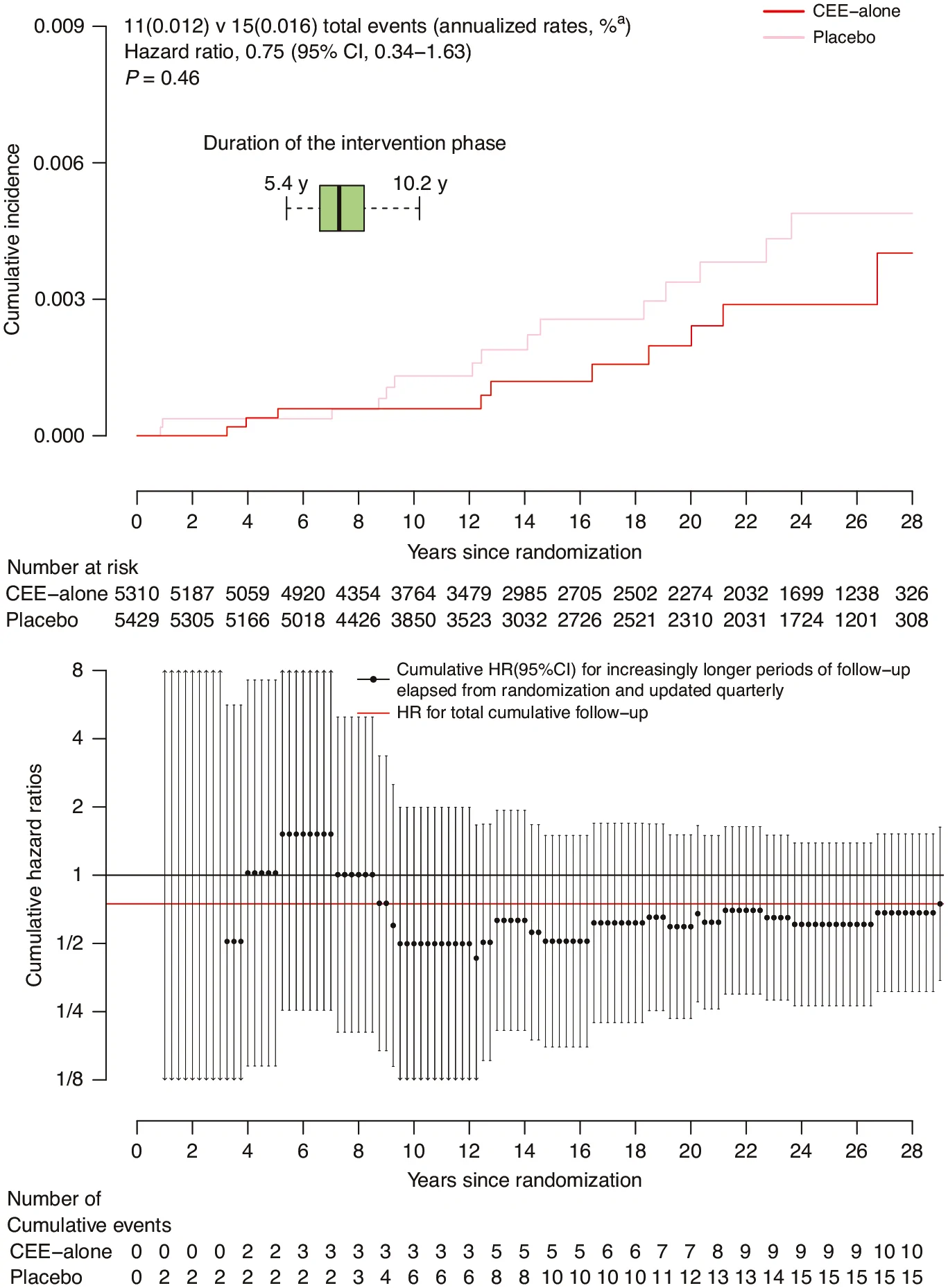
Liver cancers numbered 11 versus 15 with estrogen alone and 30 versus 18 with combined hormones, each compared with placebo.
Double-blind, placebo-controlled, dose-response, registered NCT00000611
Limit: Only 74 incident liver cancers limited power to detect treatment effects
Edited by Boris Djordjevic · AgingResearch.News
Two randomized trials enrolled postmenopausal women aged 50–79: 16,608 with a uterus and 10,739 whose uterus had been surgically removed. The first compared daily oral conjugated equine estrogen (0.625 milligrams) plus medroxyprogesterone acetate (2.5 milligrams), a progestin hormone, with placebo. The second compared the same estrogen dose with placebo.
Neither regimen clearly affected liver cancer incidence or mortality. Estrogen-only follow-up for new cancers lasted a median 16.3 years; combined-hormone follow-up lasted 19.5 years. Over nearly 24 years, liver cancer deaths numbered 14 versus 12 with estrogen alone and 27 versus 22 with combined hormones, each against placebo. Combined hormones were associated with more cancers among women aged 50–59 (10 versus none) and previous birth-control-pill users. The combined-hormone trial stopped after 5.6 years because overall risks outweighed benefits. The estrogen-only trial stopped after 7.2 years because stroke risk increased without clear coronary heart disease benefit.
Why it matters
Long-term cancer risk matters when weighing hormone therapy’s benefits and harms after menopause.
Caveats
The liver cancer analyses were not planned in advance, and only 74 cancers occurred; the uncertainty ranges allowed both benefit and harm. The trials covered postmenopausal women aged 50–79 and excluded women with prior breast cancer or another invasive cancer within 10 years.
From the paper
- Who took part
Trial eligibility included postmenopausal women aged 50–79 years who provided written informed consent.
- Analyzed for liver cancer
Postmenopausal women with a uterus (n = 16,608) were randomized to conjugated equine estrogen (CEE) 0.625 mg/d plus medroxyprogesterone acetate (MPA) 2.5 mg/d or placebo; women with hysterectomy (n = 10,739) were randomized to CEE-alone or placebo.
- Result
During the intervention phase, only five liver cancers occurred (HR, 1.52; 95% CI, 0.25–9.09).
- Limitation
Primary liver cancer was not a specified secondary study outcome, and the modest number of incident cases limited statistical power.
- Liver cancer
Through cumulative follow-up, CEE-alone was not associated with liver cancer incidence (11 cancers [0.012% per year] vs 15 cases [0.016% per year]); HR, 0.75; 95% CI, 0.34–1.63).
- Liver cancer
Over cumulative follow-up, liver cancer incidence did not differ significantly between the CEE plus MPA and placebo group (30 cancer [0.019% per year vs 18 cancers [0.012% per year]; HR 1.63; 95% CI, 0.91–2.92 …
- Mortality
For CEE-alone, there were 14 vs 12 deaths (HR, 1.18; 95% CI, 0.55–2.55), while for CEE plus MPA, there were 27 vs 22 deaths (HR, 1.18; 95% CI, 0.67–2.07).
- Liver cancer
… Evidence of non-proportional hazards was observed (P = 0.049), with HRs for CEE plus MPA vs placebo elevated in the post-intervention phase (HR, 2.11; 95% CI, 1.06–4.18 …
Quoted word for word from the full text on PubMed Central.
- Conjugated equine estrogens
- Conjugated equine estrogens + medroxyprogesterone acetate
- Liver cancer
- Humans
The paper
University of Pennsylvania; The Lundquist Institute
British Journal of Cancer, Sep 16, 2026, Open access


Comments
Be the first to comment.