Beyond Weight Loss: Thromboinflammation as a Candidate Mechanism for the Cardiovascular Benefit of GLP-1 Receptor Agonists
17,604 participants, declared no competing interests
Abstract
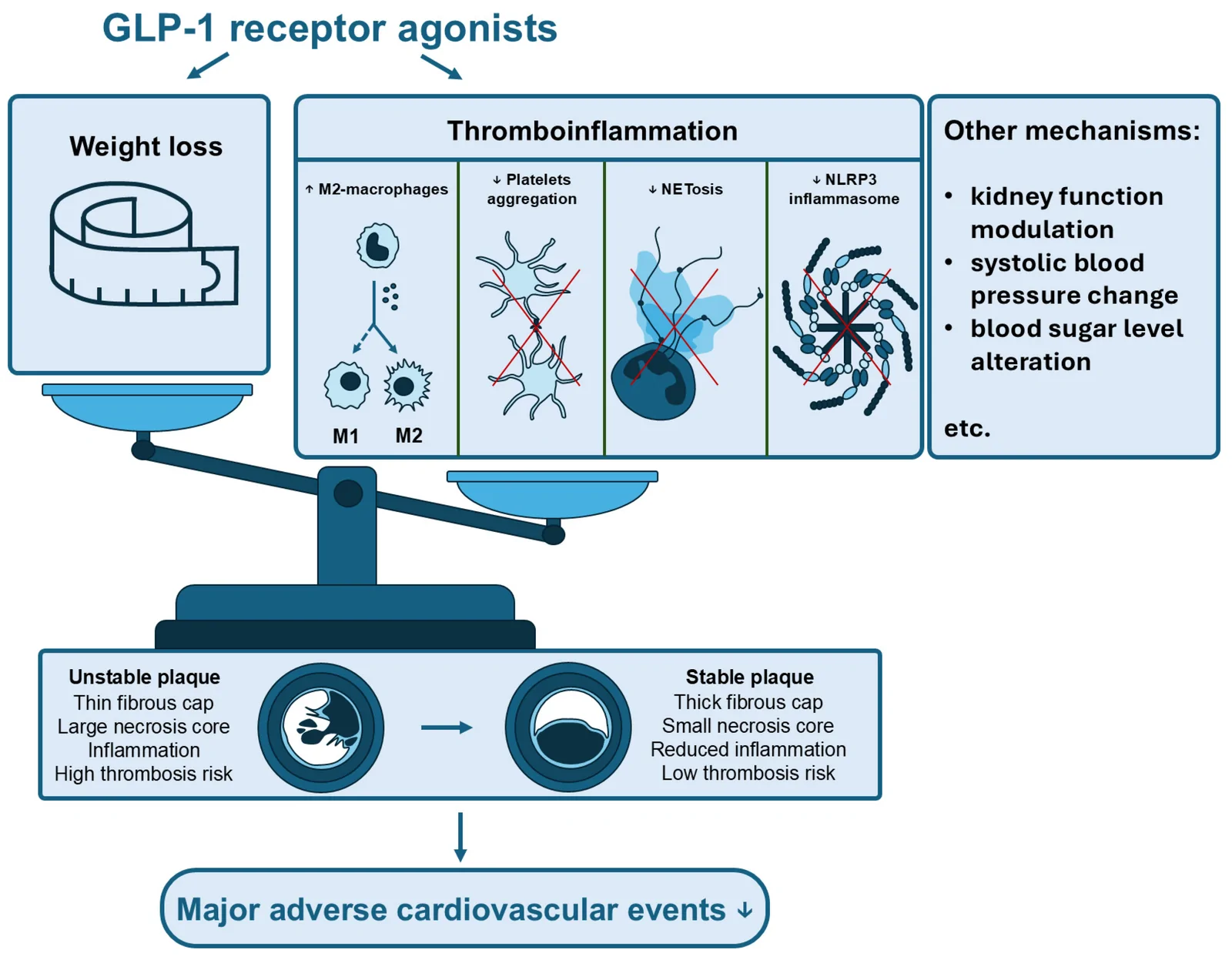
Glucagon-like peptide-1 receptor agonists (GLP-1RAs) have emerged as an important class of medications for managing type 2 diabetes and obesity, with cardiovascular outcome trials demonstrating reductions in major adverse cardiovascular events (MACEs) for several agents. The SELECT trial, which enrolled 17,604 participants with established cardiovascular disease and overweight or obesity but without diabetes, showed a 20% reduction in MACEs with semaglutide compared with placebo. Importantly, mediation analyses indicated that weight loss accounted for approximately one-third of this cardiovascular benefit, suggesting that additional mechanisms contribute substantially to the observed risk reduction. The temporal dissociation between weight loss and early MACEs reduction supports the hypothesis that GLP-1RAs exert direct vascular protective effects independent of their metabolic actions. This review synthesizes current evidence on the thromboinflammatory mechanisms through which GLP-1RAs may exert their cardiovascular benefits, with particular emphasis on the neutrophil-NET axis, platelet function, and plaque stabilization. Overall, thromboinflammation represents a biologically reasonable candidate mechanism, but its contribution to the cardiovascular benefit of GLP-1RAs treatment is an open question. Still, residual treatment effects cannot be attributed specifically to thromboinflammation, because metabolic, renal, hemodynamic, and vascular pathways, among others, may also contribute.
The paper
Institute of Experimental Cardiology; Lomonosov Moscow State University
Cells, 30 Aug 2026