Health declined slightly in a Spanish cohort aged 75 or older
An 18-month observational study of 1,072 adults aged 75 or older found generally similar health trajectories with and without prior confirmed COVID-19.
Our read
Populations- Studied:
- Cohort study of 1,072 non-institutionalized adults aged 75 years and over, 18 months (Multicenter)
- What changed:
- Quality of life worsened over 18 months compared with baseline
- The catch:
- Frail participants were more likely to drop out, potentially understating the decline
- In the record:
- The 93rd paper on sars-cov-2 infection with results in people; 168 on record in all.
- Why it’s aging research:
- Biological age, frailty, function, multimorbidity or death.
Editor of record: Boris Djordjevic · AgingResearch.News
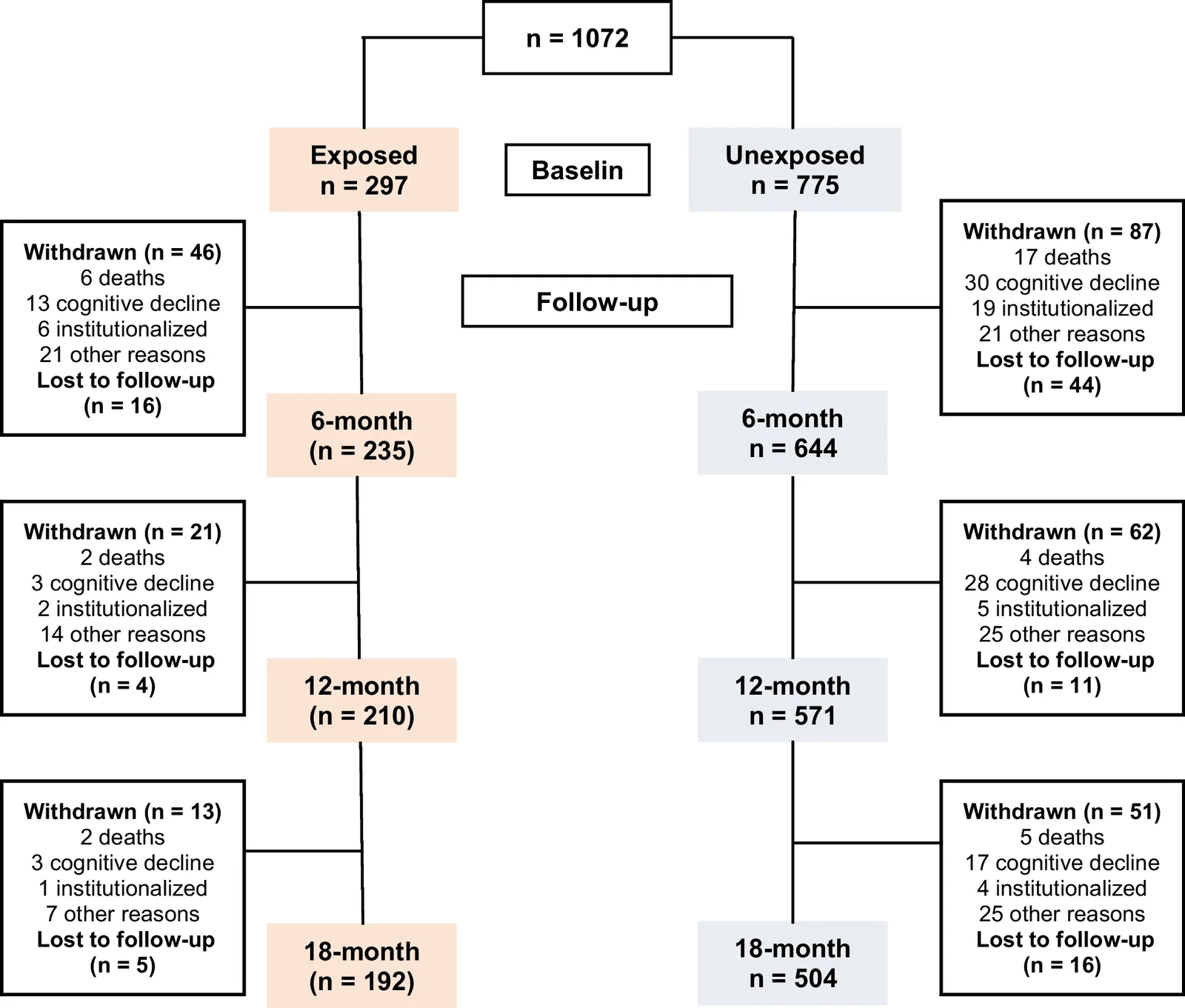
In this prospective cohort study, 1,072 adults aged 75 or older living outside institutions in 11 Spanish regions underwent health assessments over 18 months. Their average age was 82.7 years, 59.7% were women, and most had at least two chronic conditions. At enrollment, 297 had documented prior COVID-19 and 775 had no such history.
Nurses assessed participants at enrollment and at 6, 12 and 18 months. Overall, functional ability, nutritional status, social support and quality of life worsened slightly over time. After accounting for age, sex and starting scores, changes were generally similar between the groups. Anxiety was the exception: symptoms improved less among those with prior infection, with a greater reduction in those without prior infection at 18 months. Analyses restricted to participants with complete follow-up gave similar overall findings.
Why it matters
For responses to health or social crises, the authors recommended prioritizing older adults’ independence, social support and mental health to preserve quality of life.
Caveats
This observational study cannot establish what caused the decline; 35.1% were lost to follow-up, and these participants started out older and less healthy. The findings do not cover institutionalized adults or those excluded for cognitive impairment or serious psychiatric conditions.
From the paper
- Participants
The baseline sample consisted of 1,072 participants (297 exposed, 775 unexposed), resulting in a higher proportion of unexposed individuals than initially planned due to the availability of elegible participants with prior SARS-Cov-2 infection.
- Limitation
First, the exposed cohort may be subject to survival bias, as those who survived SARS-CoV-2 infection may represent a more robust population subgroup with better functional reserve than those who did not, which could make the differences between groups less noticeable.
Quoted word for word from the full text on PubMed Central.
The paper
Universitat de Barcelona; Instituto de Salud Carlos III
BMC Geriatrics, Aug 7, 2026, Open access


Comments
Be the first to comment.