Mice lacking an enzyme retained kidney function with age
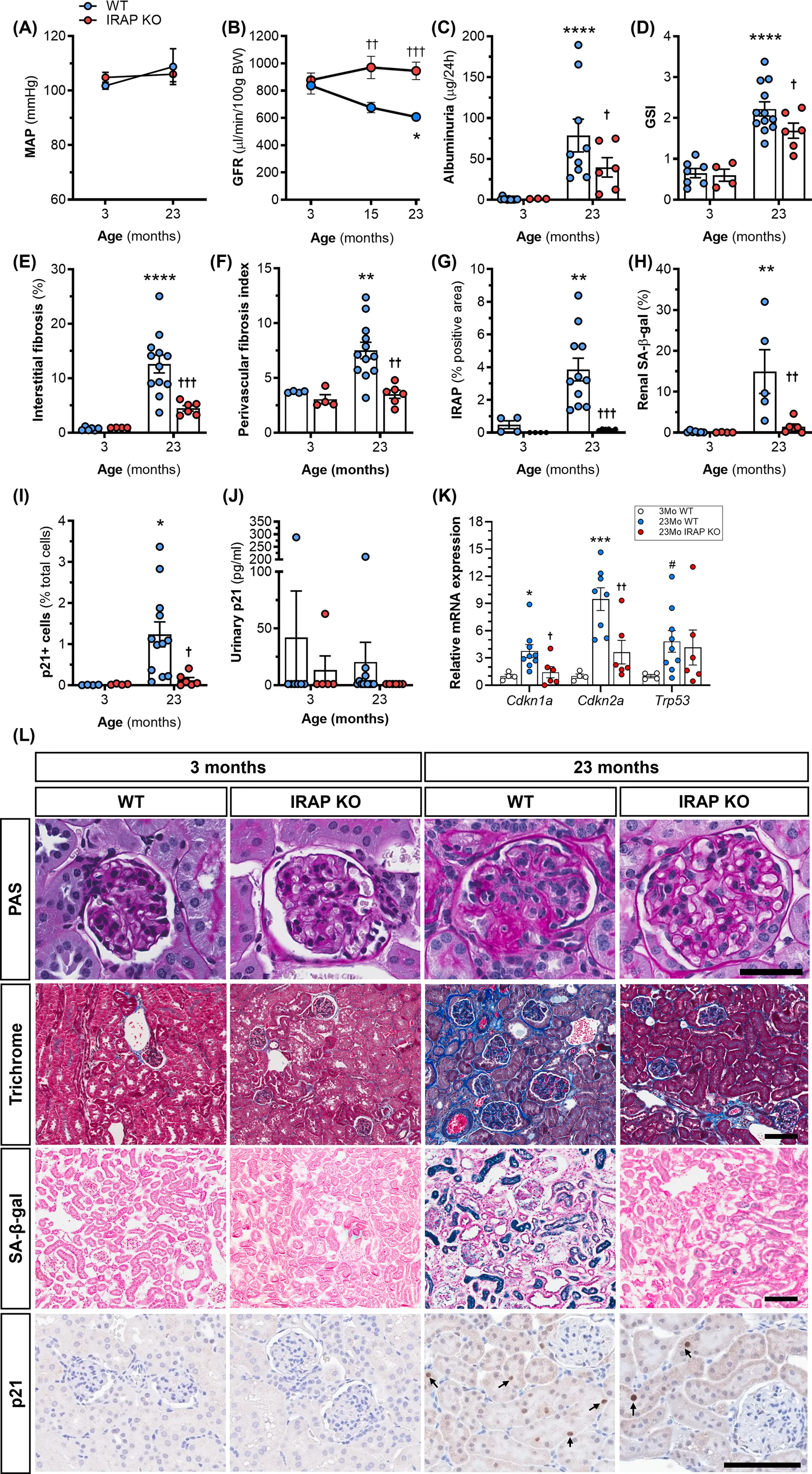
Kidney filtration declined by 25% in normal mice between 3 and 23 months, while mice lacking the enzyme were protected against this decline.
4 weeks
Limit: Systemic or tubulointerstitial changes could explain glomerular protection, rather than direct effects of IRAP loss
Stake: An author founded Inosi Therapeutics and holds shares in it.
Edited by Boris Djordjevic · AgingResearch.News
Experiments in male and female C57BL/6J mice tested how insulin-regulated aminopeptidase (IRAP), an enzyme, affected kidney aging. Researchers compared mice lacking IRAP with normal mice at 3 and 23 months. Mice without the enzyme were protected against declining kidney filtration, scarring and the buildup of senescent cells—cells that stop dividing.
In a separate experiment, male mice received the IRAP inhibitor HFI-419 or a control solution for 28 days, from 27 to 28 months of age. The dose was 500 nanograms per kilogram per minute, delivered continuously under the skin. The inhibitor prevented the age-related decline in kidney filtration observed in control mice. It also reduced scarring between the kidney’s tiny tubes, but did not change leakage of the protein albumin into urine or scarring in the kidney’s filtering units.
Why it matters
Scarring and senescent cell buildup play central roles in kidney aging. The authors suggest that inhibiting IRAP has therapeutic potential to limit age-related kidney damage.
Caveats
These findings came from mouse experiments, and the drug experiment used males only. The drug reduced some senescence measures but left staining for another senescence marker unchanged.
From the paper
- Limitation
Although immunohistochemistry demonstrated an age-associated increase in renal IRAP expression, whether ageing is associated with enhanced IRAP catalytic activity and/or altered signalling mediated by its N-terminal trafficking domain remains to be determined.
Quoted word for word from the full text on PubMed Central.
The paper
IRAP deficiency preserves renal function and attenuates pathology in aged mice
Monash University
Clinical Science, Sep 3, 2026, Open access


Comments
Be the first to comment.