Older mice had tighter DNA packing in light-sensing cells
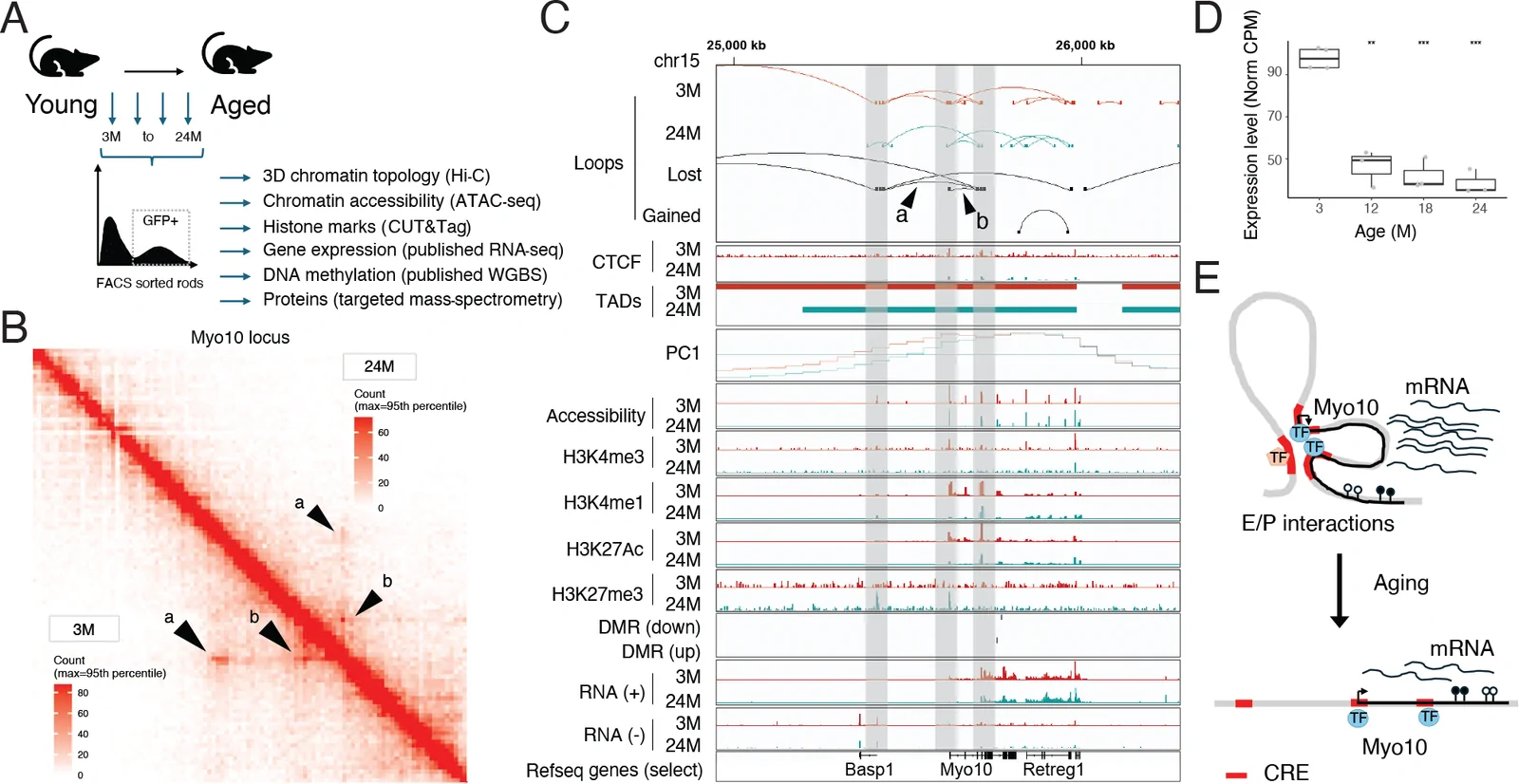
Comparisons of young and aged mouse rod cells linked changes in DNA packaging to altered gene activity, particularly in active regions of the genome.
Limit: Chromatin-contact analysis used only 5 biological replicates per age group; microscopy used 3
Edited by Boris Djordjevic · AgingResearch.News
Researchers compared rod photoreceptors, light-sensing cells in the retina, from young and aged C57BL/6J mice in a laboratory study. Measurements of DNA organization used five biological replicates per age group, from mice aged 2–4 months or older than 22 months. The team combined these with measurements of gene activity and chemical marks on DNA and its associated proteins.
Aged rod cells had more tightly packed chromatin, the material made of DNA and its packaging proteins. Local changes were concentrated in regions with active genes and correlated with altered gene activity. Gm7239, a gene encoding a small protein, became newly active with aging. In a separate experiment in human cells grown in the lab, increasing production of this protein was associated with reduced histone acetylation—the addition of chemical tags to DNA-packaging proteins.
Why it matters
Rod cells offer a way to study how aging alters neurons that no longer divide. The authors suggest that changes in their DNA packaging may influence cell function and vulnerability to disease.
Caveats
The age-group comparisons linked DNA packaging to gene activity but did not establish that one caused the other. This preprint has not been peer-reviewed, and the protein experiment used lab-grown human cells rather than aging mouse rods.
The paper
National Eye Institute
Research Square, Aug 27, 2026, Open access, Preprint, not peer-reviewed