Illness count less tied to death in frail heart failure patients
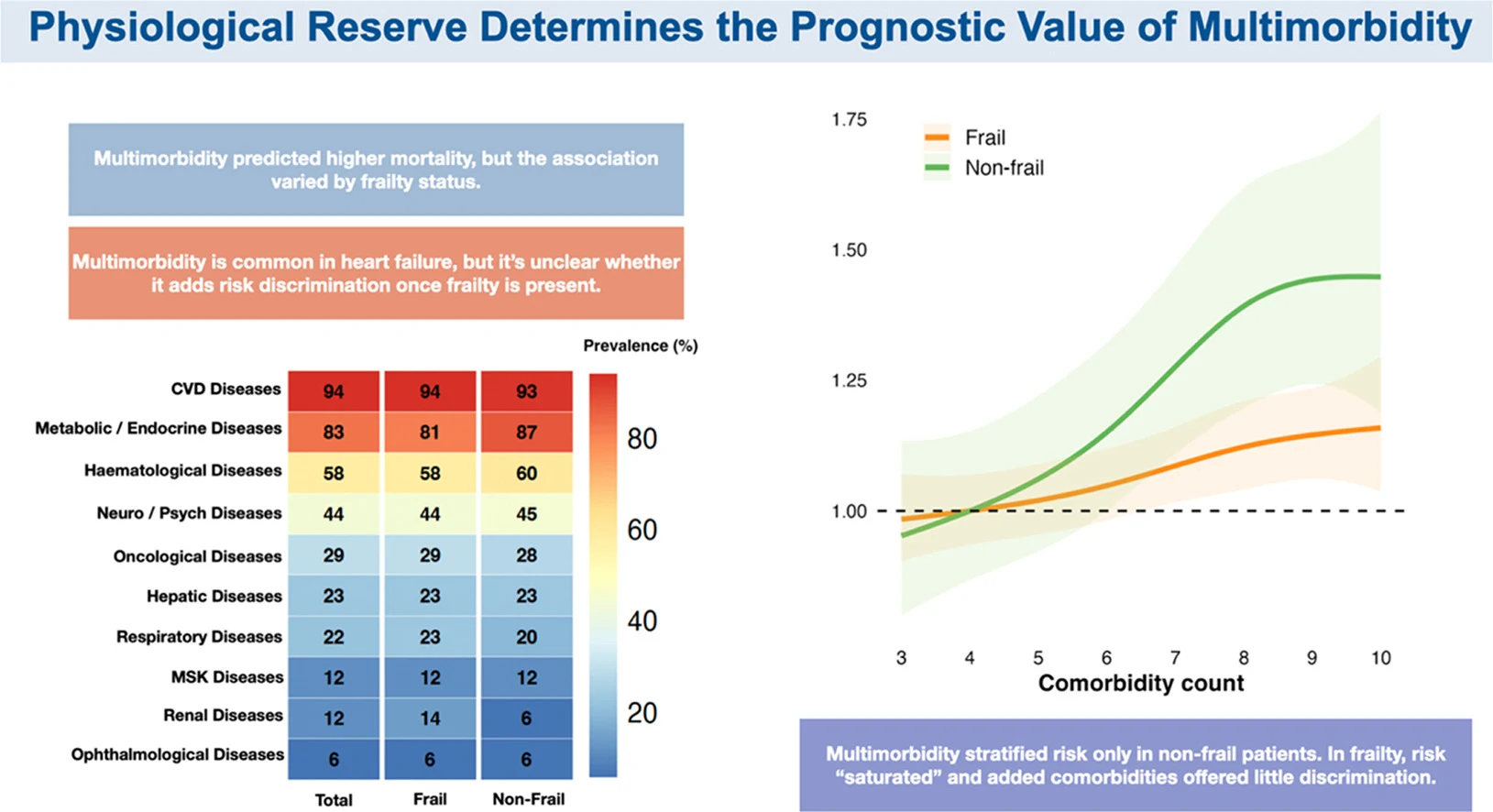
High illness burden was linked to 42% higher relative mortality risk in non-frail patients and 13% in frail patients, compared with low burden.
Limit: Charlson index validation gave different patterns among females and patients with preserved-ejection-fraction heart failure
Edited by Boris Djordjevic · AgingResearch.News
A retrospective cohort study included 18,058 people with heart failure; their median age was 74, and 62% were male. Researchers counted coexisting illnesses across 26 conditions. They assessed frailty—a reduced ability to withstand stress—using measures of function, nutrition and body chemistry; 64% were frail.
Over a median follow-up of 4.0 years, 57% died. Frailty was associated with a 91% higher relative risk of death after adjustment for other factors. The association between illness count and death differed by frailty. Compared with low illness burden, intermediate burden was associated with an 18% higher relative risk in non-frail patients, but no excess risk in frail patients. High burden was associated with higher risk in both groups, though the association was weaker in frail patients.
Why it matters
For older people with heart failure, the study addresses how frailty and coexisting illnesses should be considered together when estimating survival.
Caveats
This retrospective observational study identified associations, not causation. Its findings do not establish the same pattern in people without heart failure.
The paper
Tel Aviv University
Mayo Clinic Proceedings, Aug 31, 2026


Comments
Be the first to comment.