Model estimates heart chamber size and function from heart tests
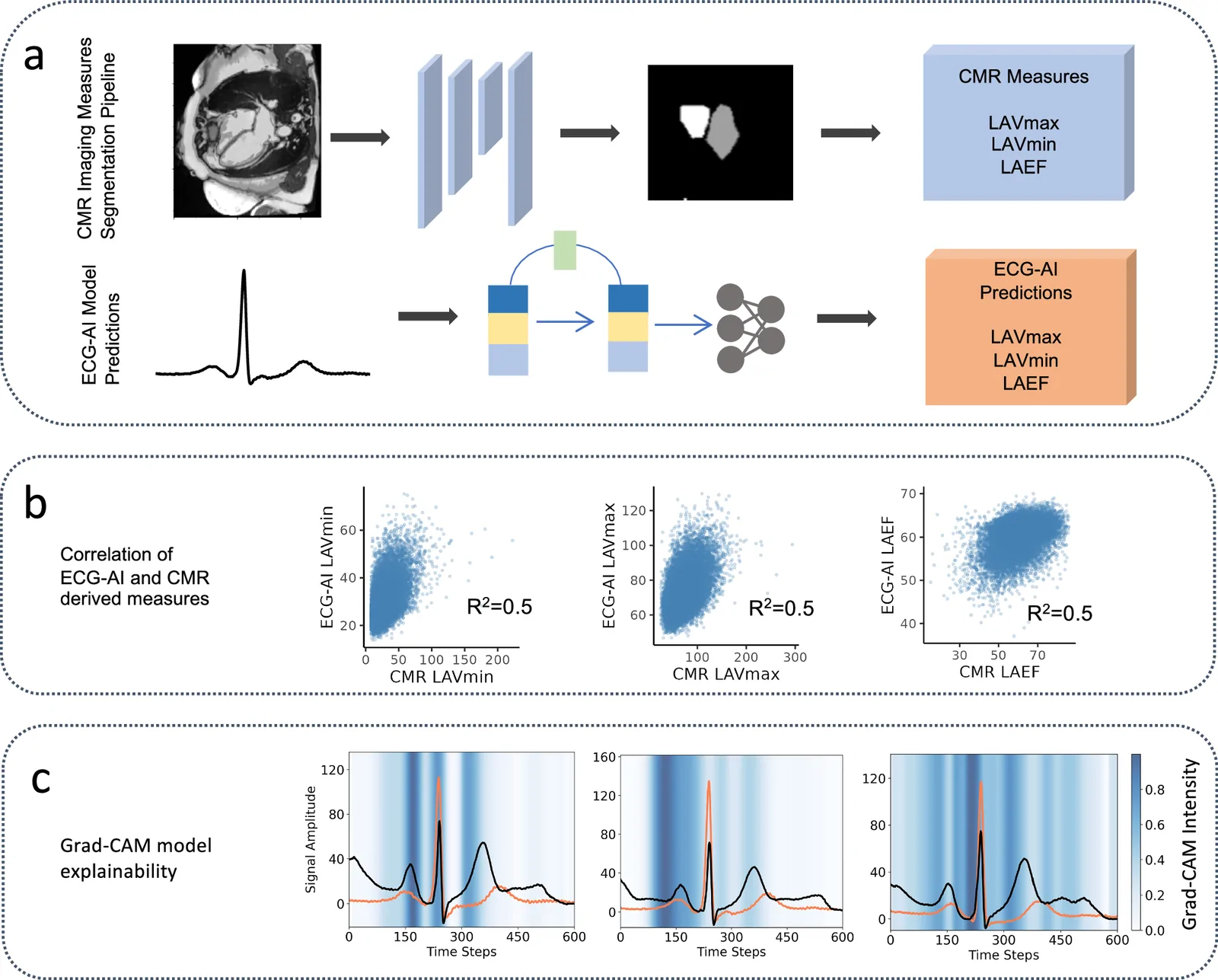
A model trained on 21,749 paired heart scans and electrical recordings estimated the size and pumping function of the heart’s left upper chamber.
Our read
Biomarkers- Studied:
- Cohort study of UK Biobank participants with ECGs and cardiac MRI (Independent replication)
- What changed:
- Model estimates of minimum left atrial volume differed from MRI measurements by 8.6 mL on average
- The catch:
- The model tended to underestimate extreme chamber measurements
Editor of record: Boris Djordjevic · AgingResearch.News
UK Biobank participants used to train the model had a median age of 65; 53% were women. This prediction-model study used electrocardiograms, recordings of the heart’s electrical activity.
Researchers examined links with later illness in two observational cohorts that enrolled 6,814 adults aged 45–84 without known cardiovascular disease and 5,888 adults aged 65 or older. Over average follow-ups of 13.6 and 11.6 years, respectively, model estimates were associated with new atrial fibrillation, an irregular heartbeat, heart failure and strokes caused by blocked blood flow. These links persisted after accounting for clinical risk factors and blood markers. In the older cohort, each standard deviation—a measure of spread—in estimated chamber volume was linked to 66% higher relative risk of stroke originating in the heart.
Why it matters
Abnormalities in the heart’s upper chambers can precede irregular heart rhythms and cardiovascular complications. Estimating these abnormalities from electrical recordings could make risk assessment more accessible in later life.
Caveats
The estimates tracked scan measurements less closely in external testing than in the UK Biobank. Prediction accuracy could not be assessed directly in the cohort aged 65 and older because matching chamber size and pumping measurements were unavailable.
From the paper
- Participants
The UK Biobank (UKB) is a cohort study that recruited 500,000 participants aged 40–69 years from the United Kingdom between 2006 and 2010.
- Follow-up
There were 331 AF, 71 ischemic stroke, and 118 heart failure events during a mean follow-up of 4 years.
- Result
Incident AF hazard ratios (HRs) for ECG-AI measures were slightly attenuated: each standard deviation (SD) higher (worse) CMR LAVImin was associated with a 44% increased risk (95% CI 34–53%), while ECG-AI-predicted LAVImin was associated with a 37% increased risk (95% CI 26–50%).
- Limitation
The correlations between ECG-AI and CMR-derived measures were only moderate (r = 0.40–0.50), reflecting the differences in electrical versus anatomical and functional assessments, despite their robust associations with clinical outcomes.
Quoted word for word from the full text on PubMed Central.
The paper
Deep learning prediction of left atrial structure and function from 12-lead electrocardiograms
University of Washington
Nature Communications, Jul 31, 2026, Open access
Presented at AHA Scientific Sessions 2025 as an abstract



Comments
Be the first to comment.