One fat-processing pathway declined with age in rat brains
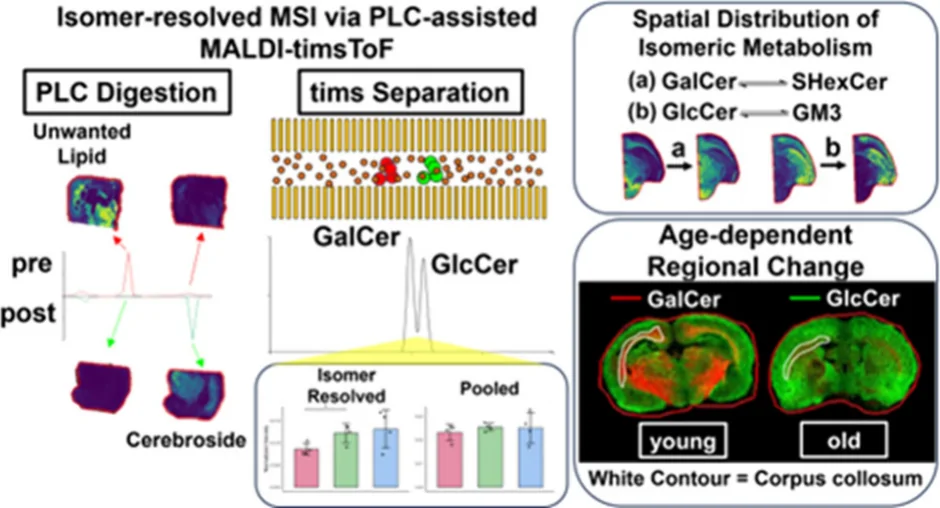
Imaging brain sections from rats aged 2, 6 and 12 months revealed a decline in one fat-processing pathway while another remained comparatively stable.
Our read
Mechanisms- Studied:
- Experiments in rats
- What changed:
- The GalCer pathway declined with age in rat brains, while the GlcCer pathway remained stable
- The catch:
- Only 3 or 4 rats per age group were analyzed
- Why it’s aging research:
- Change across ages, or exceptional longevity.
Editor of record: Boris Djordjevic · AgingResearch.News
In a laboratory imaging study, researchers examined brain sections from rats aged 2, 6 and 12 months. They combined molecular separation, enzyme pretreatment and imaging to map two closely related sugar-containing fats: galactosylceramide and glucosylceramide. The statistical imaging datasets included 21 sections.
The images revealed an age-related decline in the galactosylceramide pathway, while the glucosylceramide pathway remained comparatively stable. The changes occurred in the same locations as proteins associated with myelin, the insulating covering around nerve fibers. This overlap occurred specifically in regions rich in oligodendrocytes, the cells that make myelin. The authors linked the findings to altered fat metabolism associated with these cells.
Why it matters
Fats involved in nerve insulation are important to brain aging. The approach offers a way to investigate these changes and search for markers of nerve-cell degeneration.
Caveats
The study compared brain sections at different ages rather than tracking changes within individual rats. The researchers did not validate the findings with a separate analytical technique.
The paper
University of Illinois Urbana-Champaign
ACS Central Science, Jul 10, 2026, Open access


Comments
Be the first to comment.