More adults with cancer met activity guidelines after exercise
The share meeting activity guidelines rose from 24.1% before a 12-week supervised exercise program to 38.9% at one year.
Non-randomized trial
Limit: The study lacked a control group to compare physical activity against
Edited by Boris Djordjevic · AgingResearch.News
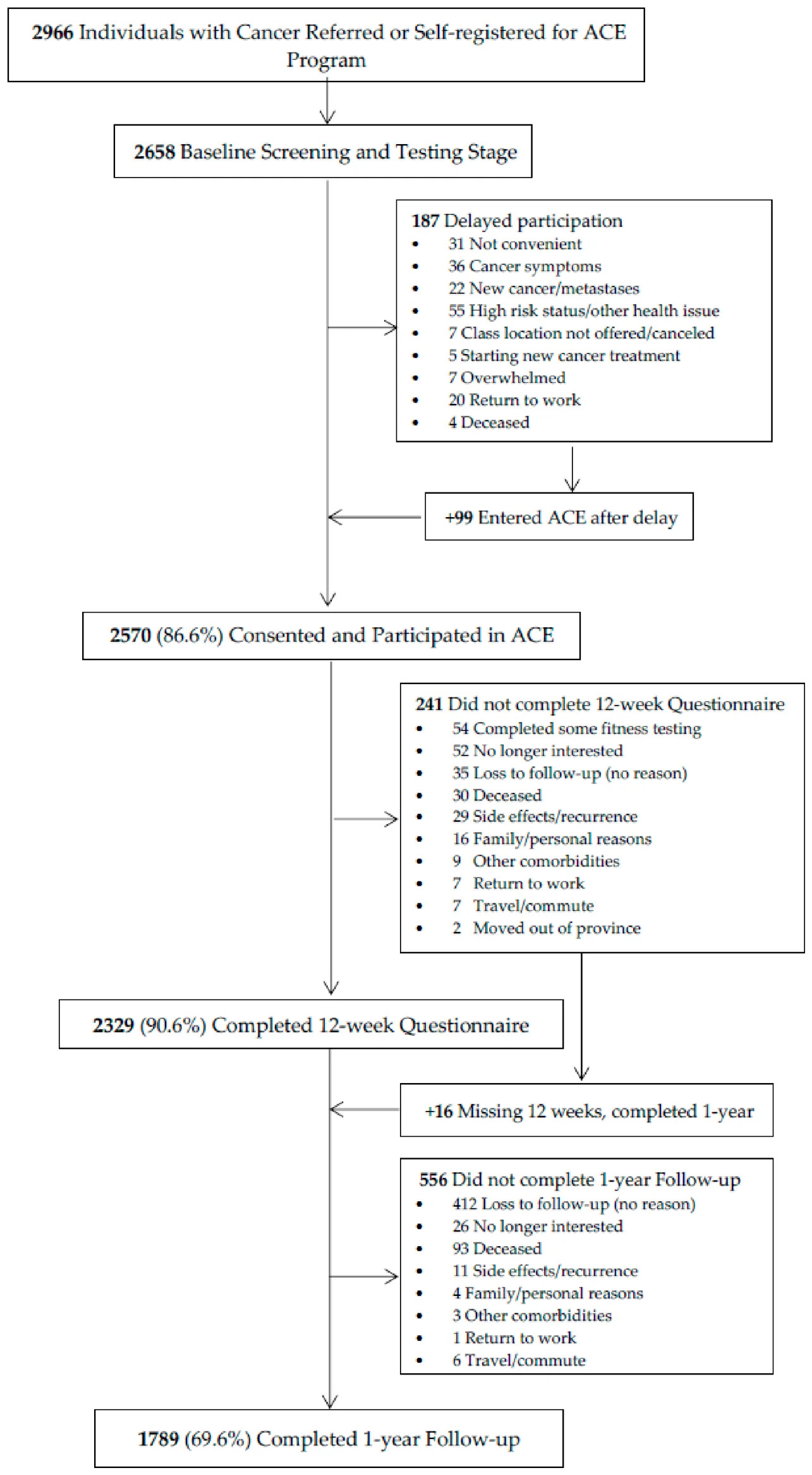
In Alberta, Canada, 2,570 adults aged 18 or older with cancer joined an uncontrolled community exercise study. Participants were predominantly female. The program offered two supervised group sessions weekly for 12 weeks, in person or online, with education on building activity habits.
Questionnaires assessed whether participants reached at least 150 minutes of moderate or vigorous activity weekly. The share meeting this guideline rose from 24.1% before the program to 38.9% at one year. At 12 weeks, six-minute walking distance increased by 39.9 meters. Researchers reported six serious adverse events (0.2%), all in participants receiving active cancer treatment, and seven non-serious muscle, bone or joint events (0.3%). Some events were unrelated to exercise. An additional unrelated serious heart event occurred during a routine medical procedure. All participants recovered without lasting effects.
Why it matters
Maintaining physical function matters for people aging with or after cancer. The study addressed how exercise support might fit into ongoing cancer care outside specialist centers.
Caveats
Without a control group, the study could not establish that the program caused the gains; activity was self-reported, and 30.5% lacked one-year follow-up data. Participants had to be able to exercise safely, walk independently with or without an aid, and rise from sitting independently.
From the paper
- Participants
A total of 2966 individuals with cancer were referred or self-referred to ACE, with 2570 consenting and participating in the study.
- Duration
ACE delivers a 12-week supervised exercise intervention offered three times annually (i.e., winter, spring, fall).
- Harms
Six serious adverse events (0.2%) and seven non-serious musculoskeletal adverse events (0.3%), occurring at or in association with the exercise intervention, were reported during the study period.
- Physical activity guidelines adherence
In the primary pooled model using MICE adjusting for baseline physical activity, age, sex, body mass index, high-risk status, location, and cancer type, participants demonstrated 3.8 times higher odds of meeting physical activity guidelines at one year compared to baseline (p < 0.001).
Results, 3.2. Primary Outcome: Proportion Meeting Physical Activity Guideline Levels
- Sit-to-stand performance
Sit-to-stand performance increased by 2.8 repetitions and six-minute walk test distance by 39.9 m, both exceeding established thresholds for clinical relevance.
Results, 3.3. Secondary Outcomes: Physical Activity and Fitness Outcomes
- Quality of life improvement
Improvements in fatigue met the lower bound of clinically meaningful thresholds (3–6 points) among participants who were off treatment (+3.20 points; standardized mean difference (SMD): 0.29) and receiving other treatments (+3.15 points; SMD: 0.30) but not among those receiving chemotherapy (+0.69 points; SMD: 0.07 …
Quoted word for word from the full text on PubMed Central.
Exercise is part of Bryan Johnson's Blueprint
The paper
University of Alberta; University of Calgary
Cancers, Aug 16, 2026, Open access


Comments
Be the first to comment.