Excess cell contraction impairs implantation in mouse embryos
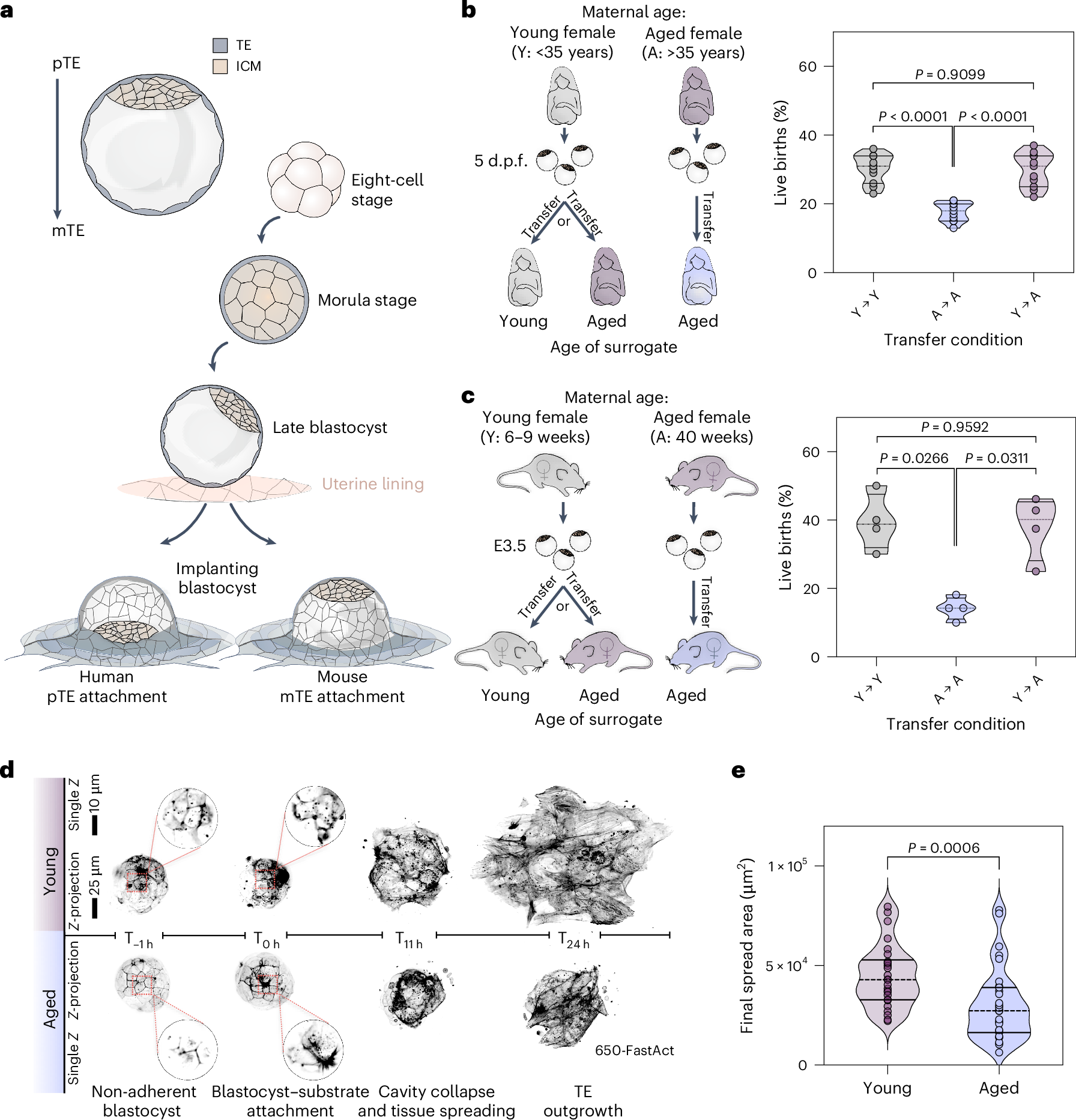
Experiments compared embryos from female mice aged 6–9 weeks and 40 weeks and found that excessive cell contraction hindered spreading during implantation.
Our read
Mechanisms- Studied:
- Experiments in mouse embryos from young and aged females, 30hrs post-implantation
- What changed:
- Young mouse embryos with drug-increased contraction spread less than vehicle-treated controls
- The catch:
- Researchers knew maternal age or drug treatment during most mouse embryo data collection
- Why it’s aging research:
- It studies organisms or tissues that aged naturally.
Editor of record: Boris Djordjevic · AgingResearch.News
In experiments with mouse embryos from females aged 6–9 weeks or 40 weeks, researchers tested how cell contraction affected implantation. Embryos from older females had excessive contraction in their outer cell layer, which enables implantation. This increased tension at the embryo’s surface and the tissue’s resistance to flowing, hindering spreading.
Increasing contraction in embryos from young females reduced spreading on laboratory gels. Reducing contraction with the drug ripasudil restored spreading in embryos from older females. The researchers also identified noninvasive imaging features that predicted implantation success in mouse embryos from both age groups. Separately, analyses of human embryos and in vitro fertilization clinical datasets revealed age-associated mechanical changes linked to implantation potential.
Why it matters
The work addresses why fertility declines with maternal age by examining an embryo’s ability to implant, a key step in establishing pregnancy.
Caveats
The reported drug rescue measured spreading on laboratory gels. The causal evidence came from mouse experiments; the human findings were associations, not a test of a fertility treatment.
The paper
Elevated contractility drives implantation failure in mouse embryos from aged females
University of California, San Francisco
Nature Cell Biology, Aug 25, 2026, Open access
Comments
Be the first to comment.