Screening found undiagnosed heart failure in people with diabetes
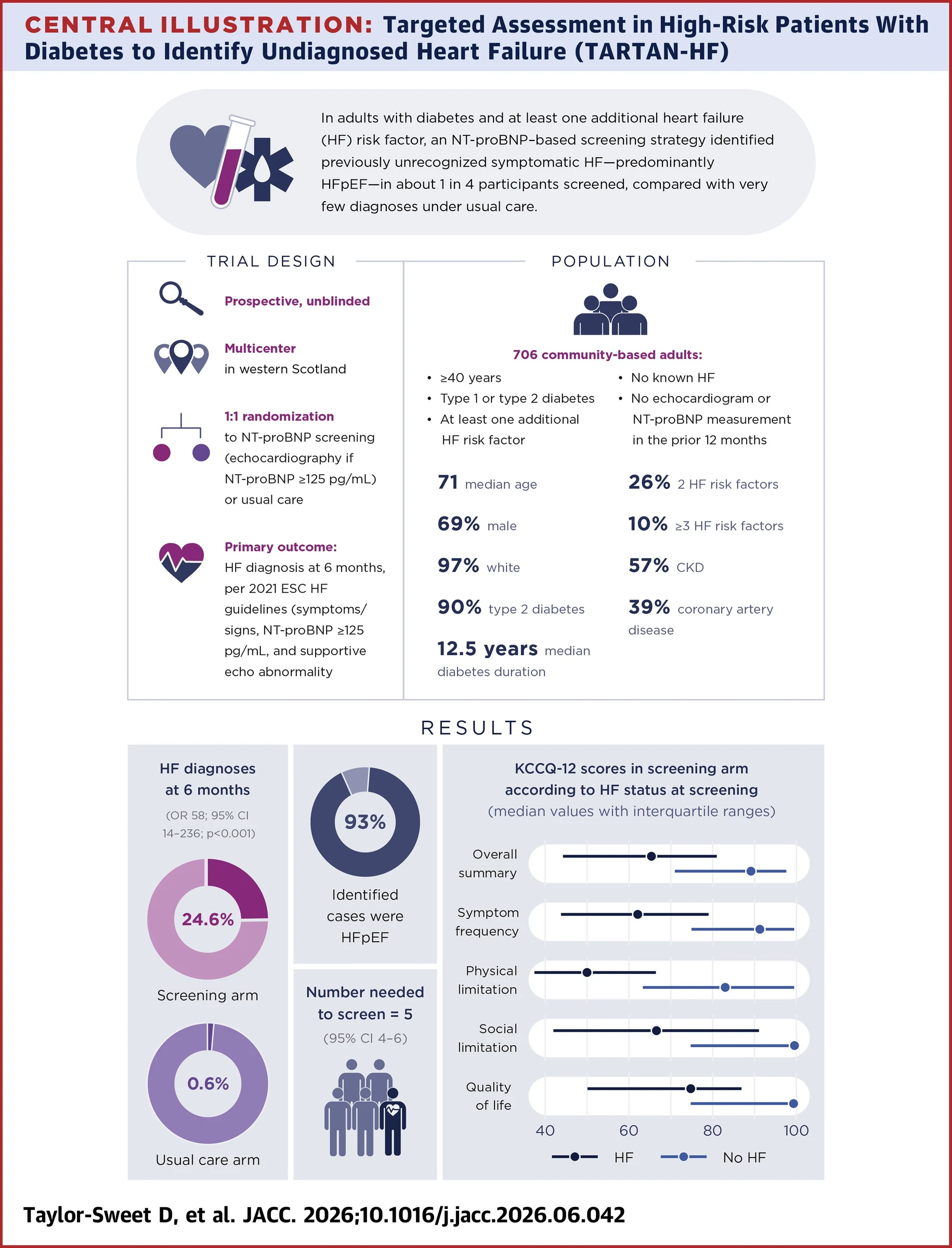
Heart failure was diagnosed in 24.6% of the screening group versus 1% with usual care over six months.
6 months, multicenter, registered NCT05705869
Limit: Knowledge of group assignments could influence heart failure diagnoses
Stake: AstraZeneca funded the study; authors work for it. An author sits on the board of Global Clinical Trial Partners.
Edited by Boris Djordjevic · AgingResearch.News
A randomized trial in western Scotland enrolled 706 people aged 40 or older with type 1 or type 2 diabetes, at least one additional heart failure risk factor and no known heart failure. Their median age was 71; 69% were men and 90% had type 2 diabetes. Researchers assigned 354 participants to screening and 352 to usual care.
Screening used a blood marker of heart strain, with a heart ultrasound scan if levels reached 125 picograms per milliliter. At six months, 87 people in the screening group and two in usual care had been diagnosed with heart failure. Most cases involved a form of heart failure in which the heart’s main pumping chamber still squeezed out a normal share of blood with each beat.
Why it matters
In this largely older population, recognizing heart failure could enable treatment that changes the disease’s course. The authors called for further investigation of screening and consideration of its adoption in diabetes care.
Caveats
The trial was unblinded, and the abstract does not report hospitalization, death or screening-related harm results. The findings concern people aged 40 or older with diabetes and additional heart failure risk factors, not lower-risk groups.
- Nt-probnp-based screening
- Heart failure
- Diabetes mellitus
- Heart failure with preserved ejection fraction
- KCCQ-12
- Humans
The paper
University of Glasgow
Journal of the American College of Cardiology, Aug 11, 2026, Open access


