Cerebrovascular Accident Risk in Survivors of Head and Neck Cancer: JACC CardioOncology State-of-the-Art Review
Abstract
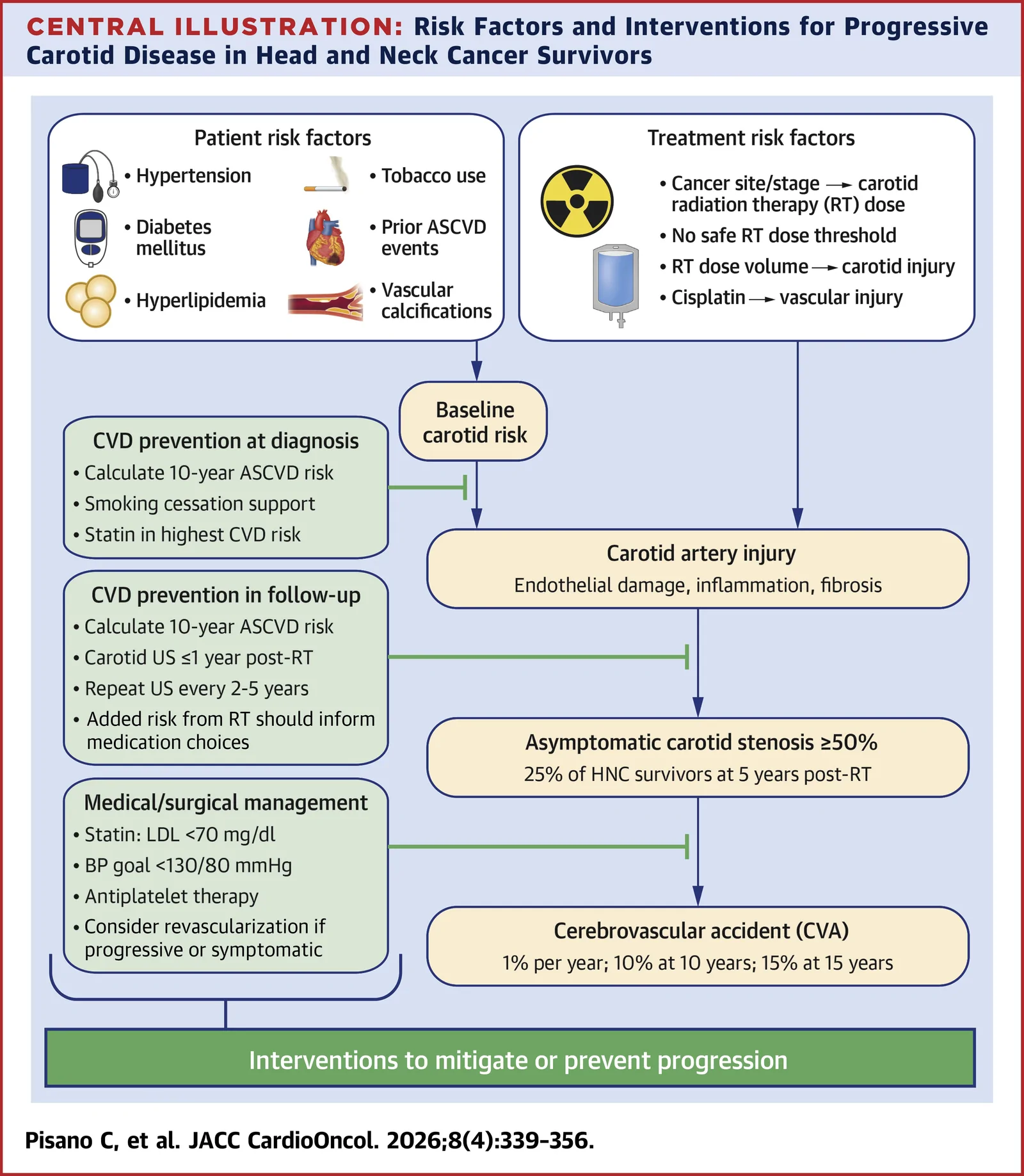
Head and neck cancer survivors treated with radiation therapy have a substantially higher long-term risk of cerebrovascular accident than the general population, driven by radiation-related carotid artery injury, baseline cardiovascular risk factors, and the effects of chemotherapy. Carotid stenosis progresses over time, making regular ultrasound screening important for early detection and intervention. Statin therapy during and after radiation therapy, along with intensive blood pressure management, may reduce cerebrovascular event rates. Guidelines increasingly recommend integrating cardiovascular risk assessment and prevention into cancer care, with special consideration of radiation- and chemotherapy-related risk and aggressive risk factor modification. Multidisciplinary strategies, including medication, lifestyle interventions, and timely revascularization for progressive or symptomatic carotid stenosis, are essential to improve outcomes and minimize cerebrovascular accident risk in head and neck cancer survivors.
The paper
University Hospitals Seidman Cancer Center
JACC CardioOncology, 1 Aug 2026