Severe or profound intellectual disability linked to earlier death
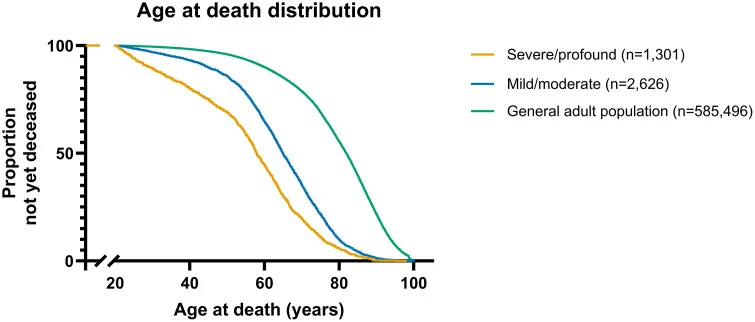
Median age at death was 57.9 years among adults with severe or profound intellectual disability, versus 81.9 years in the general population.
Our read
Populations- Studied:
- Cohort study of 1,301 adults with severe or profound intellectual disability
- What changed:
- Median age at death was lower with severe or profound intellectual disability: 57.9 years versus 81.9 years in the general population
- The catch:
- The main regression ignored delayed study entry; accounting for it produced smaller effects
Editor of record: Boris Djordjevic · AgingResearch.News
The 1,301 adults aged 20 or older with severe or profound intellectual disability in this observational analysis died in England during 2021–2023. Researchers compared their records with those of 2,626 adults with mild or moderate intellectual disability who died during the same period and 536,311 adults from the general population who died in 2022.
Median age at death was 57.9 years, compared with 65.0 and 81.9 years, respectively. Among those with severe or profound intellectual disability, 39.5% of deaths were classified as avoidable, versus 21.8% in the general population. This classification covered deaths before age 75 from causes considered preventable or treatable.
Why it matters
Avoidable causes of premature death point to potential ways to narrow gaps in lifespan. The authors called for tailored public health strategies, early interventions and coordinated care.
Caveats
Only people who had died were included, so the analysis described age at death rather than the risk of dying among living people. “Avoidable” was a classification based on cause of death, not evidence that each individual death could have been prevented.
From the paper
- Participants
The comparison group comprised 536,311 adults aged ≥20 years from the general population.
- Result
… the following were associated with a younger age at death: having a severe or profound intellectual disability (adjusted mean difference −7.17 years; 95% confidence interval [CI] [−8.16, − 6.18]; p < 0.001 …
- Limitation
Although reporting a death to LeDeR is strongly encouraged and includes robust NHS systems to ensure timely reporting, it is not mandatory and it is possible that some deaths in England may have gone unreported.
Quoted word for word from the full text on PubMed Central.
The paper
King's College London
PLOS Medicine, Aug 17, 2026, Open access

Comments
Be the first to comment.