Some medicines linked to memory problems in autistic adults
Caregiver surveys of 512 autistic adults with higher support needs linked higher anticholinergic medication scores to memory problems and changes associated with cognitive decline.
Our read
Populations- Studied:
- Cross-sectional study of 467 autistic adults with higher support needs
- What changed:
- Higher anticholinergic medication scores were linked to more caregiver-reported memory problems in autistic adults
- The catch:
- Memory problems were assessed through caregiver questionnaires rather than direct memory testing
- In the record:
- The 54th paper on anticholinergics with results in people; 82 on record in all.
- Why it’s aging research:
- It measures an outcome that worsens with age.
Editor of record: Boris Djordjevic · AgingResearch.News
In a cross-sectional observational study, caregivers reported medication use for 512 autistic adults aged 18–68 with higher support needs. Their average age was about 31. Caregivers completed online surveys between May and August 2023.
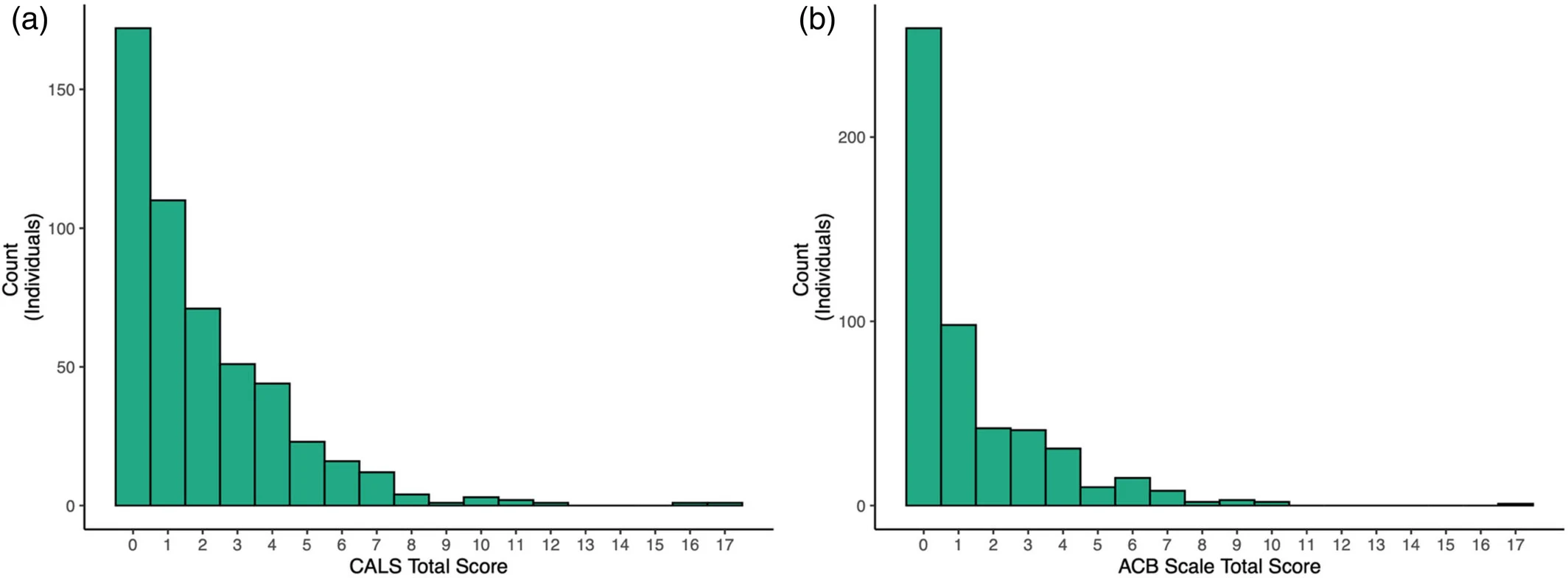
Researchers scored medicines for anticholinergic effects, which block the action of acetylcholine, a chemical messenger. On one medication-rating scale, 66.41% took at least one such medicine, and 31% reached a score considered clinically meaningful. Caregivers reported everyday memory problems for 467 adults and completed a questionnaire about changes in thinking and behavior for 466. After accounting for age and sex at birth, higher medication scores were associated with more memory problems and more changes linked to cognitive decline. Both medication-rating scales showed these associations.
Why it matters
Anticholinergic medication use has been associated with dementia and cognitive decline in older adults. This study extends that aging-related question to autistic adults with higher support needs, including younger adults.
Caveats
This cross-sectional study relied on caregiver questionnaires and cannot establish that medications caused the reported problems. All participants had legally authorized representatives, and none had reported Down syndrome diagnoses; the findings may not extend to other autistic adults.
The paper
George Mason University; George Washington University
Autism Research, Aug 13, 2026, Open access



Comments
Be the first to comment.