The moderating effect of age on loneliness and subjective remaining life expectancy among Chinese adults
Abstract
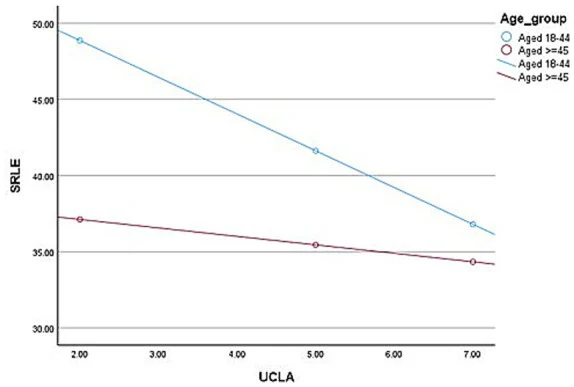
BACKGROUND: Subjective Remaining Life Expectancy (SRLE) plays a critical role in shaping late-life decision-making, such as health behaviors, retirement planning, and end-of-life preparation. Although loneliness has been widely documented to exert adverse physical, mental, cognitive, and behavioral consequences, relatively little is known about how loneliness influences SRLE. This study aimed to examine the association between loneliness and SRLE and to determine whether this relationship differs across age groups. METHODS: A cross-sectional online survey was conducted among 969 individuals recruited from Macao, Zhongshan, Guangzhou, and Zhuhai. SRLE was calculated using the life-line question from the Longitudinal Aging Study Amsterdam. Loneliness was measured using the Chinese version of the three-item UCLA Loneliness Scale. Moderation analyses were performed to examine age-group differences in the relationship between loneliness and SRLE. RESULTS: The mean SRLE was 41.39 years, and the mean loneliness score was 4.54. Loneliness and age were both significantly negatively associated with SRLE. Significant age-group differences were observed, with younger adults (18-44 years) reporting higher loneliness levels and longer SRLE than adults aged 45 years and older. CONCLUSION: The association between loneliness and SRLE was observed primarily among younger adults and remains unclear among older adults. This pattern highlights life-course differences in how loneliness relates to perceived remaining lifespan, suggesting that interventions aimed at strengthening social connections may be particularly beneficial for younger adults.
The paper
Kiang Wu Nursing College of Macau
Frontiers in Public Health, 29 Jul 2026