Assisted reproduction not linked to most heart and vessel risks
Disorders involving reduced brain blood flow had a 30-year relative risk of 1.44 with assisted reproduction versus conception without it among women with infertility.
Limit: Few exposed women and very few events limited precision at follow-up extremes
Edited by Boris Djordjevic · AgingResearch.News
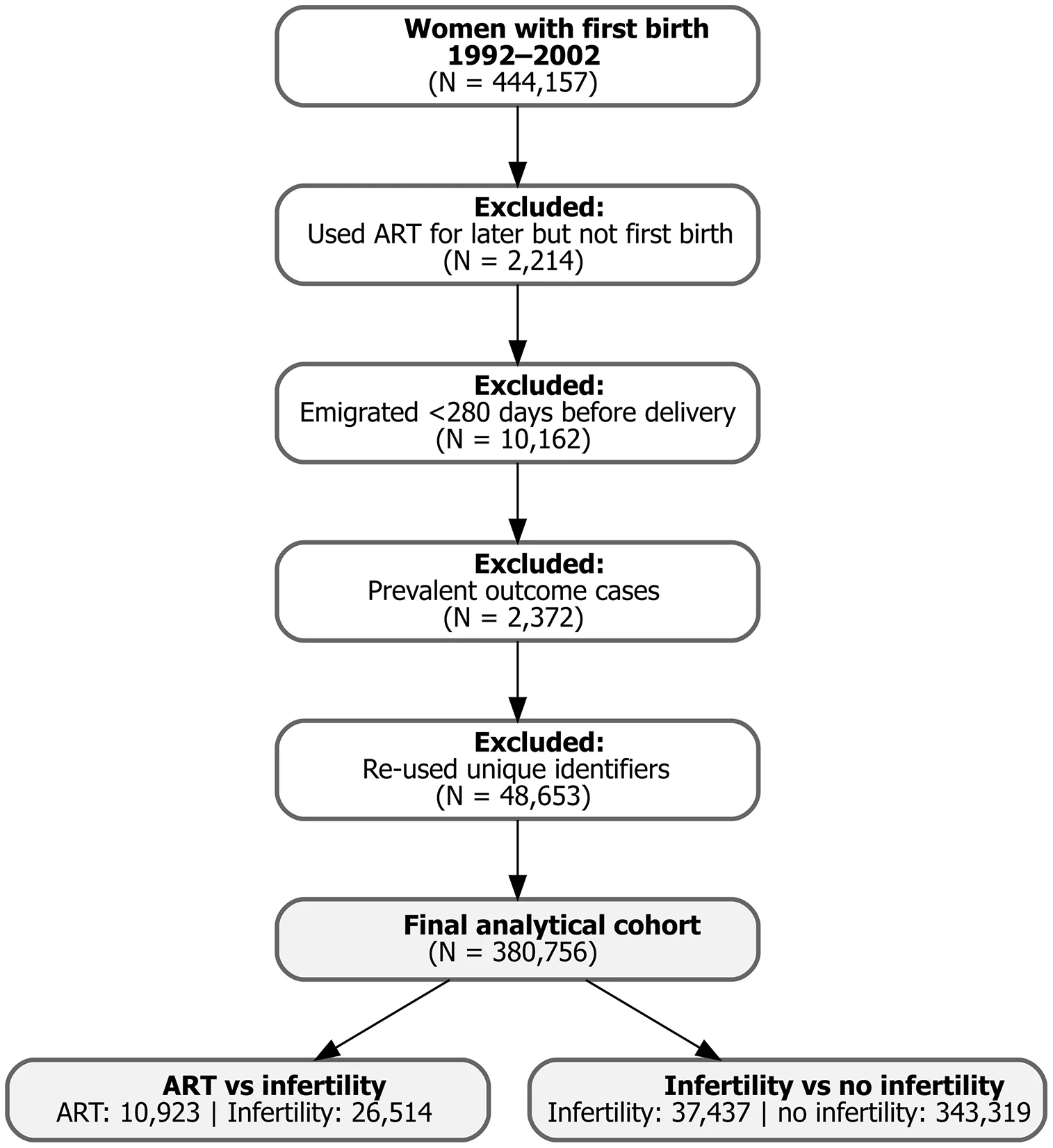
An observational cohort study tracked 380,756 women in Sweden whose first births occurred in 1992–2002, using national registers through 2023. It included 10,923 women who conceived with assisted reproduction and 26,514 who experienced infertility but conceived without it. Average ages at first birth were 32 and 29, respectively, versus 26 among women without known infertility.
After accounting for baseline differences, assisted reproduction was not linked to higher risks of most diseases studied. Disorders involving reduced blood flow to the brain were the exception, with an estimated 46 additional cases per 10,000 women over 30 years. Separately, infertility was linked to higher risks of heart attack, type 2 diabetes and heart failure. Baseline differences accounted for some, but not all, of those links.
Why it matters
The authors suggest that infertility may serve as a marker of cardiovascular and metabolic disease risk as women age.
Caveats
This observational study could not establish cause and effect, and relatively few exposed women and events limited precision. The findings do not cover women who did not give birth or who already had a recorded diagnosis of a studied outcome.
- Assisted reproductive technology
- Infertility
- Type 2 diabetes
- Heart failure
- Acute myocardial infarction
- Humans
The paper
Karolinska Institutet; Harvard University
PLOS Medicine, Aug 12, 2026, Open access

Comments
Be the first to comment.