Effect of bodyweight interval training on frailty status in older adults: a randomized controlled trial
24 weeks, registered RBR-23t5jbh
Abstract
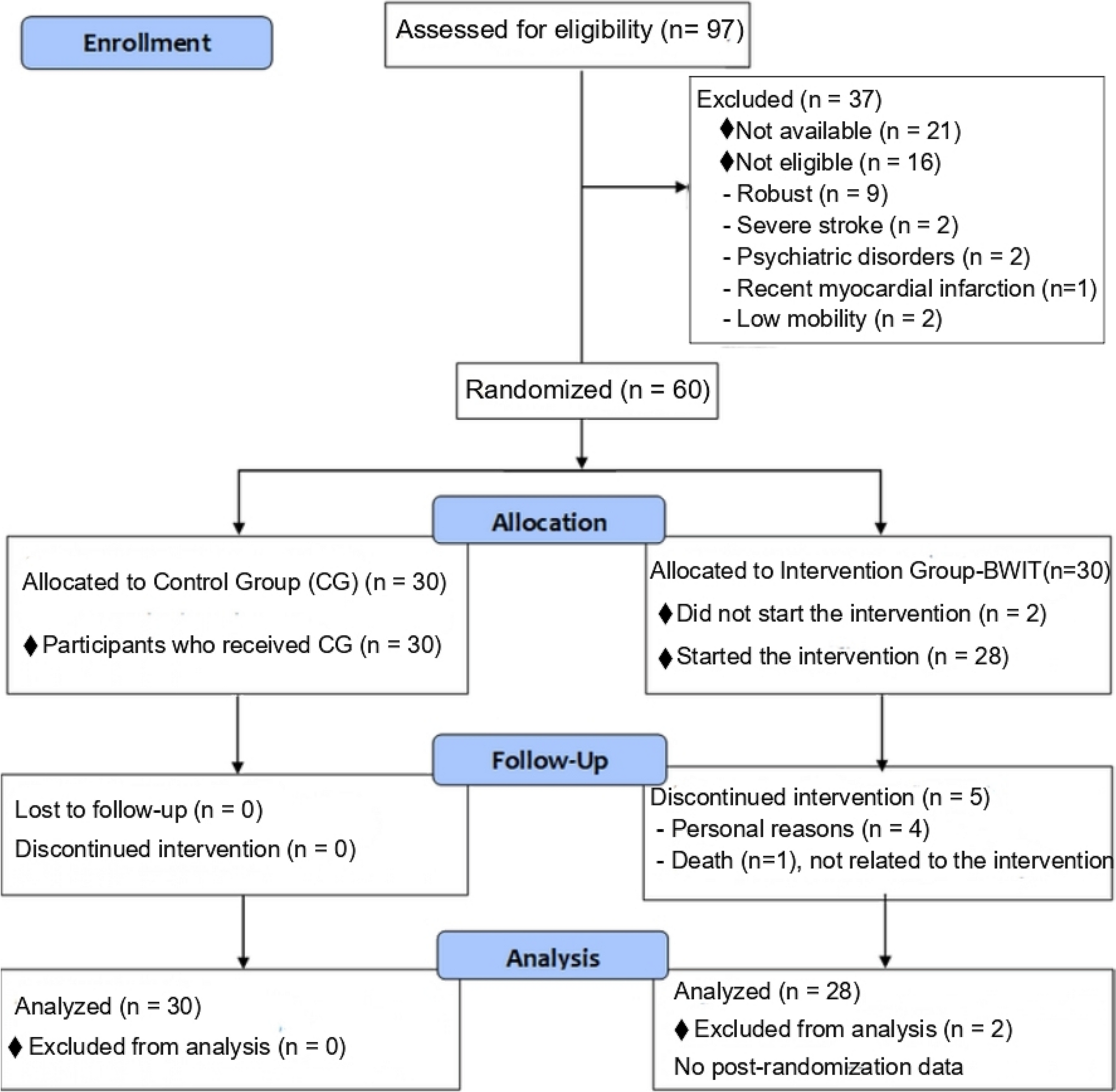
PURPOSE: To evaluate the effect of bodyweight interval training on frailty status in older adults. METHODS: A randomized controlled trial was conducted with 60 frail older adults (74.0 ± 6.0 years; 72.4% women). Participants were allocated to bodyweight interval training (BWIT = 30) for 24 weeks or to a control group (CG = 30) instructed to maintain their usual physical activities. Frailty status (Fried phenotype), physical-functional performance, cardiohemodynamic responses, and body composition were assessed at baseline and after 12 and 24 weeks. Longitudinal effects were analyzed using linear mixed-effects models and categorical between-group comparisons. RESULTS: BWIT was associated with a higher probability of transition to less frail states over 24 weeks (p < 0.001), whereas the control group remained stable. Significant effects were observed in the intervention group (OR = 15.44; p = 0.006) and over time at 12 weeks (OR = 4.96; p = 0.005) and 24 weeks (OR = 15.24; p < 0.001). BWIT improved knee extension strength, five-times sit-to-stand performance, gait speed, and reduced blood pressure parameters (p < 0.001), with no relevant changes in body composition. CONCLUSION: BWIT was effective in modifying frailty status in older adults over 24 weeks and may represent a feasible and accessible strategy for frailty management in primary health care. TRIAL REGISTRATION: RBR-23t5jbh (Brazilian Registry of Clinical Trials), registered September 4, 2024, retrospectively registered.
The paper
Universidade de São Paulo
European Geriatric Medicine, 12 Aug 2026