Audiometric detection thresholds for older adults with normal and impaired hearing predict recognition of spectrally and temporally degraded speech in speech-modulated noise
Abstract
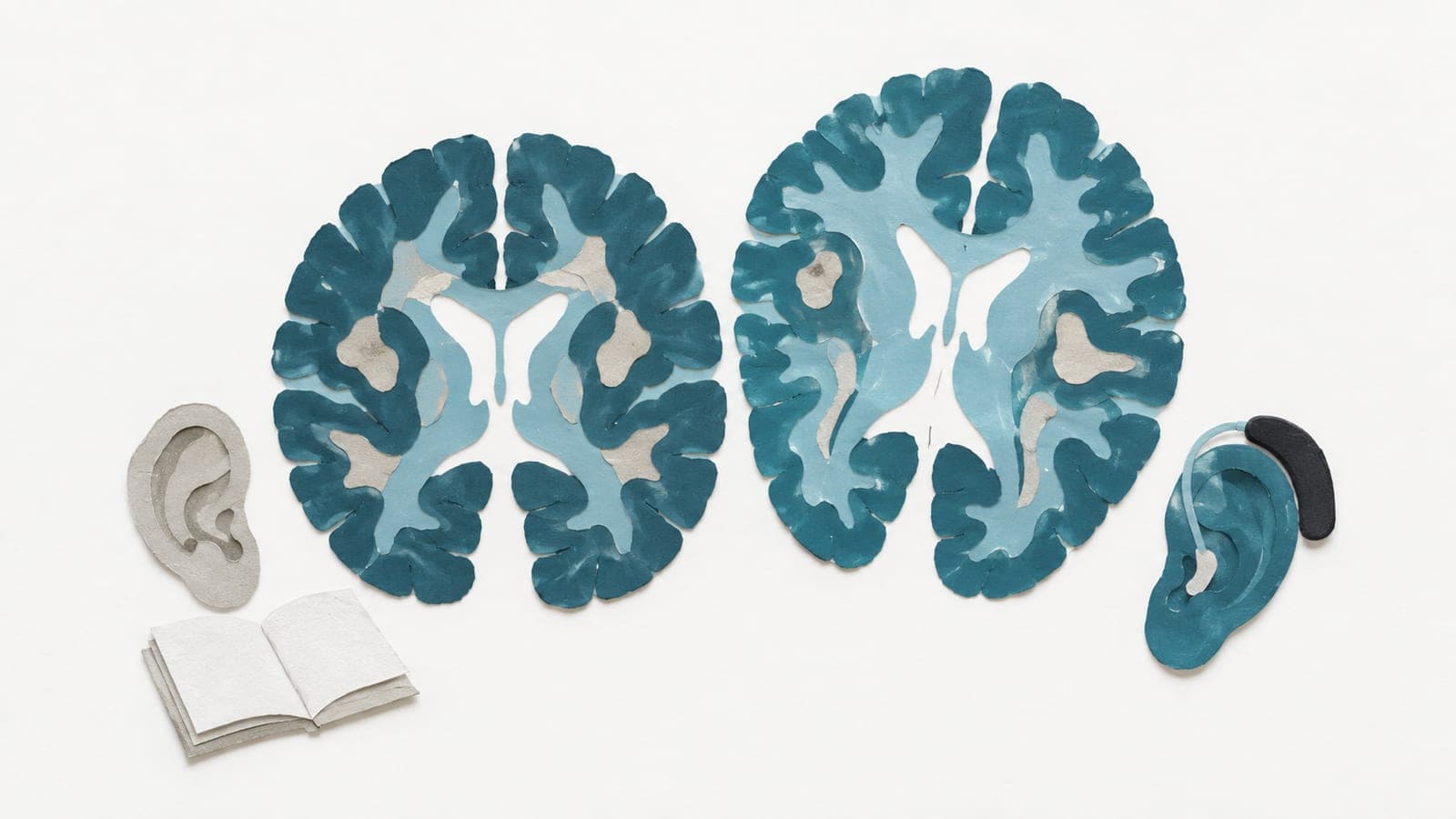
OBJECTIVE: This study examined associations between audiometric detection thresholds for older adults with normal and impaired hearing and recognition of degraded speech in speech-modulated noise. DESIGN: Three datasets consisted of 15-16 measures of temporally degraded speech: (1) degraded spectral cues, (2) competing speech-modulated noise, and (3) spectral degradation combined with speech-modulated noise. Speech was spectrally shaped to each listener's pure-tone detection thresholds, and ESTOI-based speech recognition thresholds (SRTESTOI) for degraded speech in noise were determined at 50% correct. Individual differences in detection thresholds from 0.25-8 kHz were examined, along with suprathreshold measures of speech modulation detection and glimpsing. STUDY SAMPLE: Older adults with normal hearing (ONH, N = 20) or with sloping high-frequency hearing loss (OHI, N = 20) were compared to three younger normal hearing control groups (N = 63) to evaluate effects of age, spectral gain, and reduced speech sensation levels. RESULTS: Audiometric detection thresholds below 1 kHz were the strongest predictors of SRTESTOI for both groups of older adults. Among OHI listeners, associations of low frequency thresholds with SRTESTOI also differed depending on the type of speech distortion. CONCLUSIONS: Findings suggest the importance of low-frequency speech cues for glimpsing speech in temporally modulated backgrounds for older adults.
The paper
University of Illinois Urbana-Champaign; Medical University of South Carolina
International Journal of Audiology, Jul 7, 2026