Virtual reality training linked to balance changes in older adults
An eight-week randomized trial in 40 adults aged 65 or older found balance and mobility changes compared with unsupervised home exercise.
Our read
Interventions- Studied:
- Randomized trial in 40 community-dwelling older adults, 8 weeks (Registered NCT05779189)
- What changed:
- Balance improved with virtual reality training compared with unsupervised exercise
- The catch:
- Unequal supervision and unknown control-group exercise exposure prevent isolating the effect of virtual reality
- In the record:
- The 8th paper on virtual reality balance training with results in people; 11 on record in all.
Editor of record: Boris Djordjevic · AgingResearch.News
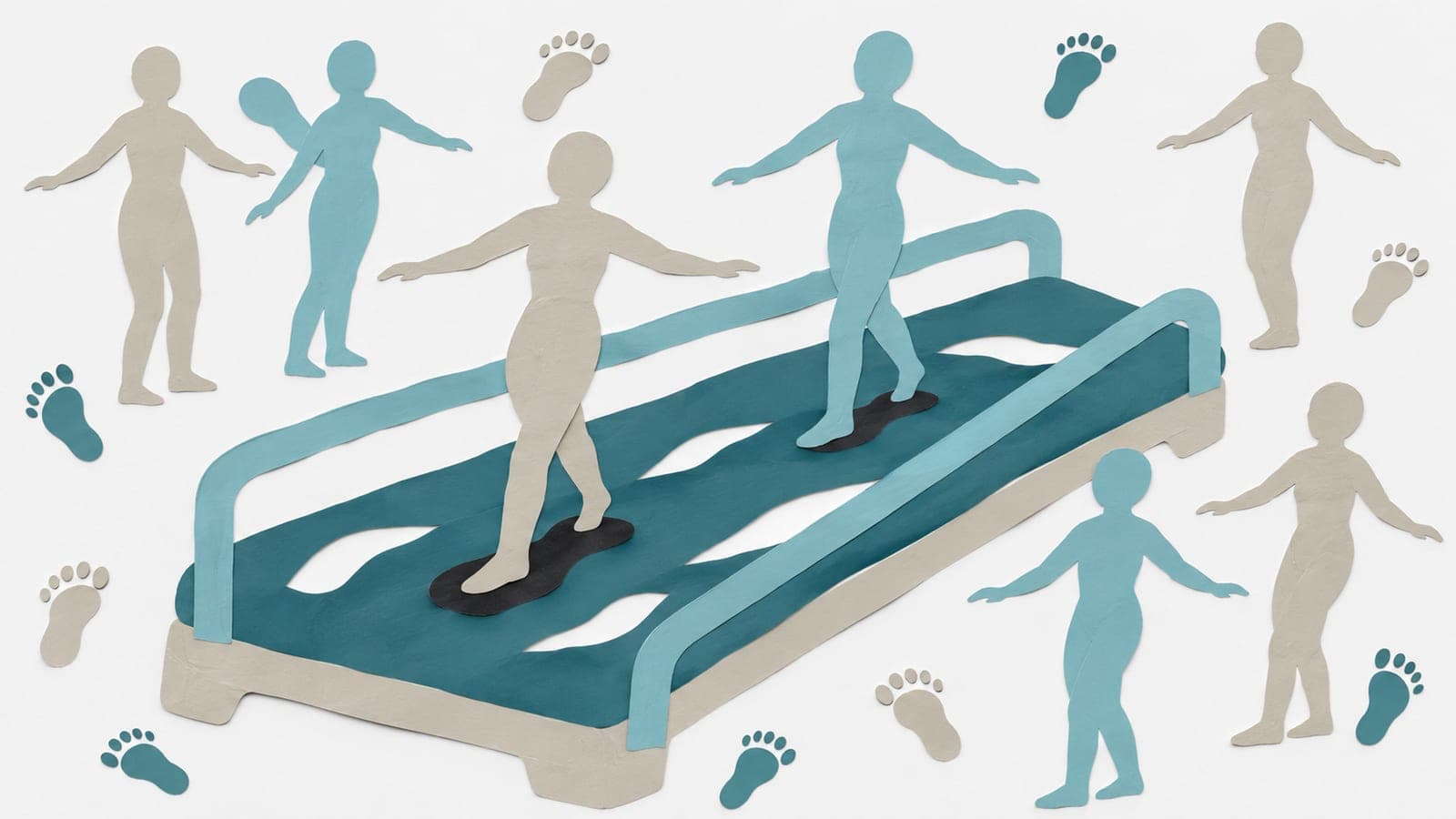
Forty community-dwelling adults aged 65 or older, mostly women, took part in an exploratory randomized trial. Twenty completed 16 supervised, 30-minute sessions of game-based virtual reality balance training over eight weeks. Twenty received exercise videos, health education and weekly telephone reminders, without supervised exercise or adherence tracking.
Changes in several balance measures differed between groups, including some measured while participants also performed attention tasks. Average time on a test of standing up, walking and sitting fell from 8.8 to 6.5 seconds with training, versus 9.1 to 8.2 seconds in controls. Single-leg standing performance also changed differently between groups. Concern about falling increased in both groups, with a greater increase in the training group; the authors urged caution in interpreting this result. All participants completed both assessments. No adverse events, injuries or training-related discomfort were reported.
Why it matters
Falls threaten older adults’ independence. The findings support the feasibility of supervised, technology-assisted balance training in community settings.
Caveats
Participants and assessors knew group assignments, only the virtual reality group received supervised exercise, and the analysis did not adjust for testing many outcomes. All four men were in the training group; the trial excluded people with cognitive impairment, major neurological disorders or severe osteoporosis, limiting applicability to those groups.
From the paper
- Participants
A total of 40 participants were enrolled: 20 in the experimental group (4 men, 16 women) and 20 in the control group (all women).
- Result
Significant effects were identified for overall sway with eyes open (OA(S)_EO; estimate = 0.22, 95% CI 0.02 to 0.42, p = 0.028), anterior–posterior sway with eyes open (AP(S)_EO; estimate = 0.19, 95% CI 0.02 to 0.37, p = 0.032) …
- Harms
No adverse events, injuries, or intervention-related discomfort were reported.
- Limitation
First, the sample size was relatively small, which limits statistical power and generalizability.
Quoted word for word from the full text on PubMed Central.
- Virtual reality balance training
- Accidental falls
- Falls Efficacy Scale-International
- Postural sway
- Single-leg stance
- Humans
The paper
Taipei Medical University; Taipei Medical University-Shuang Ho Hospital
BMC Geriatrics, Jul 3, 2026, Open access
Comments
Be the first to comment.