Placental molecule helps set the timing of labor in mice
Lowering a placental molecule shortened average pregnancies to 17 days 8.4 hours, versus 18 days 18.6 hours in controls; raising it delayed birth.
Our read
Interventions- Studied:
- Experiments in pregnant C57BL/6J and CD1 mice, against controls
- What changed:
- Lowering a placental molecule shortened average pregnancies to 17 days 8.4 hours, versus 18 days 18.6 hours in controls
- The catch:
- Preterm labor was an induced model triggered by a bacterial molecule
- In the record:
- One of 213 papers on NAD+ on record: 25 with results in people, 42 in animals.
- Why it’s aging research:
- It studies an intervention with evidence of extending healthy life.
Editor of record: Boris Djordjevic · AgingResearch.News
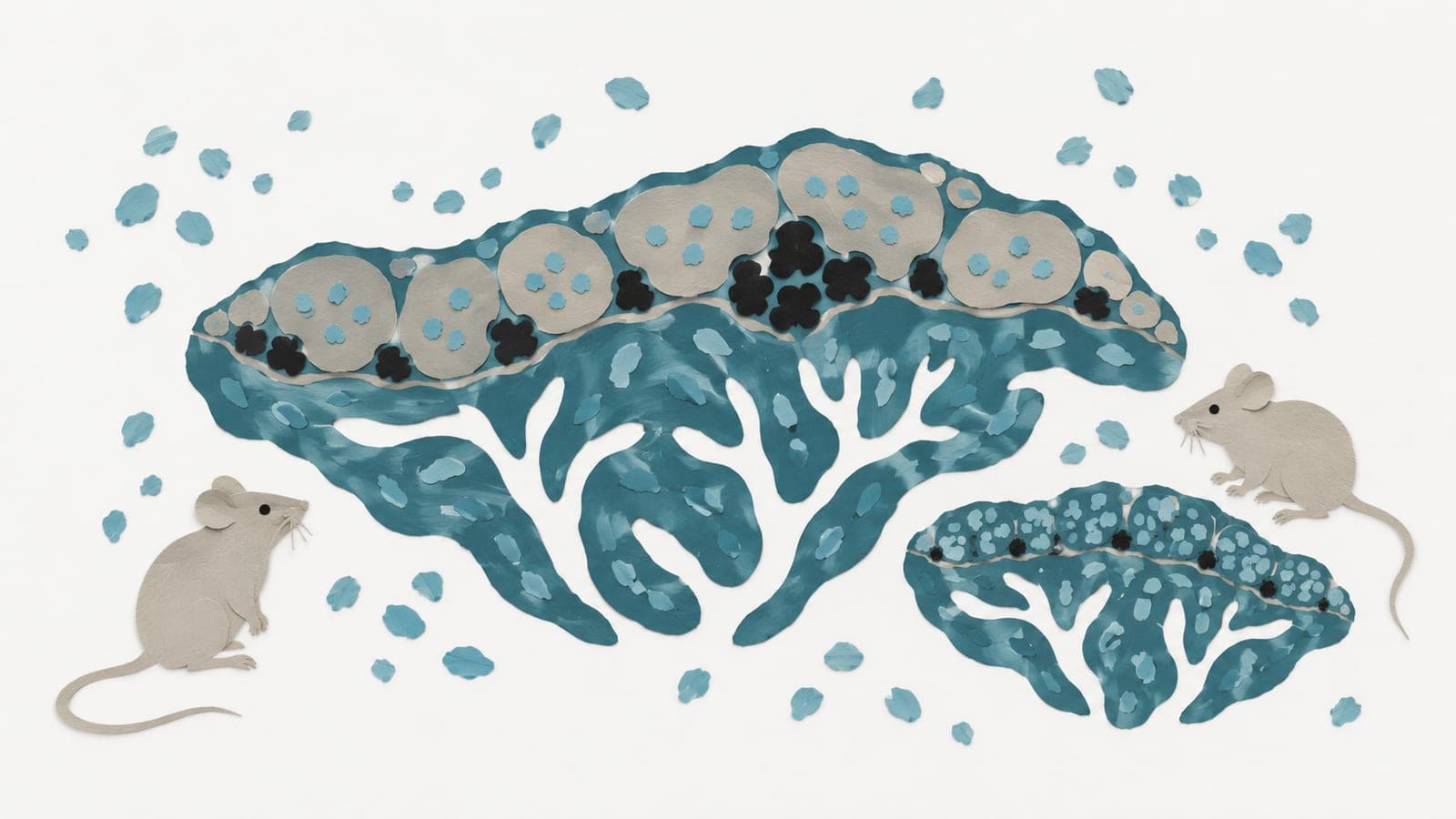
Experiments in pregnant C57BL/6J and CD1 mice identified placental nicotinamide adenine dinucleotide (NAD⁺), a molecule that supports chemical reactions in cells, as a regulator of labor timing. Its concentration fell sharply before birth.
Twice-daily injections of 0.5 milligrams of a drug that reduced NAD⁺ production, starting on pregnancy day 14.5, shortened gestation. Depletion impaired an enzyme that deactivates prostaglandins, signals that promote labor. Conversely, adding 0.3% nicotinamide, a building block for NAD⁺, to drinking water from pregnancy day 12.5 raised placental NAD⁺ and prolonged gestation. Supplemented mice also resisted preterm labor triggered by a bacterial molecule. The authors suggested that metabolic exhaustion plays a central role in triggering labor.
Why it matters
The work addressed how metabolic changes as pregnancy advances might connect gestational aging to birth timing. The authors suggested potential avenues for addressing preterm labor and optimizing labor induction.
Caveats
The labor-timing experiments were in mice and included an induced model of preterm labor. They do not establish benefits or safety for pregnant people.
The paper
Placental nicotinamide adenine dinucleotide modulates the timing of labor
Beth Israel Deaconess Medical Center; The University of Texas Southwestern Medical Center
Science, Jun 11, 2026, Open access

Comments
Be the first to comment.