Model predicts a shift in colon cancer origins with screening
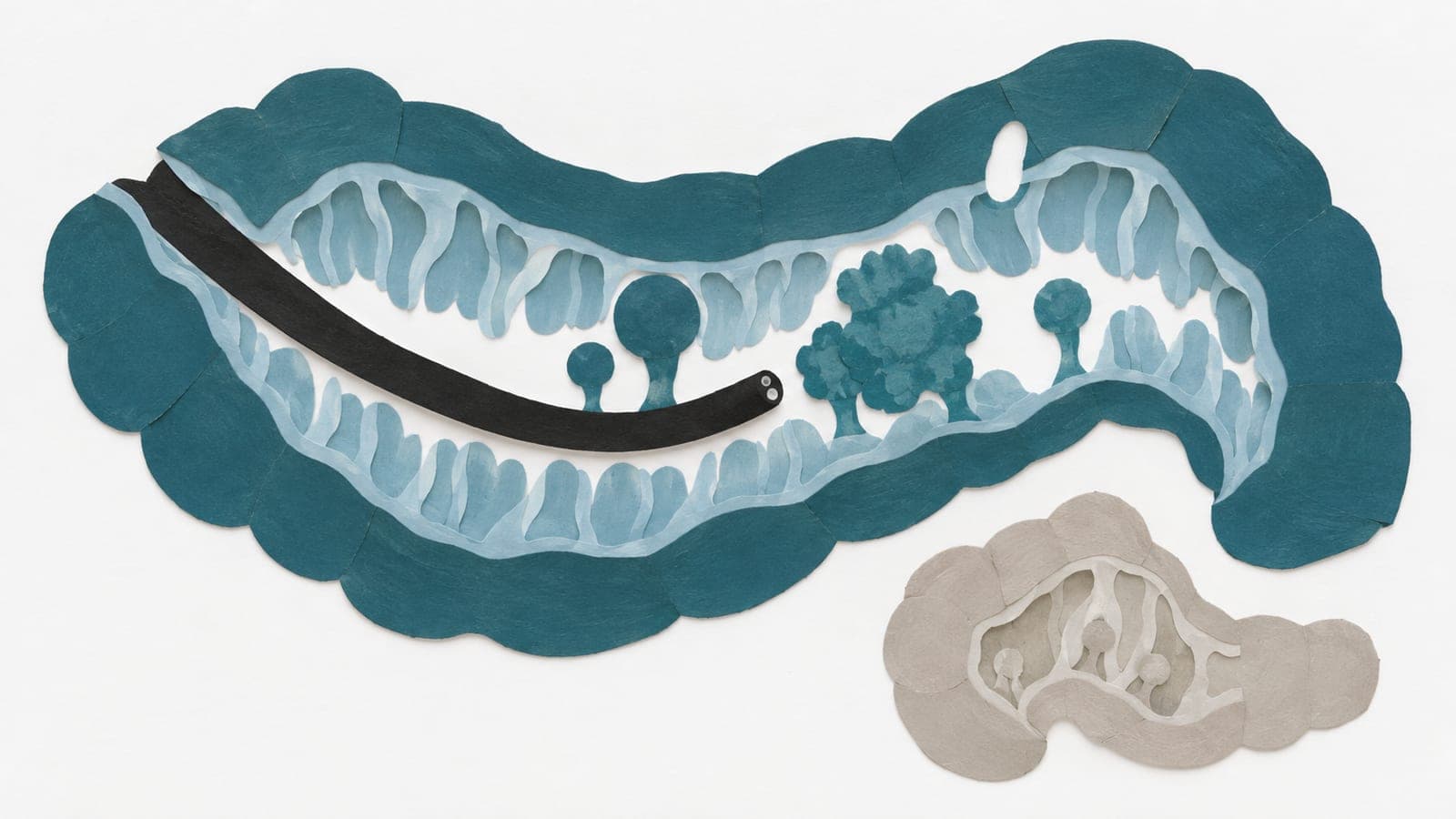
Hard-to-detect growths accounted for a predicted 10.6% of colorectal cancers without screening and 23.5% with screening, as colonoscopy selectively removed other growths.
Our read
Biomarkers- Studied:
- Computational study of simulated adults, against no screening
- What changed:
- The predicted share of colorectal cancers arising from serrated growths rose from 10.6% without screening to 23.5% with screening
- The catch:
- The model assumed serrated growth risk did not vary by age or sex
- In the record:
- The 24th paper on colonoscopy with results in people; 171 on record in all. Its result on colorectal cancer agrees with 11 of 14 other findings on record; 2 point the other way and 1 found no change.
Editor of record: Boris Djordjevic · AgingResearch.News
Researchers used a computer model of colorectal cancer in adults to estimate the effects of colonoscopy every 10 years from ages 45 to 75. The updated model included sessile serrated lesions, growths that can lead to cancer and are harder to detect and remove than adenomas, another type of precancerous growth. It also incorporated information on cancer risk in adults younger than 50.
The model predicted that screening would prevent 93.9% of colorectal cancers and 95.3% of deaths from the disease compared with no screening. Serrated growths made up a larger share of the remaining cancers because screening selectively removed adenomas. The researchers checked the model against screening and follow-up colonoscopy studies and found that it generally matched their results.
Why it matters
For colorectal cancer screening from midlife into older age, the authors emphasized the importance of improving detection of serrated growths, especially large ones.
Caveats
These are computer predictions, not observed outcomes of this screening schedule. The model assumed that the chance of developing serrated growths did not vary by age or sex.
The paper
Fred Hutch Cancer Center
Journal of the National Cancer Institute, Feb 16, 2026, Open access
Comments
Be the first to comment.