Evaluation of Age-Related compositional changes in the infrapatellar fat pad using MRI-Derived PDFF and T₂* at 1.5 T
Abstract
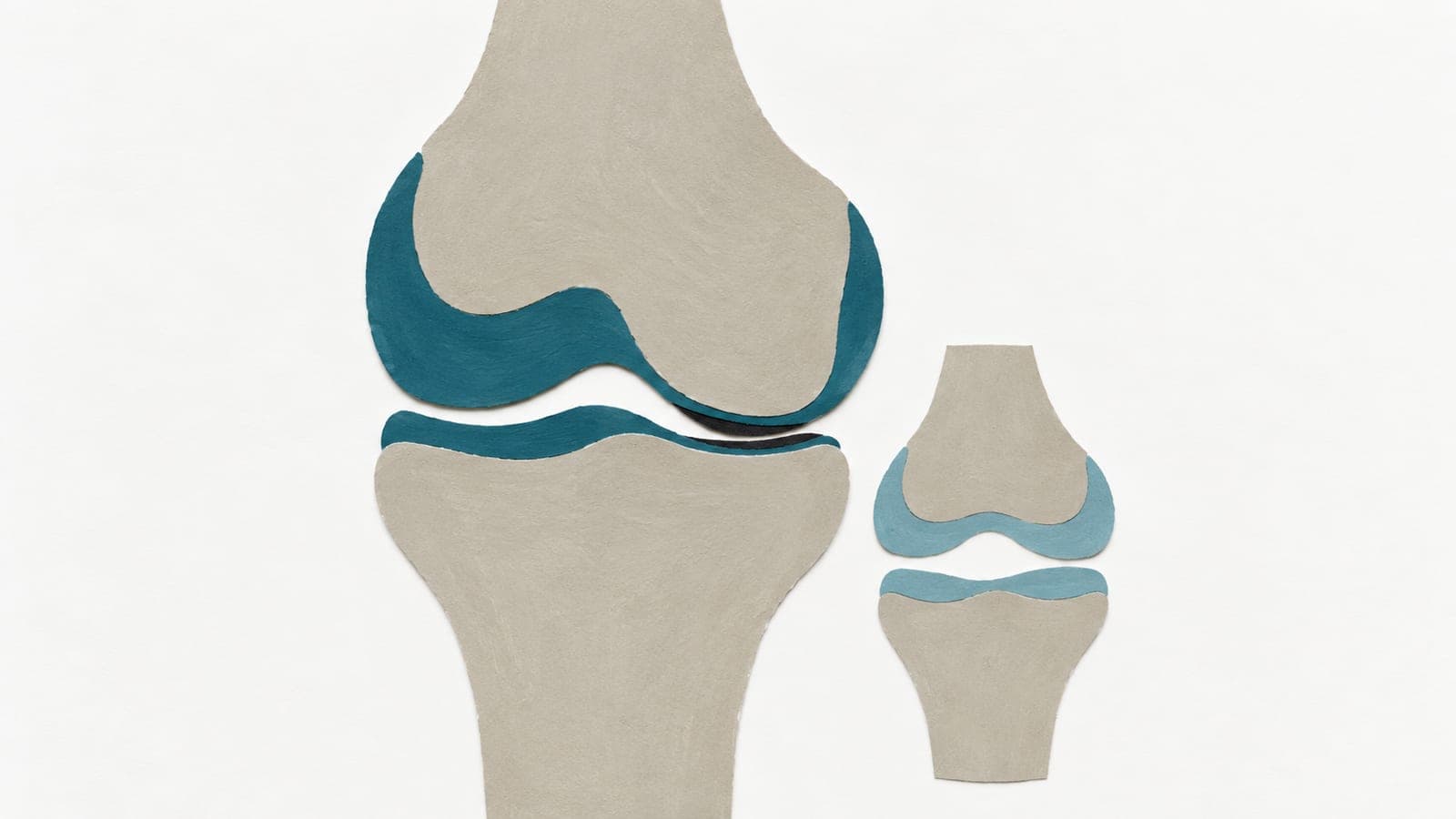
PURPOSE: To investigate age-related compositional changes in the infrapatellar fat pad (IFP) using chemical shift-encoded MRI-derived proton density fat fraction (PDFF) and T₂* at 1.5 T, and to evaluate their associations with clinical symptoms and structural abnormalities. METHODS: A cross-sectional study was performed in 100 adults (mean age: 44 ± 14 years; 54 men, 46 women) who underwent 1.5 T MRI using a six-echo spoiled gradient-echo sequence for quantitative assessment of PDFF and T₂* in the IFP. Clinical symptoms were assessed using the Western Ontario and McMaster Universities Osteoarthritis Index (WOMAC), and structural abnormalities were evaluated using the Whole-Organ Magnetic Resonance Imaging Score (WORMS). Spearman correlation and mediation analyses were performed. RESULTS: Age showed a strong negative correlation with IFP PDFF (r = - 0.46, p < 0.001) and a moderate inverse association with T₂* (r = - 0.30, p = 0.003). Lower PDFF was associated with worse WOMAC pain (r = - 0.33, p = 0.001) and WORMS scores (r = - 0.41, p < 0.001). The mediation analysis revealed a significant indirect pathway linking age to both pain (ACME = 0.19, 95 % CI: 0.02-0.38) and WORMS scores (ACME = 0.24, 95 % CI: 0.06-0.45) through PDFF. In contrast, the indirect pathway through T₂* was weaker and less precise (ACME = 0.12, 95 % CI: 0.01-0.28). CONCLUSIONS: PDFF and T₂* reflect age-related compositional and microstructural changes in the IFP, with PDFF demonstrating stronger associations with clinical symptoms and joint degeneration. These findings indicate PDFF as a superior imaging biomarker for early detection, monitoring, and potential therapeutic targeting in age-related musculoskeletal degeneration.
- Proton density fat fraction
- Joint degeneration
- Musculoskeletal degeneration
- T2*
- Western Ontario and McMaster Universities Osteoarthritis Index
- Humans
The paper
University of Science and Technology of China
European Journal of Radiology, 1 Jan 2026