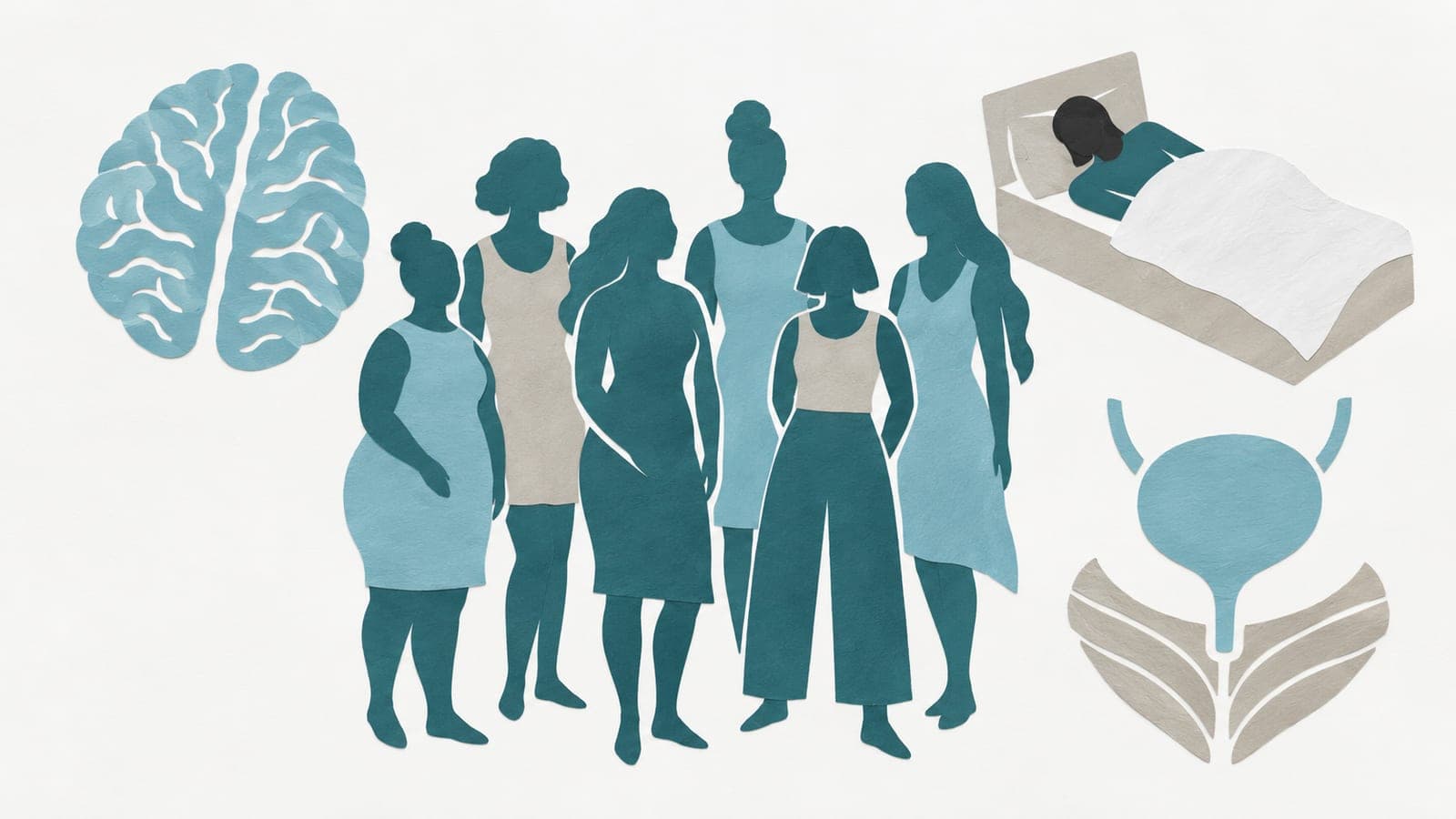
Preserving intrinsic capacity in midlife women: A mixed-methods study of a personalized multicomponent intervention aligned with the WHO ICOPE framework
12 weeks, multicentre
Abstract
BACKGROUND: Intrinsic capacity (IC) preservation during midlife represents a critical yet overlooked opportunity for preventing age-related functional decline. We developed WomenWellness, a 12-week personalized multicomponent intervention aligned with the WHO Integrated Care for Older People (ICOPE) framework, and evaluated its effectiveness and scalability potential. METHODS: In a multicentre randomized controlled trial conducted in Hong Kong, we enrolled 176 women with ≥1 IC domain impairment, randomizing them to WomenWellness (n = 117) or to a control group that received a health kit containing educational materials and lifestyle tips (n = 59). The intervention integrated personalized care, multimodal exercise, and cognitive-psychosocial activities. Outcomes included IC composite scores (range 0-6, higher = worse), domain-specific impairments, anthropometrics, physical and cognitive performance, urinary incontinence prevalence, and pain severity, analysed using generalized linear mixed models adjusted for age, education, and medication use. A parallel qualitative evaluation involved 14 focus groups (8 participant groups, 6 service provider groups) exploring intervention acceptability, feasibility, and scalability through thematic analysis. RESULTS: Participants (mean age 61.5 ± 3.6 years) receiving WomenWellness showed significantly greater reductions in IC composite scores than controls (β = 0.39, 95 % CI = 0.03-0.75, p = .032), with domain-specific benefits including reduced chair stand times (β = 1.57, 95 % CI = 0.51-2.63, p = .004), ASMI preservation (β = -0.32, 95 % CI = -0.60--0.04, p = .027), cardiorespiratory fitness gains (β = -11.47, 95 % CI = -16.89--6.04, p < .001), lower malnutrition risk (OR = 0.26, 95 % CI = 0.08-0.84, p = .025), and reduced visual impairment (OR = 0.28, 95 % CI = 0.12-0.65, p = .003). Qualitative findings revealed high acceptability, with participants valuing the integrated approach and service providers emphasizing its adaptability to community settings. CONCLUSION: WomenWellness effectively enhanced IC in midlife women, demonstrating high acceptability, feasibility, and adaptive fidelity, thereby supporting the integration of such programs into routine midlife healthcare services.
The paper
Chinese University of Hong Kong
Experimental Gerontology, 21 Nov 2025