Influence of aging and task-related activation on descending cortical modulation of spinal sensorimotor circuitry
Abstract
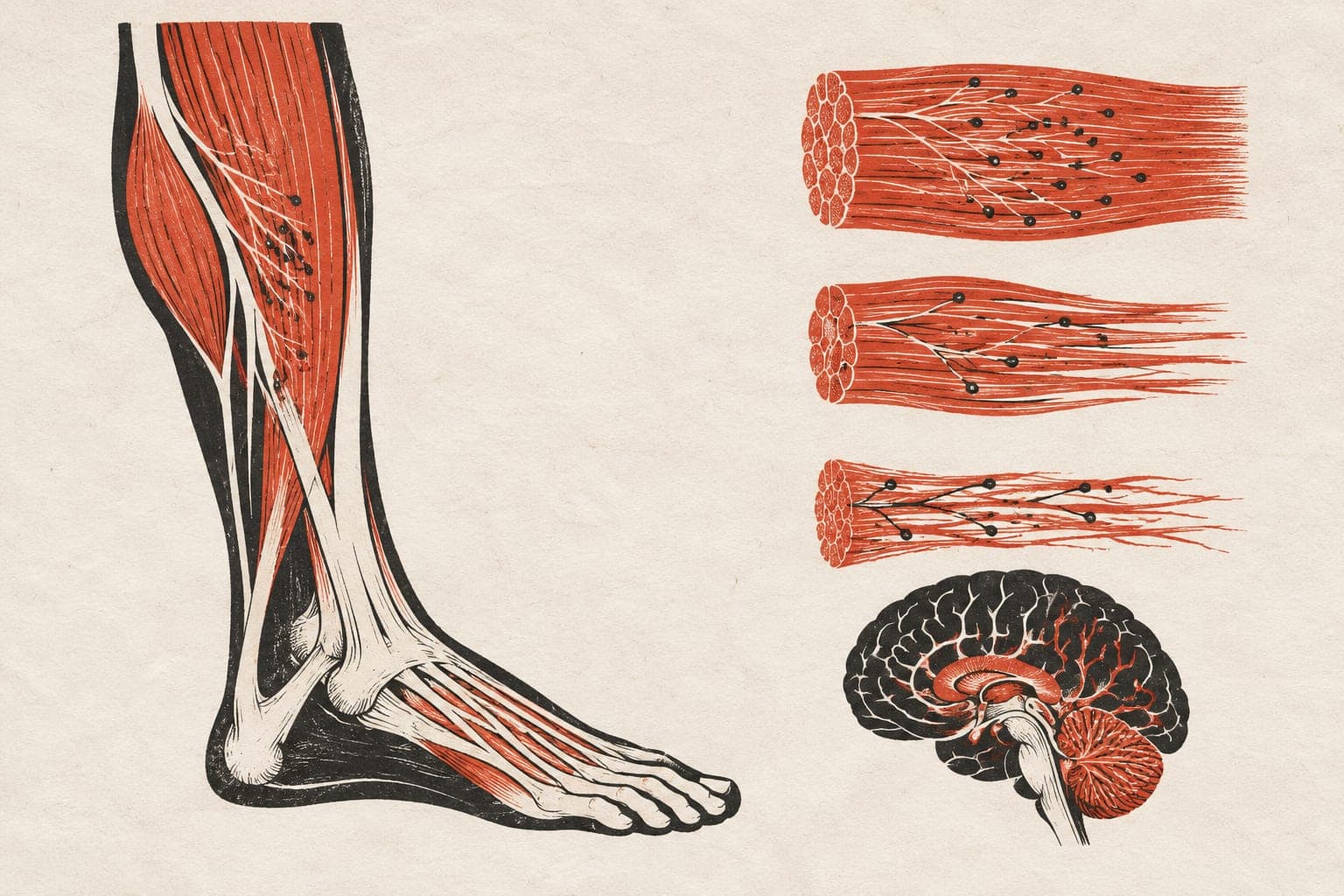
The objective of this study was to evaluate the effects of aging on descending modulation of spinal reflexes across different task conditions. In healthy young (YA; age 27 ± 4 years) and older (OA; age 63 ± 10 years) adults, we utilized paired subthreshold transcranial magnetic stimulation (TMS) and peripheral nerve stimulation (PNS) to elicit unconditioned (PNS only) and conditioned (TMS paired with PNS) soleus Hoffmann (H-)reflexes at 3 inter-stimulus intervals (ISIs) (-1.5, +10 ms, +40 ms) and during 3 task conditions - sit rest (SR), sit active (SA), and quiet stance (QS). Our results showed that at the + 40 ms ISI, compared to YA, the OA group showed significant differences in modulation (and reversal from facilitation to inhibition) of soleus H-reflexes during both SA and QS tasks (p < 0.0001). Correlation analysis showed a significant negative relationship between age and the magnitude of H-reflex modulation at the + 40 ms ISI, such that older individuals showed a larger magnitude of H-reflex inhibition. In conclusion, altered task-related modulation of spinal reflexes at the + 40 ms ISI may reflect specific aging-related effects on spinal sensorimotor integration, likely mediated via complex interactions between the influence of polysynaptic slower-conducting descending pathways, sensory afferents, and local spinal circuits, on spinal reflex activity during motor task performance.
The paper
Emory University; Georgia Institute of Technology
Aging Brain, 28 Oct 2025