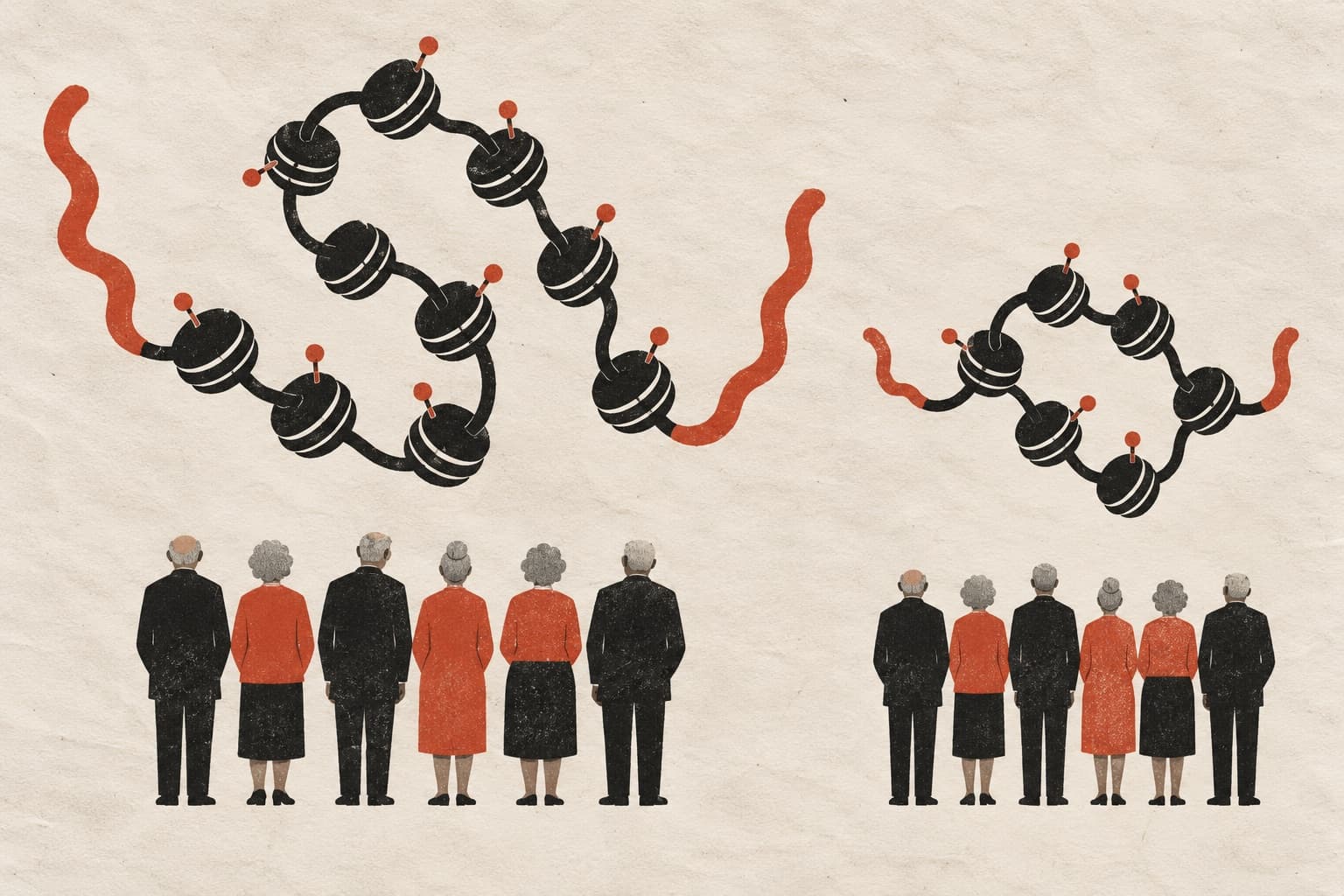
Accelerated Metabolomic Aging and Its Association with Social Determinants of Health in Multiple Sclerosis
Abstract
OBJECTIVES: Biological age may better capture differences in disease course among people with multiple sclerosis (PwMS) of identical chronological age. We investigated biological age acceleration through metabolomic age (mAge) in PwMS and its association with social determinants of health (SDoH) measured by area deprivation index (ADI). METHODS: mAge was calculated for three cohorts: 323 PwMS and 66 healthy controls (HCs); 101 HCs and 71 DMT-naïve PwMS; and 64 HCs and 67 pediatric-onset MS/clinically isolated syndrome patients, using an aging clock derived from 11,977 healthy adults. mAge acceleration, the difference between mAge and chronological age, was compared between groups using generalized linear and mixed-effects models, and its association with ADI was assessed via linear regression. RESULTS: Cross-sectionally, PwMS had higher age acceleration than HCs: 9.77 years in adult PwMS (95% CI:6.57-12.97, p=5.3e-09), 4.90 years in adult DMT-naïve PwMS (95% CI:0.85-9.01, p=0.02), and 6.98 years (95% CI:1.58-12.39, p=0.01) in pediatric-onset PwMS. Longitudinally, PwMS aged 1.19 mAge years per chronological year (95% CI:0.18, 2.20; p=0.02), faster than HCs. In PwMS, a 10-percentile increase in ADI was associated with a 0.63-year (95% CI:0.10-1.18; p=0.02) increase in age acceleration. DISCUSSION: We demonstrated accelerated mAge in adult and pediatric-onset PwMS and its association with social disadvantage.
The paper
Johns Hopkins University School of Medicine
medRxiv, 20 Feb 2025, Open access, Preprint, not peer-reviewed