Association between chronic disease status and transitions in depressive symptoms among middle-aged and older Chinese population: Insights from a Markov model-based cohort study
Abstract
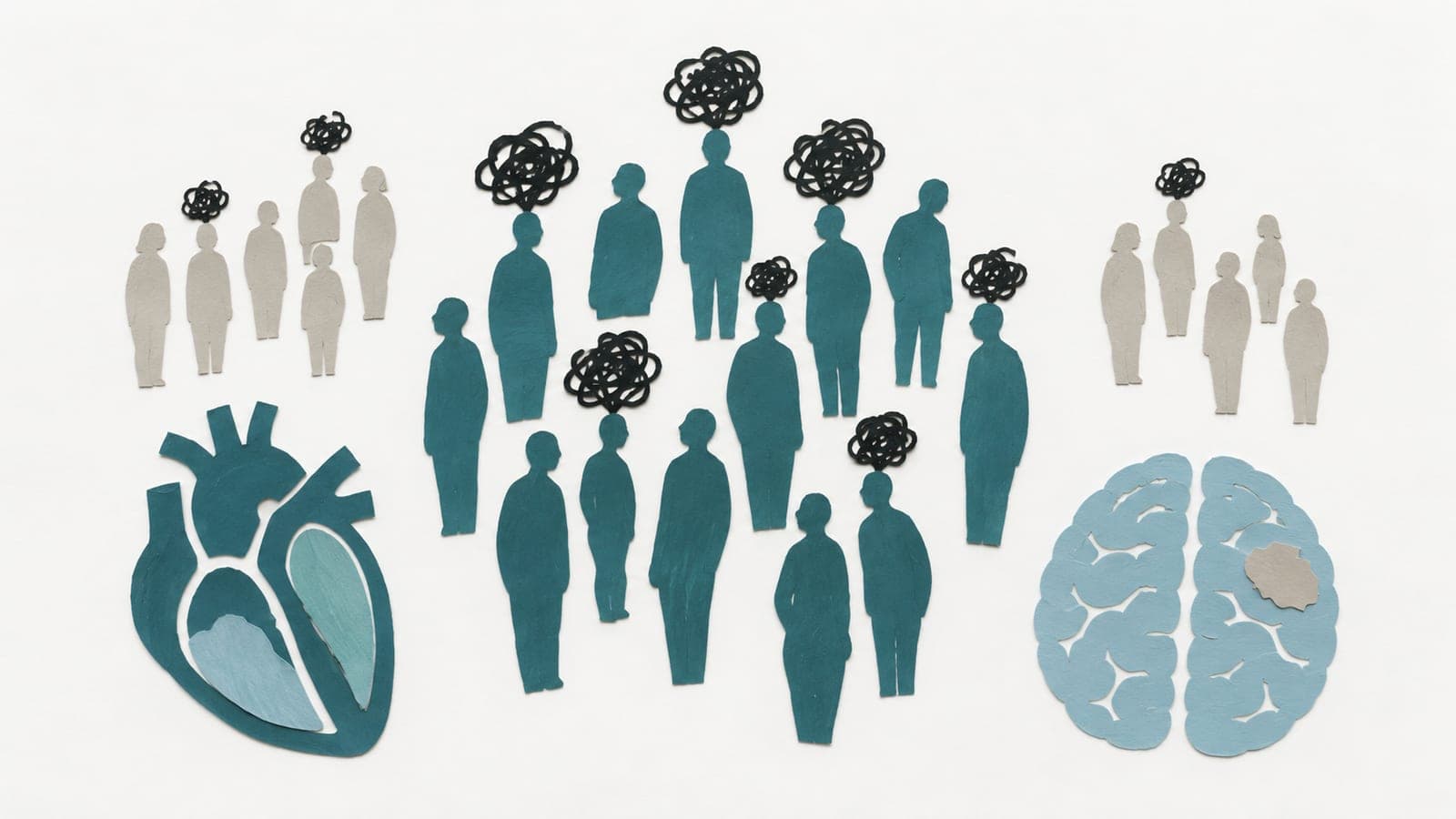
BACKGROUND: The relationship between chronic disease status (CDS) and transitions in depressive symptoms (DS) remains unclear. This study explores the association between CDS and DS transitions. METHODS: This cohort study analyzed data from 8175 participants aged 45+, sourced from China Family Panel Studies (2016, 2018, 2020). DS were assessed using a brief version of Center for Epidemiologic Studies Depression Scale (CES-D). CDS was categorized into healthy, single disease, and multimorbidity. Markov models were used to estimate state transition intensities, mean sojourn times and hazard ratios (HRs). RESULTS: DS transitions occurred between adjacent and non-adjacent states, but transition intensity between adjacent states was higher than among non-adjacent states. Self-transition intensities of severe-DS, mild-DS, and non-DS progressively increased, with average durations of 1.365, 1.482, and 7.854 years, respectively. Both single disease and multimorbidity were significantly associated with an increased risk of transitioning from non-DS to mild-DS, with multimorbidity showing a stronger association. In contrast, HRs for single diseases transitioning from mild-DS to severe-DS were significantly lower than 1. Furthermore, their HRs were almost <1 in recovery transitions but not statistically significant. LIMITATIONS: Specific chronic diseases and their combinations were not analyzed. CONCLUSIONS: The progression of DS exhibits various pathways. CDS is associated with DS transitions, but the roles of single disease and multimorbidity may differ across different DS progression stages. Both conditions were significantly linked to the risk of new-onset DS, with multimorbidity posing a greater association. However, this relationship is not observed in other progression stages. These findings could provide insights for early prevention and intervention for DS.
The paper
Chinese Academy of Medical Sciences & Peking Union Medical College
Journal of Affective Disorders, 18 Jul 2024