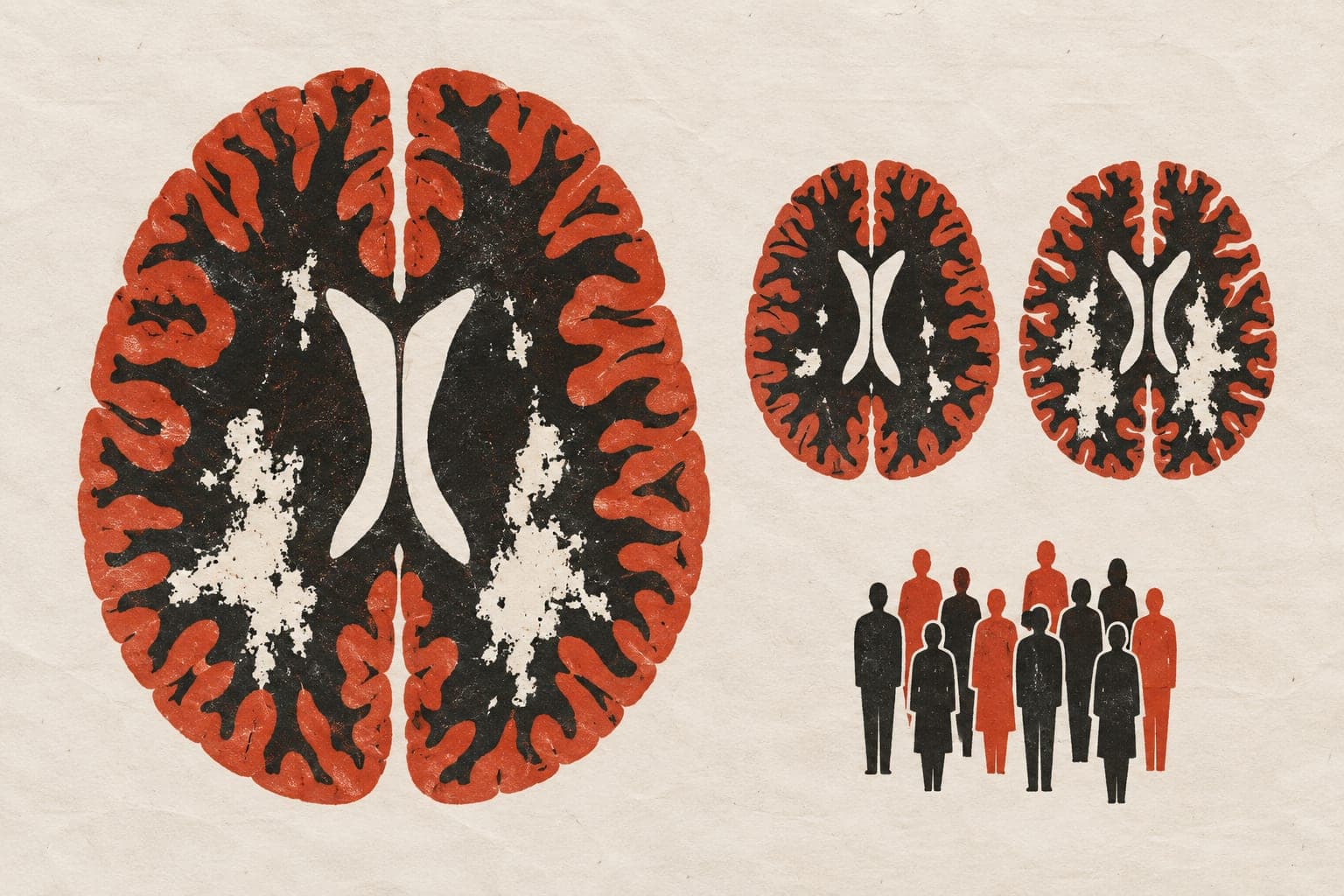
Association Between Amyloid-β, Small-vessel Disease, and Neurodegeneration Biomarker Positivity, and Progression to Mild Cognitive Impairment in Cognitively Normal Individuals
Abstract
BACKGROUND: We estimated the prevalence and incidence of amyloid-β deposition (A), small-vessel disease (V), and neurodegeneration (N) biomarker positivity in community-dwelling cognitively normal individuals (CN). We determined the longitudinal association between the respective biomarker indices with progression to all-cause mild cognitive impairment (MCI) and its amnestic and nonamnestic subtypes. METHODS: CN participants, recruited by advertising, underwent brain [C-11]Pittsburgh Compound-B (PiB)-positron emission tomography (PET), magnetic resonance imaging, and [F-18]fluoro-2-deoxy-glucose (FDG)-PET, and were designated as having high or low amyloid-β (A+/A-), greater or lower white matter hyperintensities burden (V+/V-) and diminished or normal cortical glucose metabolism (N+/N-). MCI was adjudicated using clinical assessments. We examined the association between A, V, and N biomarker positivity at study baseline and endpoint, with progression to MCI using linear regression, Cox proportional hazards and Kaplan-Meier analyses adjusted for age and APOE-ε4 carrier status. RESULTS: In 98 CN individuals (average age 74 years, 65% female), A+, V+, and N+ prevalence was 26%, 33%, and 8%, respectively. At study endpoint (median: 5.5 years), an A+, but not a V+ or N+ scan, was associated with higher odds of all-cause MCI (Chi-square = 3.9, p = .048, odds ratio, 95% confidence interval = 2.6 [1.01-6.8]). Baseline A+, V+, or N+ were not associated with all-cause MCI, however, baseline A+ (p = .018) and A+N+ (p = .049), and endpoint A+N+ (p = .025) were associated with time to progression to amnestic, not nonamnestic, MCI. CONCLUSION: Longitudinal assessments clarify the association between amyloid-β and progression to all-cause MCI in CN individuals. The association between biomarker positivity indices of amyloid-β and neurodegeneration, and amnestic MCI reflects the underlying pathology involved in the progression to prodromal Alzheimer's disease.
The paper
University of Pittsburgh
The Journals of Gerontology, Series A, Apr 9, 2019, Open access