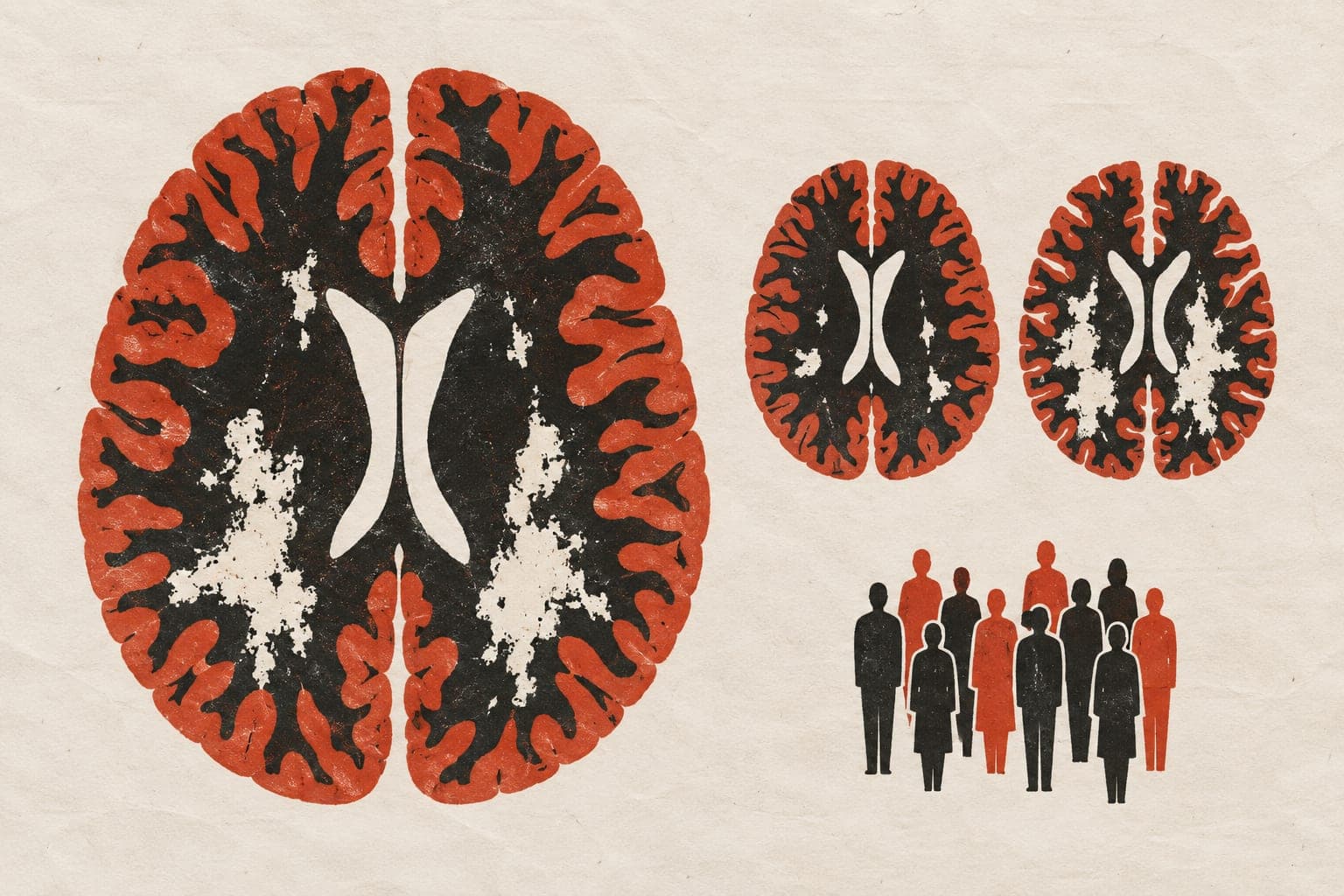
Effect of normal aging versus hypertension, abnormal body mass index, and diabetes mellitus on white matter hyperintensity volume
Abstract
BACKGROUND AND PURPOSE: The natural history of white matter hyperintensity (WMH) progression resulting from normal aging versus comorbid vascular insults remains unclear. Therefore we investigated age-related differences in WMH volumes among a group with comorbid hypertension, abnormal body mass index, and diabetes mellitus to a normal aging group drawn from the same population lacking any of these comorbidities. METHODS: WMH volumes were acquired using 3T MRI for 2011 Dallas Heart Study participants. The slope of the WMH versus age regression was compared between normal and comorbidity groups<50 and ≥50 years of age where a change in slope was demonstrated. RESULTS: Aging was linearly associated with greater log WMH volume for both normal (P=0.02) and comorbidity (P<0.0001) groups. Beyond 50 years of age, more rapid increases in WMH volumes for age were seen in the group with comorbidities (P<0.0001) but not in the normal group (P=0.173). The between-group difference in slope of expected WMH for age was significantly greater in the comorbidity groups≥50 years of age (P=0.0008) but not <50 years of age (P=0.752). CONCLUSIONS: After 50 years of age, but not before, comorbid hypertension, obesity, and diabetes mellitus were associated with significantly larger WMH volumes for age compared with a normal aging group lacking these conditions. These results support the assertion that age-related differences in WMH volumes are significantly increased in the presence of comorbidities, but the effect is only detectable after 50 years of age.
- Hypertension
- Abnormal body mass index
- Diabetes mellitus
- White matter hyperintensity volume
- Obesity
- Humans
The paper
The University of Texas Southwestern Medical Center
Stroke, 7 Nov 2013