Fatty acid altered DNA marks in human fat-derived stem cells
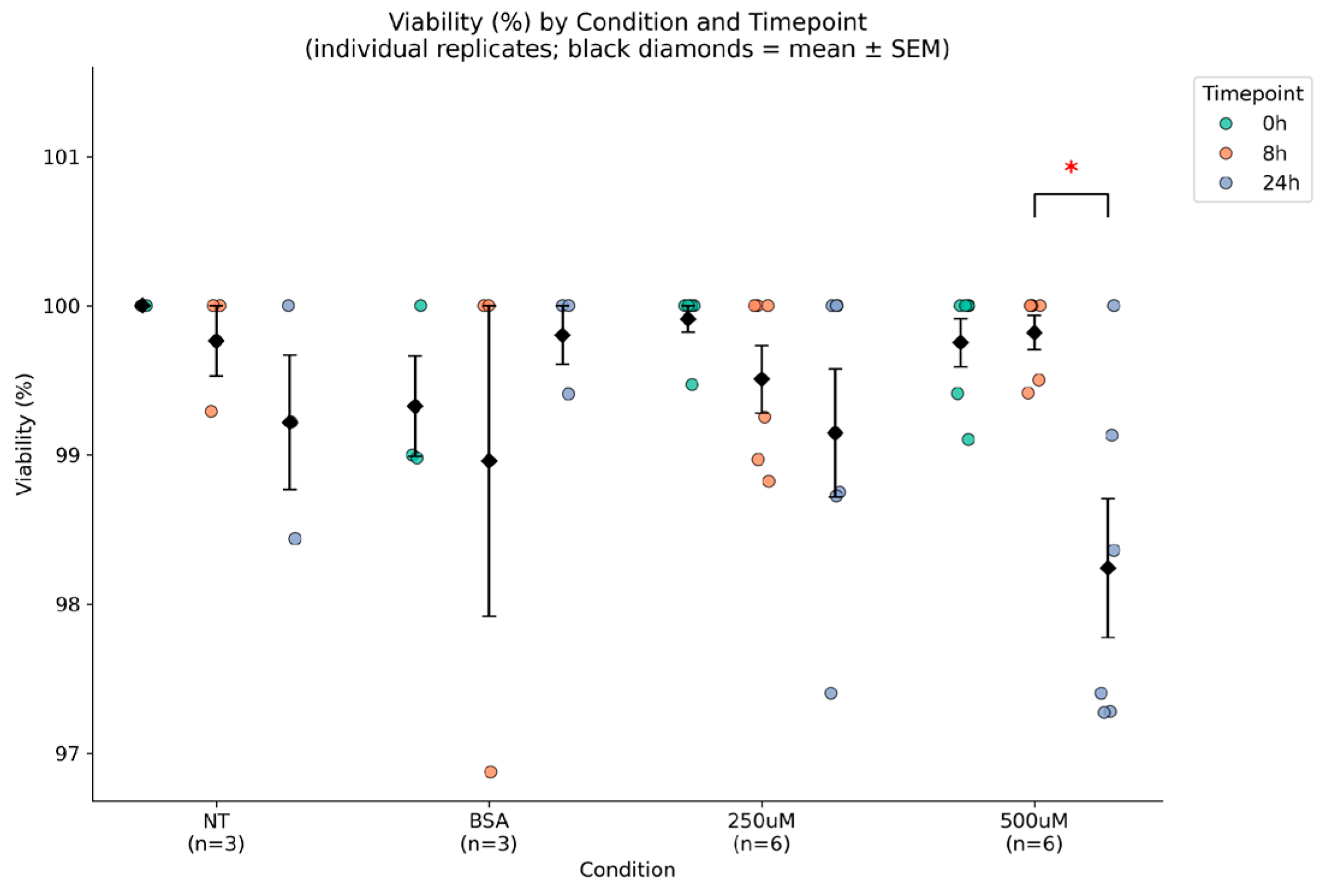
A measure of chemical tagging on nuclear DNA fell from 29.87% in untreated cells to 26.84% after exposure to a saturated fatty acid.
Our read
Mechanisms- Studied:
- Experiments in human adipose-derived mesenchymal stem cells, 24 h, against untreated stem cells (Dose-response)
- What changed:
- DNA methylation was lower in palmitate-treated stem cells: 26.84% against 29.87% in untreated cells
- The catch:
- Sequencing compared palmitate plus BSA with untreated medium, without a BSA-only control
Editor of record: Boris Djordjevic · AgingResearch.News
Human adipose-derived mesenchymal stem cells, stem cells from healthy fat tissue, were exposed to palmitate, a saturated fatty acid, in a laboratory experiment. The cells received 250 or 500 micromoles per liter for 24 hours. Both doses increased the electrical difference across the membranes of mitochondria, the cells’ energy-producing structures, rather than reducing it.
At the lower dose, the estimated number of mitochondrial DNA copies fell to 56% of untreated levels. DNA in the cell nucleus lost one type of chemical tag and gained an equal amount of a chemically modified form. This pattern was consistent with the tags being converted rather than removed.
Why it matters
Regenerative capacity matters for tissue maintenance as bodies age. The authors suggest that fatty-acid stress may be a route by which obesity compromises the regenerative capacity of fat-tissue stem cells.
Caveats
The authors note that each assay ran once on one commercial cell lot, with one culture sequenced per condition, making the findings exploratory.
Where the evidence stands
Cellular senescence
- 865 independent labs in 75 countries
- 522 findings against
- 52 trials, 15 with no results posted
- Funders: National Natural Science Foundation of China and others
- 668 of 9,980 findings with company ties
- 50 of 52 trials sponsored by developers of drugs aimed at it
DNA methylation
- 205 independent labs in 39 countries
- 19 findings against
- Funders: National Institutes of Health and others
- 44 of 410 findings with company ties
From the paper
- Events by group
… with colocalisation of 28.0% against 7.3% in NT and 39–40% under palmitate, but fewer puncta than palmitate; as its mitophagy is Parkin-dependent and these cells were not Parkin-transfected, it is shown for descriptive reference and excluded from the concentration comparison.
- Limitation
Each assay was performed once on cells of one commercial lot, and one culture per condition was sequenced, so the findings are exploratory.
Quoted word for word from the full text on mdpi.com.
- Cellular senescence
- DNA methylation
- Mitochondrial DNA maintenance
- 5-hydroxymethylcytosine
- 5-methylcytosine
- Humans
The paper
Institute of Biology and Immunology of Reproduction
International Journal of Molecular Sciences, Nov 13, 2026, Open access, CC BY
Comments
Be the first to comment.