Blood proteins linked to later lung-scarring disease
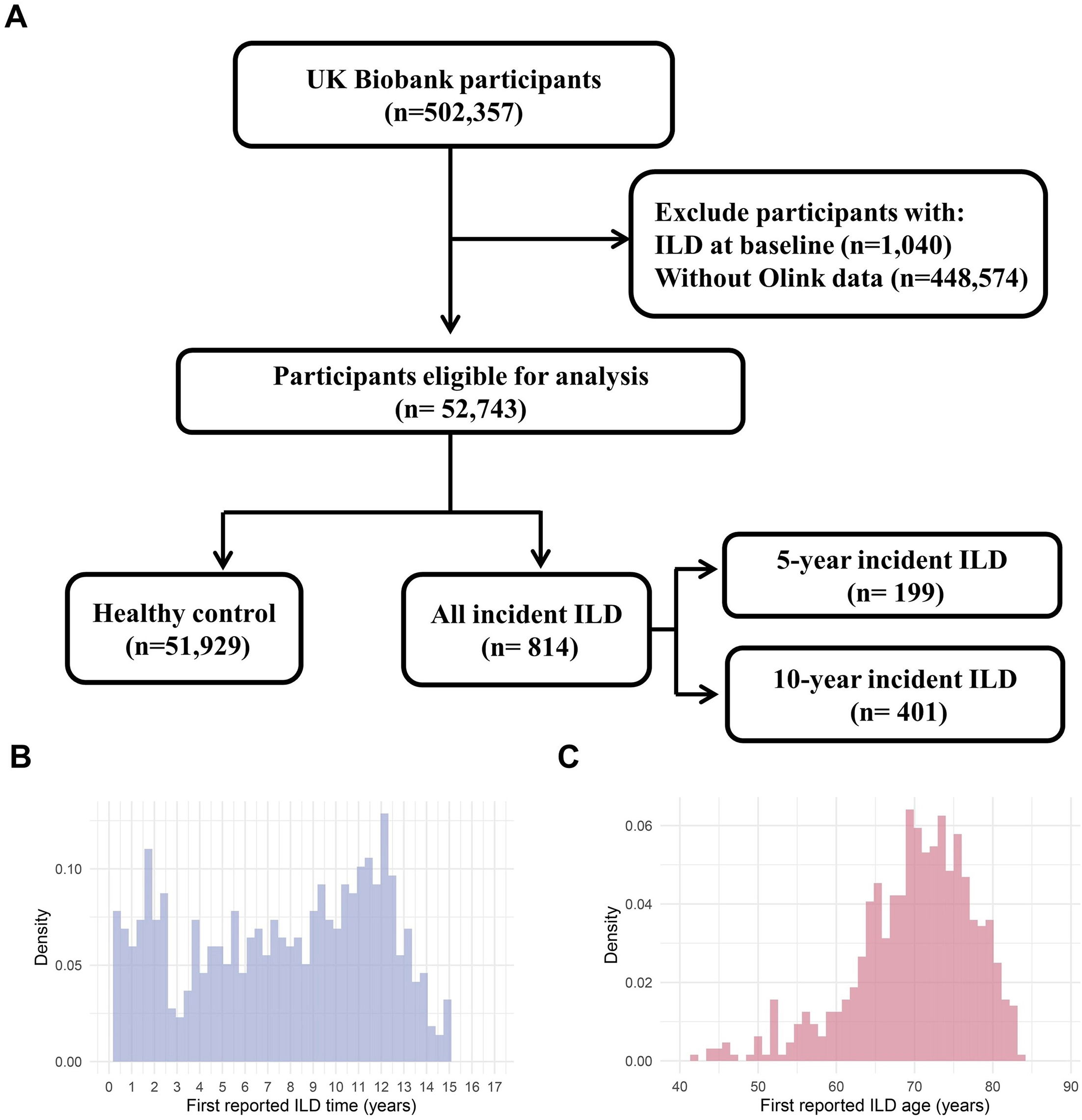
Among 52,743 participants initially free of interstitial lung disease, 277 blood proteins were linked to later diagnoses over an average 14.4 years.
Limit: Unrecognized lung disease at baseline could explain protein changes before diagnosis
Edited by Boris Djordjevic · AgingResearch.News
Researchers studied 52,743 UK Biobank participants without interstitial lung disease, a group of disorders that can scar the lungs, in an observational cohort study. They measured 2,923 proteins in plasma, the liquid part of blood. During an average 14.4 years of follow-up, researchers identified 814 cases. They linked 277 proteins to later diagnoses.
A prediction model combined five selected proteins with clinical information. Its area under the curve—a measure of how well a model distinguishes people who develop a condition from those who do not—was 0.938 for five-year risk and 0.908 for 10-year risk. Higher values indicate better discrimination, with 1 representing perfect discrimination. Some protein levels differed from control levels more than a decade before diagnosis.
Why it matters
Prediagnostic blood markers could help researchers investigate the long lead-up to lung disease, including questions about immune signaling.
Caveats
The observational design cannot establish that these proteins cause lung disease. The findings concern UK Biobank participants without interstitial lung disease at enrollment.
From the paper
- Participants
After excluding 1,040 participants with baseline ILD and 448,574 without proteomic data, 52,743 of 502,357 UK Biobank participants were included ( Figure 1A ).
- Result
For example, SCGB3A1 and ROBO2 were positively associated with incident ILD, with HRs of 9.85 (95% CI:6.99-13.88) and 7.89 (95% CI: 5.77-10.78), respectively.
Quoted word for word from the full text on frontiersin.org.
The paper
Shanghai Jiao Tong University
Frontiers in Immunology, Oct 21, 2026, Open access, CC BY


Comments
Be the first to comment.