Severity of Deficit in Skeletal Muscle Lipid Metabolism Invokes Unique Adaptive Responses in Dietary Lipid Intake and Absorption
Abstract
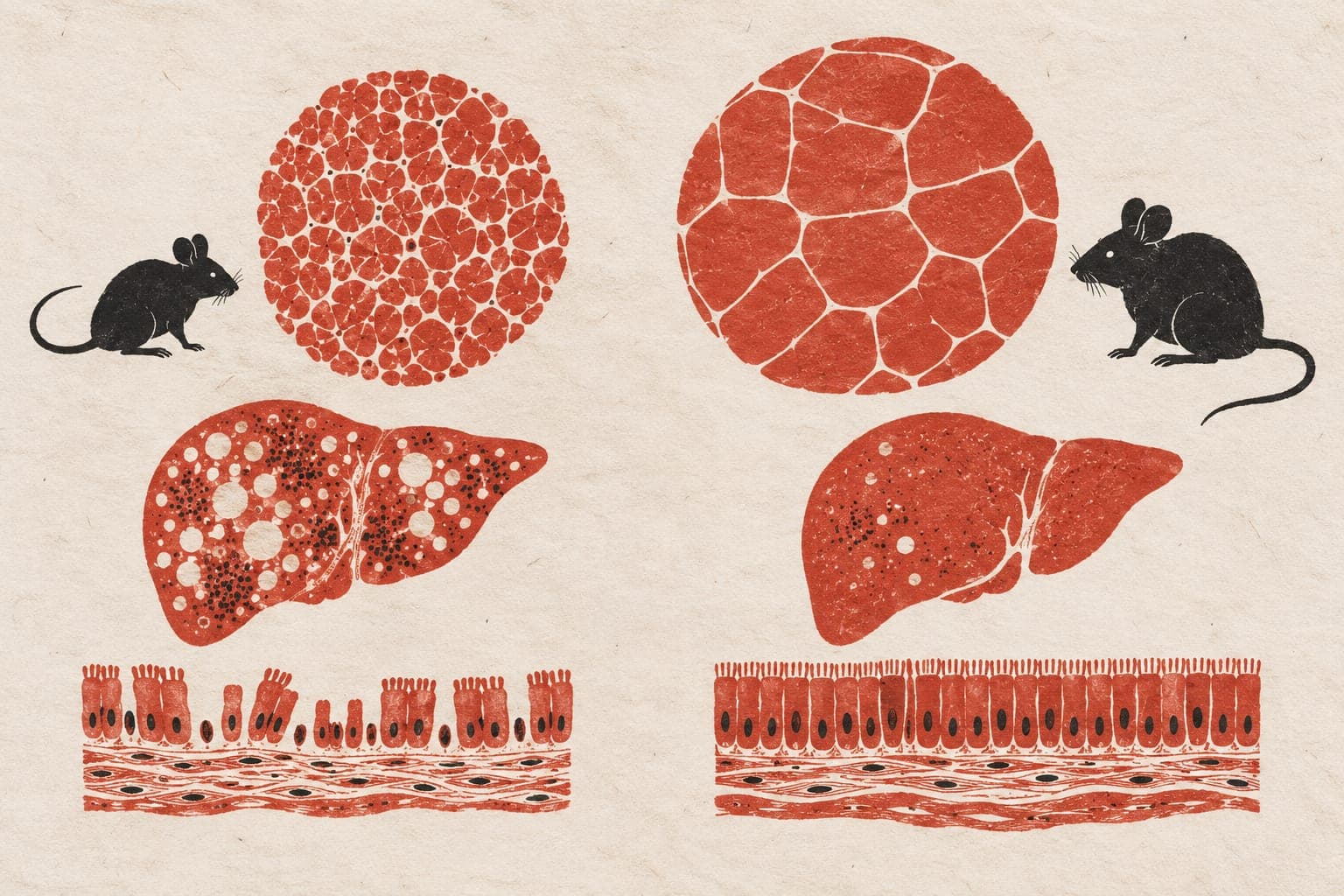
Introduction and Objective: Skeletal muscle plays a central role in whole-body lipid metabolism through mitochondrial and peroxisomal fatty acid oxidation (FAO). When skeletal muscle lipid metabolism is impaired, whole-body adaptations occur to maintain metabolic homeostasis. We hypothesized that limiting skeletal muscle lipid metabolism through mitochondria &/or peroxisomes would trigger adaptive responses to reduce dietary lipid intake &/or absorption with the most robust changes coinciding with deficit severity Methods: Mice were generated with skeletal muscle-specific deletion of 1) carnitine palmitoyltransferase 1b (Cpt1bM-/-) to limit mitochondrial FAO, 2) peroxin 5 (Pex5M-/-) to negate peroxisomal FAO, and 3) both Cpt1b and Pex5 (DKO) to limit lipid metabolism through both organelles. Results were compared to floxed littermate controls (Cpt1bfl/fl, Pex5fl/fl, and DFL). Results: Skeletal muscle FAO capacity was reduced 20-30% in both Cpt1bM-/- and Pex5M-/- mice, while DKO mice had a robust 60-70% decrease. Despite these deficits, only Cpt1bM-/- mice had impaired whole body lipid clearance after Intralipid 20 gavage (15µl/g body weight). Further tests revealed distinct adaptive responses: Cpt1bM-/- mice reduce dietary lipid intake, while DKO mice limit dietary lipid absorption (no changes in Pex5M-/- mice). Investigation of circulating factors that may contribute to these unique responses showed that Cpt1bM-/- mice produced fibroblast growth factor 21 (Fgf21), growth differentiation factor 15 (Gdf15), and angiopoietin-like 4 (Angptl4), which enter circulation and can impact food/lipid preference. In contrast, serum proteomics revealed that DKO mice released mitochondrial proteins into the circulation that are predicted to alter dietary lipid absorption. Conclusion: Skeletal muscle can communicate the severity of deficit in FAO capacity to fine-tune dietary lipid intake and absorption, potentially through release of distinct muscle-derived proteins into the circulation. Disclosure: V.M. Datta: None. A.E. Verret: None. M.A. Linden: None. C.D. Morrison: None. P. Smoak: None. R.C. Noland: None. Funding: National Institutes of Health (R01DK103860)
The paper
Baton Rouge
ADA Scientific Sessions 2026 Abstract, 5 Jun 2026
Presented at ADA Scientific Sessions 2026, late-breaking 3050-LB