Heart failure after anthracyclines in older adults with two lymphomas
Among 13,401 older patients without prior heart failure, treated with anthracyclines for either of two lymphomas, estimated heart failure incidence reached 14.2% at two years.
Our read
Populations- Studied:
- Cohort study of 13,401 anthracycline-treated older adults with lymphoma, median 2.7 years
- What changed:
- Heart failure incidence reached 14.2% at two years after anthracycline chemotherapy in older adults with lymphoma
- The catch:
- Billing records can miss heart failure that goes undiagnosed or uncoded
- In the record:
- One of 8 papers on Classical Hodgkin lymphoma on record: 1 with results in people.
Editor of record: Boris Djordjevic · AgingResearch.News
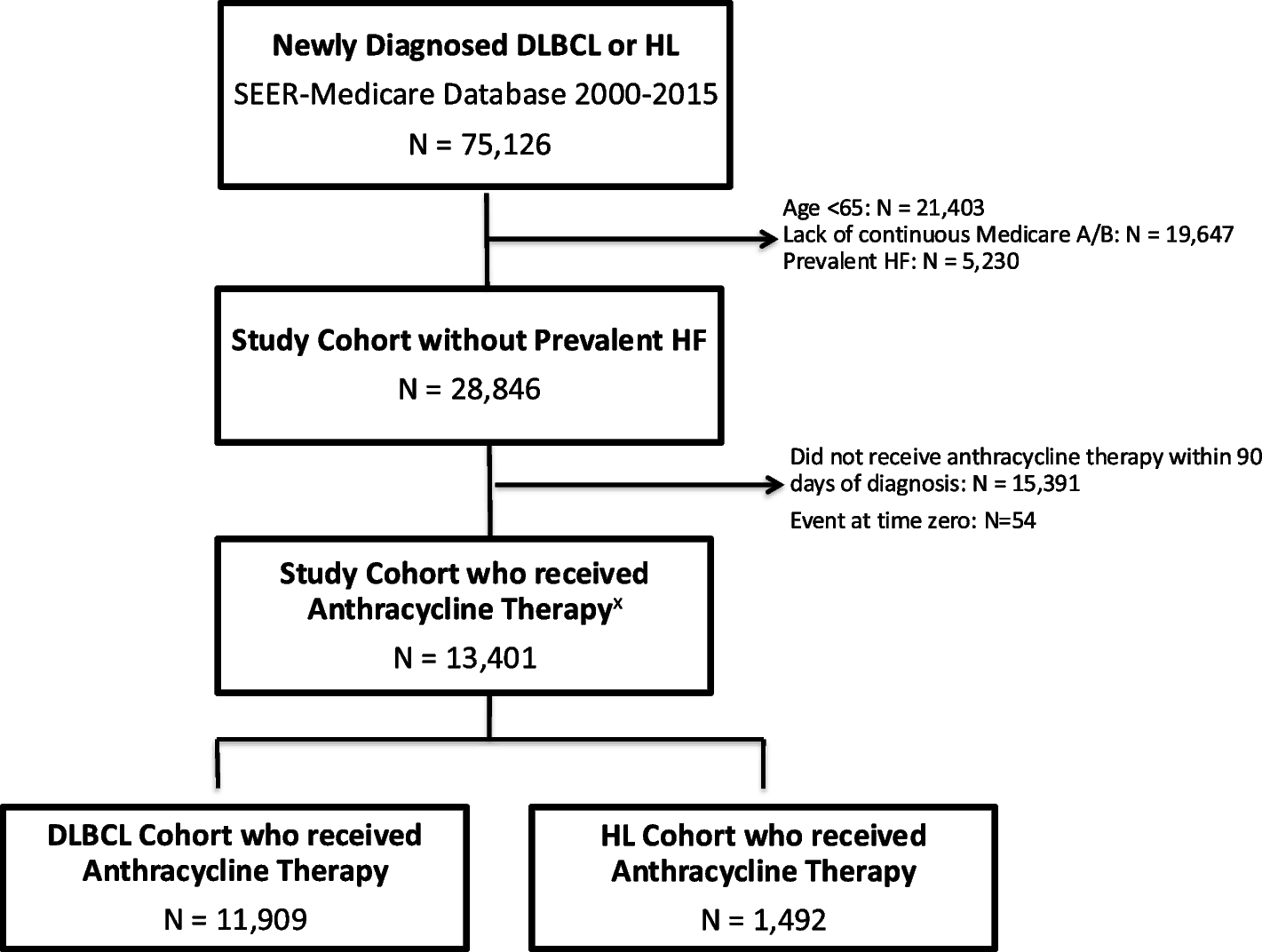
Among 13,401 adults aged 65 or older with newly diagnosed diffuse large B-cell lymphoma or classic Hodgkin lymphoma, a records-based study tracked heart failure after chemotherapy containing anthracyclines, a class of cancer drugs. These lymphomas are cancers of immune cells. Participants had no previous heart failure; their average age was 75.1, and 49.1% were women.
The analysis used linked cancer-registry and Medicare records. Over a median follow-up of 2.7 years, billing codes identified 3,343 new heart failure diagnoses. Models accounted for the competing possibility of death. Estimated heart failure incidence was 14.2% at two years and 21.6% at five years after chemotherapy. Estimated heart failure hospitalization incidence was 9.6% at two years. Older age, high blood pressure, diabetes and several existing heart conditions were associated with higher risk.
Why it matters
Heart failure complicates cancer care in older adults, whose age and existing illnesses add to their risk. The authors suggest that adding heart ultrasound measurements taken before chemotherapy may improve risk prediction.
Caveats
Billing records may miss heart failure that was not diagnosed or coded. The results do not cover adults younger than 65 or people who already had heart failure.




Comments
Be the first to comment.