Assessing the long-term effects of wearing a lower-limb exoskeleton on physical activity and quality of life in pre-frail adults – a feasibility study
Registered NCT06041100
Abstract
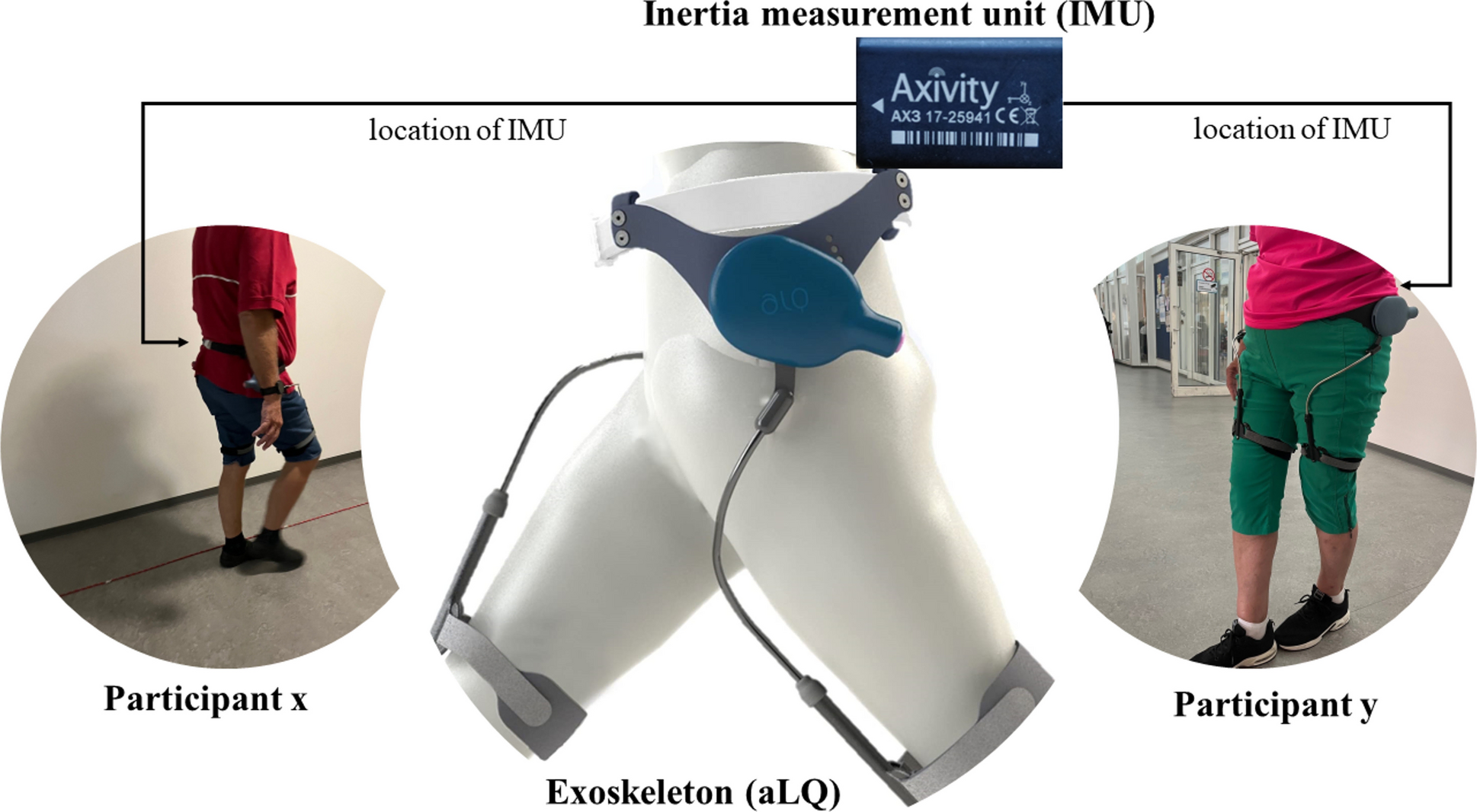
Lower-limb exoskeletons have become an alternative walking aid that tackles mobility problems. However, to efficiently improve the mobility and quality of life of senior adults, it is important to comprehensively assess the long-term effects and challenges associated with using exoskeletons, including their compatibility with everyday activities, usability, and acceptability. Therefore, this study aimed to evaluate the feasibility of implementing a passive hip exoskeleton into the daily routine of senior adults over 12 weeks and to monitor their walking performance. Senior adults aged > 65 without a current use of walking aid and with a pre-frailty index ≤ 5 were recruited for this feasibility study. We recruited 16 participants who received a bilateral passive exoskeleton to be worn daily for 30 min for 12 weeks (W12) and a follow-up assessment after 6 weeks (W18). We assessed participant adherence and wearability of the device through weekly phone calls, as well as acceptability of the device and overall experience using a 5-point Likert Scale. Their cadence, step length, and speed were monitored with (Exo) and without (noExo) the exoskeleton during a 6-min walk test and short physical performance battery at baseline (W0), after 4 weeks (W4), W12 and W18. Seven out of 16 participants finished the protocol and follow-up assessment and reported the wearability, acceptability of the device, and overall experience as acceptable. Only 5/7 participants showed a feasible adherence to the protocol. From W0 to W12, 7/16 participants showed a tendency to decrease their cadence, step length, and speed and to increase their total walking distance during walking with Exo and noExo. The daily use of the Exo for over 12 weeks was found to be partly feasible for senior adults. Based on the low number of participants no conclusion can be drawn on the cadence, step length, speed, and walking distance. Future randomized controlled trials are warranted to explore the longitudinal effects of wearing a passive hip exoskeleton on senior adults. NCT06041100| | https://www.clinicaltrials.gov/ | registered 01.09.2023.
- Passive hip exoskeleton
- 6-minute walk test
- Cadence
- Pre-frailty index
- Short Physical Performance Battery
- Humans
The paper
Aalborg University
Pilot and Feasibility Studies, 8 Oct 2026, CC BY-NC-ND