Sleep waves were flatter at later Alzheimer’s disease stages
An observational study linked larger, steeper sleep waves to better cognitive performance over time among people without cognitive impairment.
Our read
Biomarkers- Studied:
- Cohort study of 45 people
- In the record:
- One of 4 papers on slow-wave slope on record: 2 with results in people.
- Why it’s aging research:
- It bears on staying healthy in midlife and later life.
Editor of record: Boris Djordjevic · AgingResearch.News
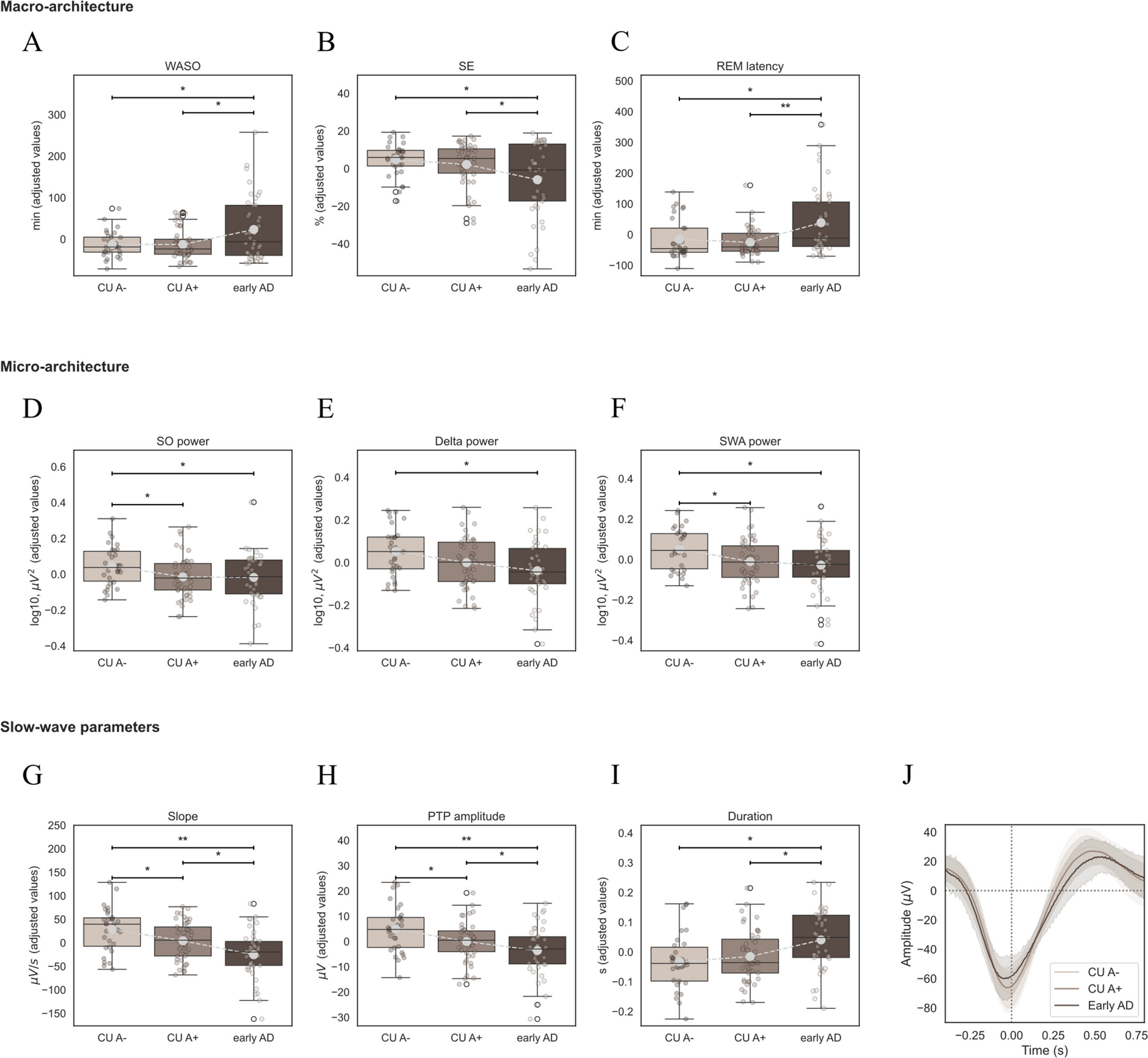
People without cognitive impairment and people with mild cognitive impairment or mild dementia due to Alzheimer’s disease took part in an observational study. Sleep recordings covered 30 unimpaired people without abnormal biological markers of Alzheimer’s disease, 45 unimpaired people with abnormal markers, and 41 people with impairment or dementia.
Cross-sectional comparisons found more waking after falling asleep and a longer wait for rapid eye movement sleep at later disease stages. Slow sleep waves were flatter at later stages in both sexes. Among initially unimpaired participants, steeper waves and greater wave height were linked to better cognitive performance during follow-up. Exploratory analyses suggested stronger associations in men.
Why it matters
Alzheimer’s research needs ways to track changes before cognitive symptoms appear. The authors supported sleep-wave shape as a candidate noninvasive marker for future studies testing sleep-based interventions.
Caveats
Cross-sectional group comparisons did not track sleep changes as individuals’ disease advanced. Underlying Alzheimer’s changes could have influenced both sleep and cognition during follow-up, and the sex differences were exploratory.
Comments
Be the first to comment.