Smell test scores linked to later mild cognitive impairment
Among cognitively normal older adults, each 10-percentage-point higher smell identification score was linked to a 16% lower hazard of later mild cognitive impairment.
Our read
Biomarkers- Studied:
- Preprint: cohort study of 250 cognitively normal older adults
- What changed:
- Each 10-percentage-point higher smell identification score was linked to a 16% lower hazard of later mild cognitive impairment
- The catch:
- Underlying Alzheimer’s-related changes could explain both poorer smell scores and later cognitive impairment
- Why it’s aging research:
- It bears on staying healthy in midlife and later life.
Editor of record: Boris Djordjevic · AgingResearch.News
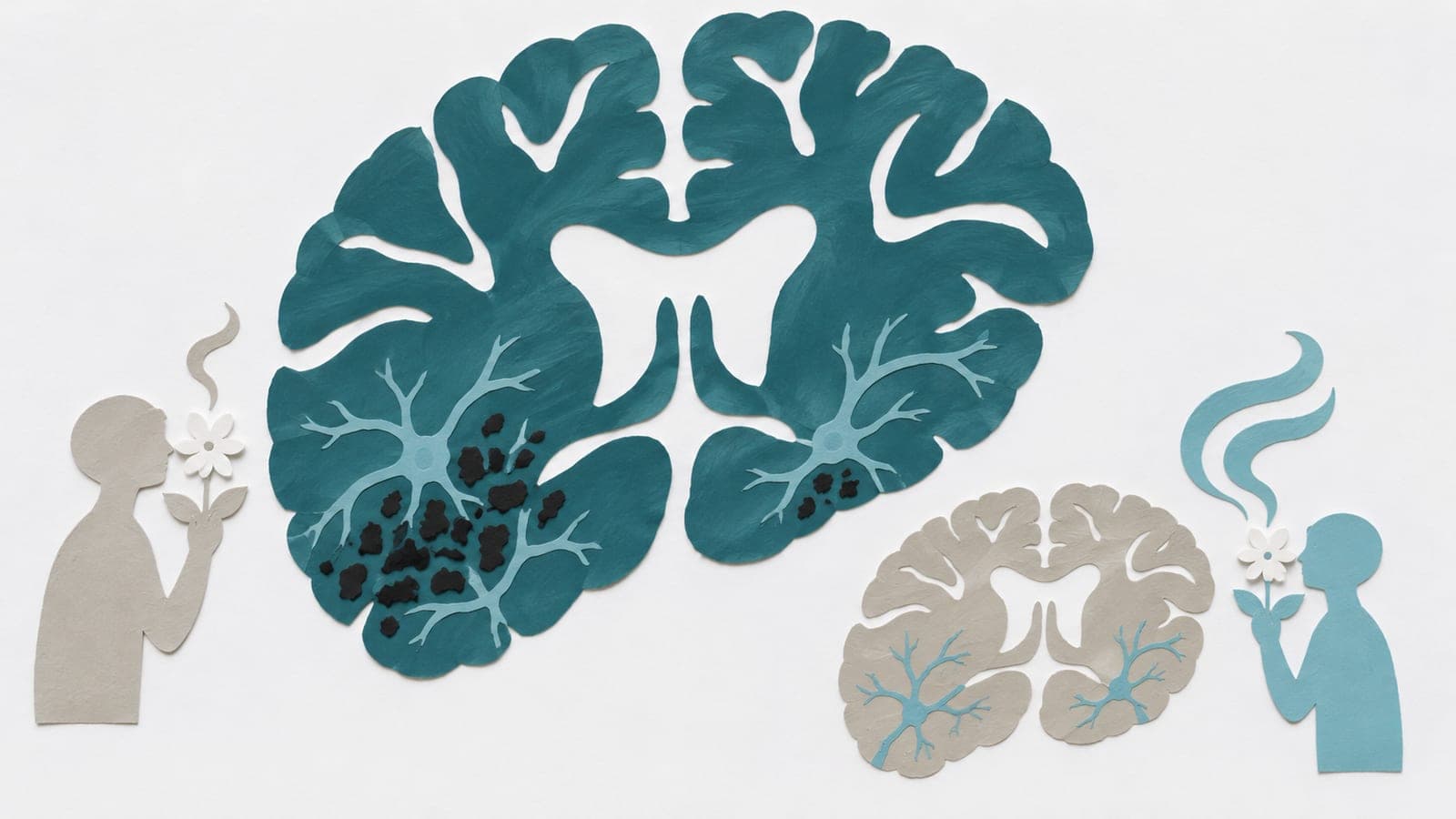
Cognitively normal older adults—257 across two cohorts—completed smell identification tests and brain scans in an observational study. The 76 participants who tested positive for amyloid buildup identified odors less well than the 181 who tested negative.
Among 250 participants followed over time, each 10-percentage-point higher smell identification score was associated with a 16% lower hazard, or risk at a given time, of developing mild cognitive impairment—problems with memory or thinking. The link remained after accounting for initial overall cognitive performance and whether participants carried the APOE ε4 gene variant. Links between smell scores and tau, a protein that can accumulate in the brain, differed between cohorts. No link with brain structure remained after correction for multiple comparisons.
Why it matters
Alzheimer’s-related brain changes can precede cognitive symptoms. These results support investigating smell testing as a way to assess the risk of later cognitive impairment.
Caveats
Underlying Alzheimer’s-related changes could account for both poorer smell scores and later cognitive impairment; improving smell was not tested. The preprint has not been peer-reviewed and included only cognitively normal older adults.
- Mild cognitive impairment
- MAPT
- Alzheimer's disease
- Olfactory impairment
- Incident mild cognitive impairment
- Humans
The paper
Olfactory Function in Preclinical Alzheimer's Disease: A Multi-Cohort Study
Harvard University; UCLouvain
medRxiv, Nov 4, 2026, Open access, Preprint, not yet peer-reviewed
Comments
Be the first to comment.