Colchicine not linked to cardiovascular risk in a Chinese cohort
Cardiovascular disease rates were 1.62 versus 1.59 per 100 person-years among colchicine users and non-users, respectively, after statistical adjustment.
Edited by Boris Djordjevic · AgingResearch.News
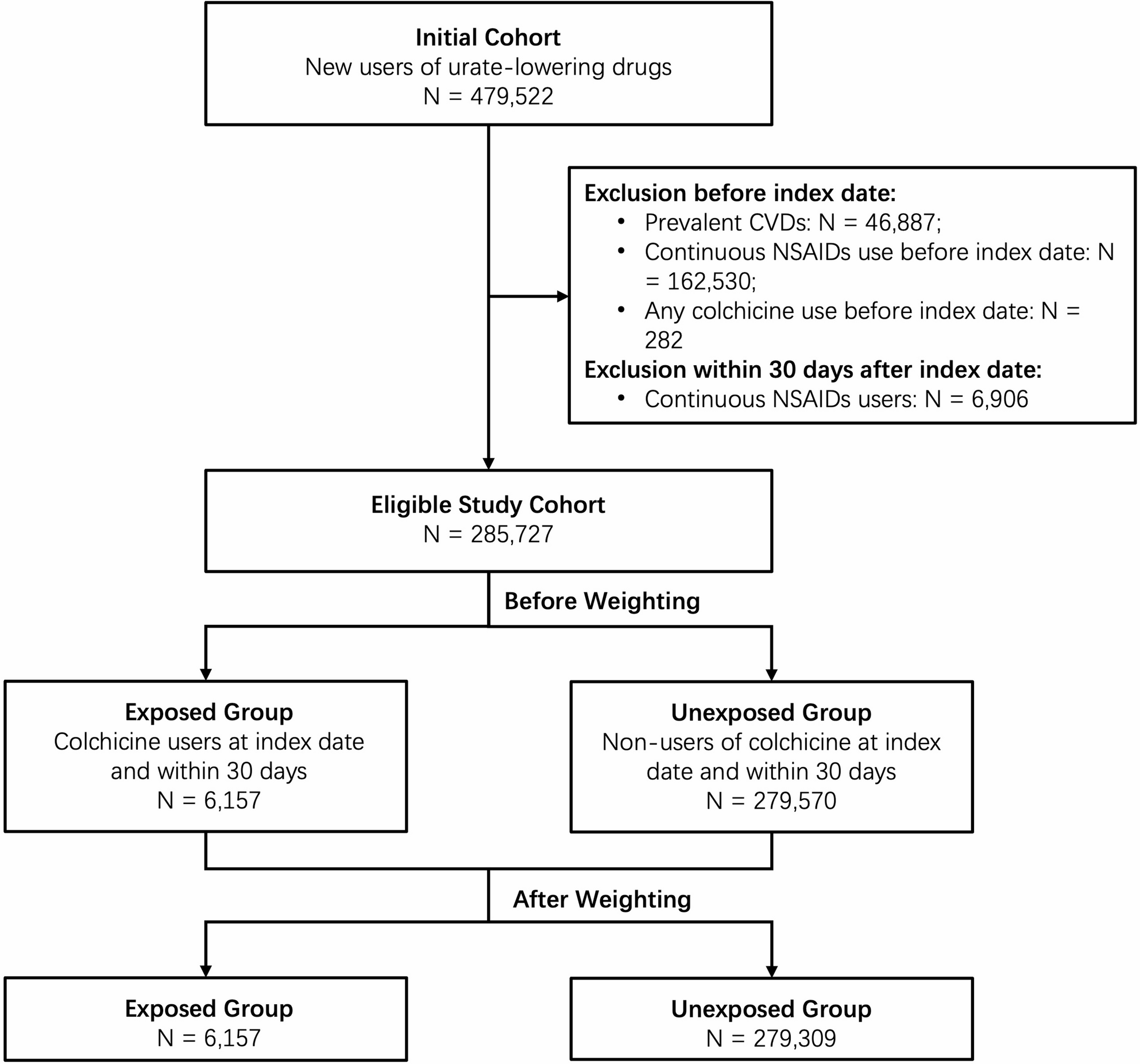
An observational cohort study examined Chinese adults without previous cardiovascular disease—disease of the heart or blood vessels—who started treatment to lower uric acid. Researchers analyzed Beijing employee medical claims from 2008–2017, including 6,157 colchicine users and 279,309 non-users.
People counted as colchicine users if they received at least one dispensing within 30 days of starting uric acid–lowering treatment. Researchers used statistical weighting to balance the groups’ starting characteristics. Over a median follow-up of 3.05 years, colchicine use was not associated with developing cardiovascular disease. It was also not associated with heart failure or stroke. Colchicine use was associated with a lower relative risk of death from any cause.
Why it matters
Preventing a first cardiovascular event is relevant to healthy aging. The authors concluded that these findings did not support routine colchicine use for that purpose when uric acid–lowering treatment begins.
Caveats
This observational study cannot establish cause and effect. The findings concern Chinese adults starting uric acid–lowering treatment without previous cardiovascular disease, not people with established cardiovascular disease.
Where the evidence stands
Colchicine
- 12 independent labs in 10 countries
- 1 finding against
- 169 trials, 48 with no results posted
- Funders: Dutch Cardiovascular Alliance and others
- 23 of 169 trials sponsored by its developers




Comments
Be the first to comment.