Mobile lifestyle program lowered odds of high blood pressure
At 24 months, hypertension odds were lower with the six-month program than in the control group, with an odds ratio of 0.20.
Our read
Interventions- Studied:
- Randomized trial in community-dwelling adults, 24 months, against control group (Registered ChiCTR2300070575)
- What changed:
- High blood pressure odds were lower with the lifestyle program than control at 24 months (odds ratio 0.20)
- The catch:
- Only 20 communities were randomized, limiting precision of the hypertension effect estimate
- Why it’s aging research:
- It bears on staying healthy in midlife and later life.
Editor of record: Boris Djordjevic · AgingResearch.News
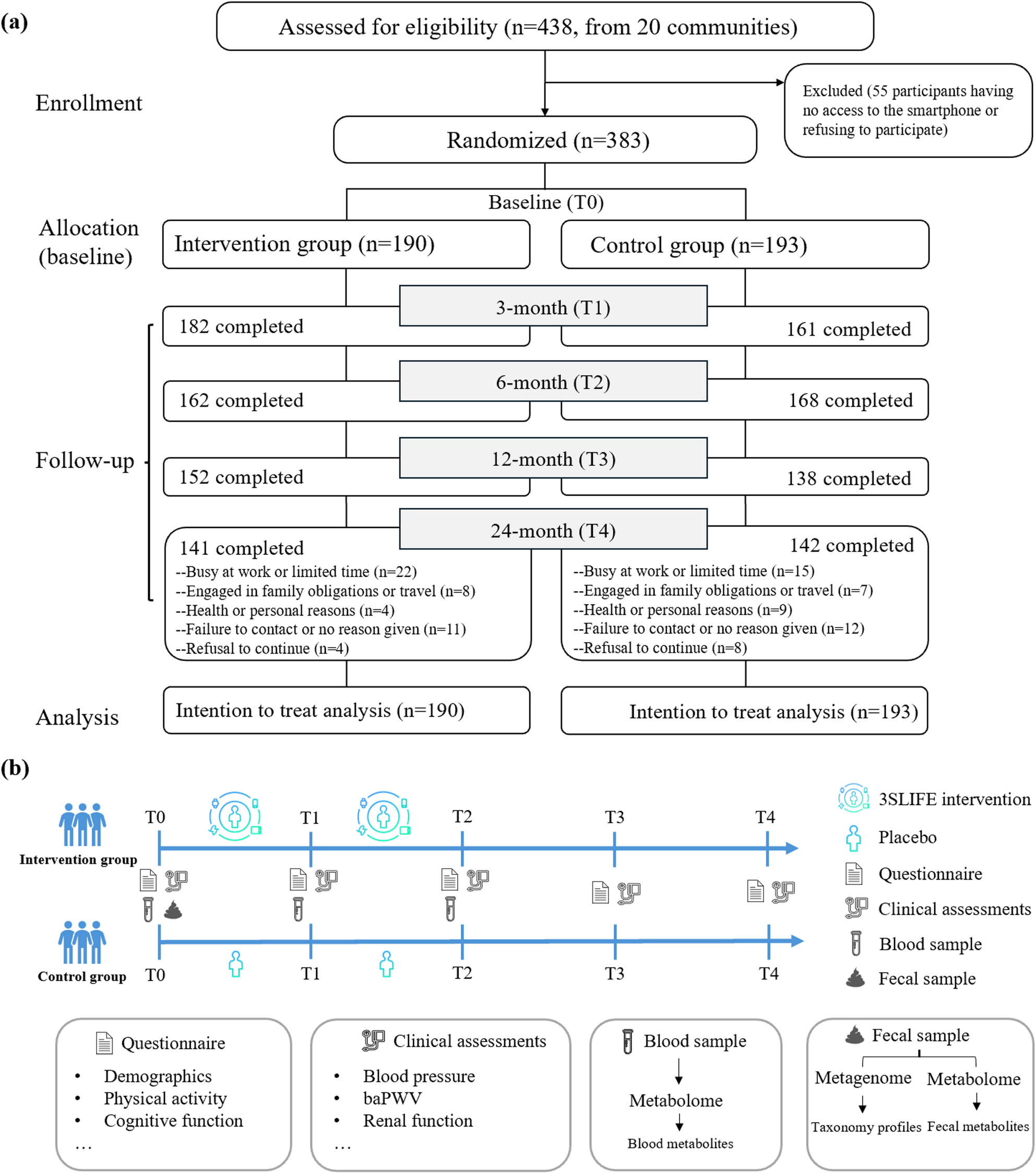
Community-dwelling adults with and without hypertension in 20 Chinese communities or villages took part in a cluster-randomized trial, which assigned whole communities to study groups. This prespecified secondary analysis included 190 participants in the intervention group and 193 controls. The six-month program combined lifestyle education, interactive courses, personalized feedback, and family and community support through social media. Follow-up continued to 24 months.
Hypertension was defined as blood pressure of at least 140/90 mmHg. Compared with controls, the program group had lower hypertension odds at six and 24 months. At 24 months, diastolic pressure—the lower blood pressure reading—was 2.68 mmHg lower relative to controls. Exploratory analyses suggested that gut microbes and stool chemicals measured before the program may help predict participants’ responses.
Why it matters
High blood pressure matters for cardiovascular health as people age. The trial addressed whether mobile lifestyle support could offer lasting help with its management.
Caveats
The findings came from a prespecified secondary analysis in 20 Chinese communities or villages. The exploratory gut-microbe predictions did not show that using these measurements to personalize care improved outcomes.
From the paper
- Result
… the intervention group showed the reductions in hypertension risk at 6 months (OR = 0.28 [95% CI 0.10, 0.77]) and 24 months (OR = 0.20 [0.07, 0.60]), as well as in diastolic BP (-2.68 mmHg [-4.52, -0.83]) and mean arterial pressure (-2.68 mmHg [-4.80, -0.56]) at 24 months …
Quoted word for word from the full text on link.springer.com.



Comments
Be the first to comment.